Categories
NCS News

‘Pioneer Pods’ will help advance NCS project aims

A group of leading arable and mixed farmers is being positioned at the forefront of the UK’s shift towards home-grown, sustainable protein, as a new delivery model is launched to turn ambition into action.

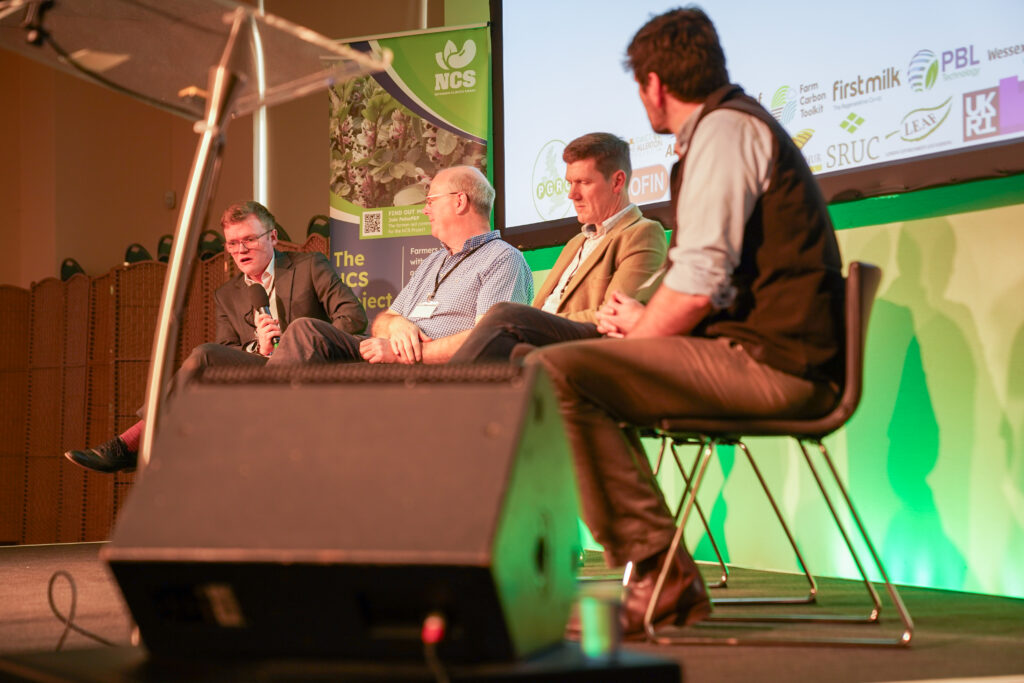
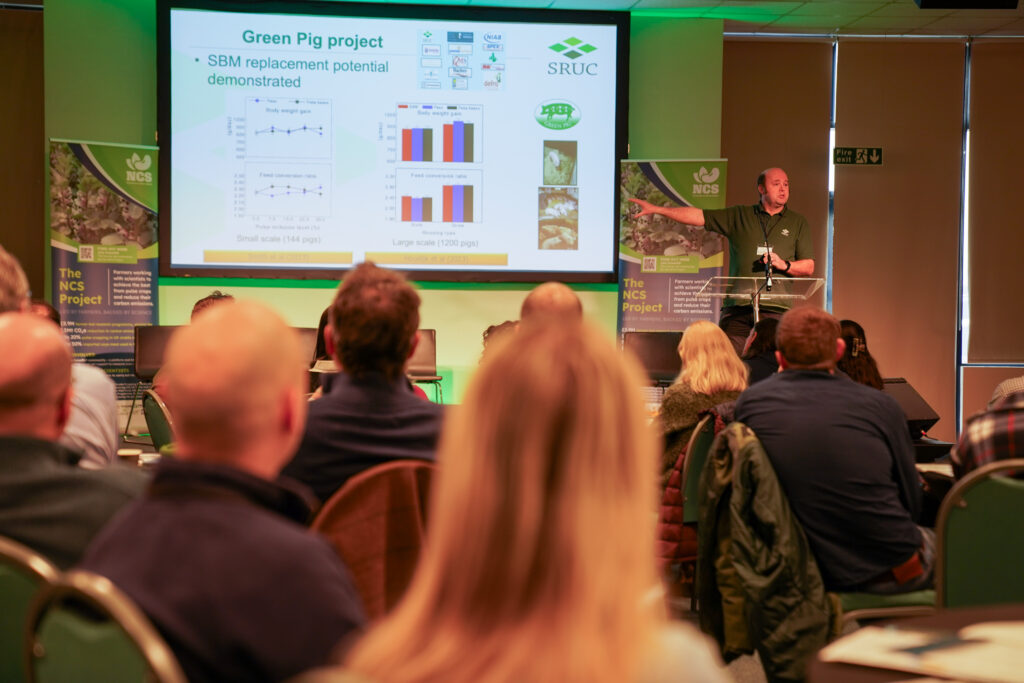
At the From Soya to Sustainability conference in Peterborough, which took place on Wednesday, 28 January, organisers announced the creation of Pioneer Pods – small, focused groups of farmers drawn from the Nitrogen Climate Smart (NCS) project’s Pulse Pioneers. These farmers are working together to accelerate the adoption of pulses in arable rotations and strengthen routes to market for UK-grown protein crops.

The move is designed to provide a practical delivery mechanism for the NFU Sustainable Proteins Plan, which calls for a major expansion in pulse cropping to improve farm resilience, cut reliance on imported soya and reduce greenhouse gas emissions across UK agriculture.
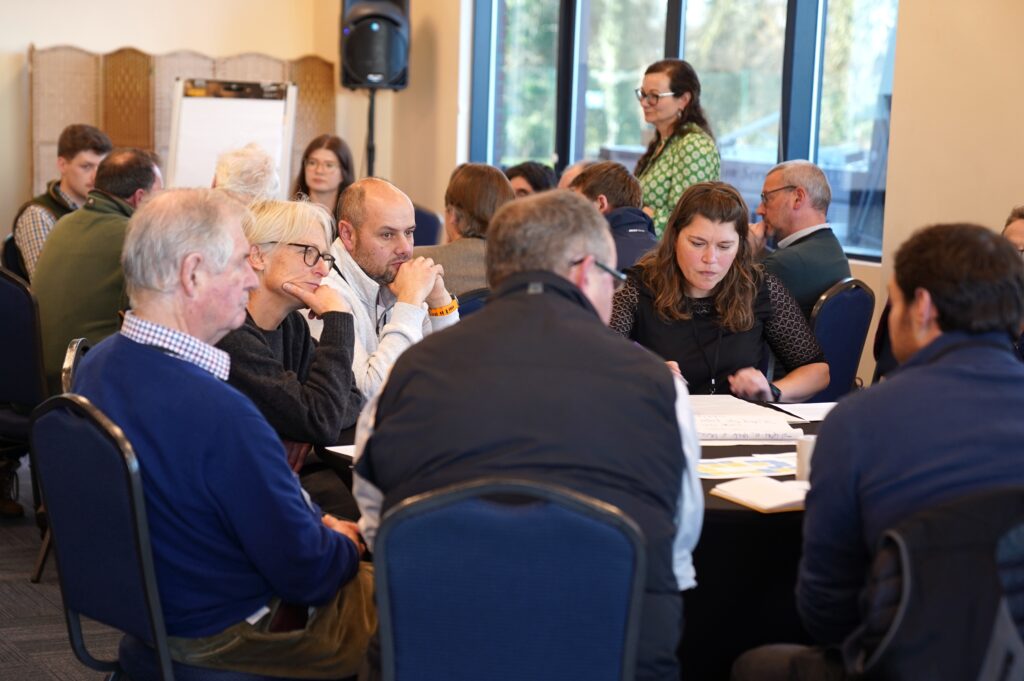
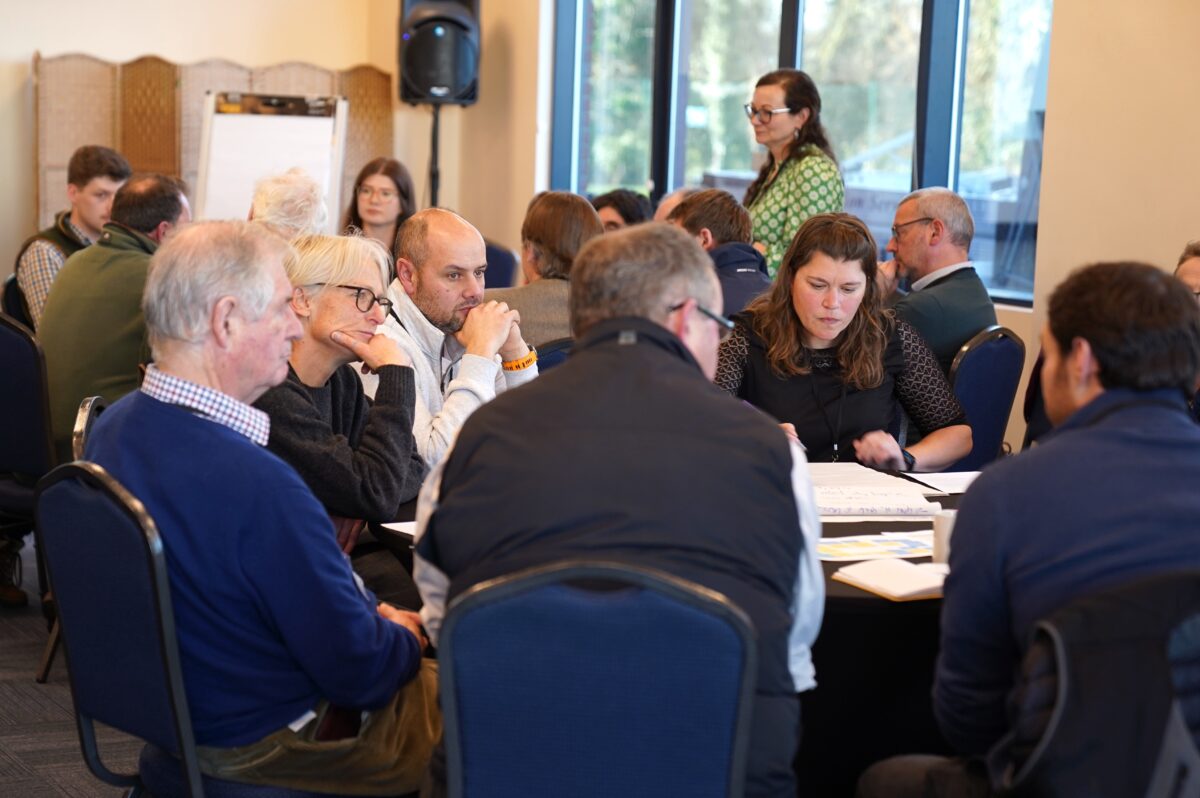
Workshop discussions at From Soya to Sustainability

The Pulse Pioneers, around 30 commercial growers involved in the PGRO-led NCS project, have already demonstrated what is possible. They are among growers involved in independent benchmarking through ADAS YEN, which shows they are achieving pulse yields around 1t/ha higher than national averages. Early rotational data from Pulse Pioneer trials point to improvements in nitrogen supply and following-crop performance.

“These are not trial-plot results – this is evidence from commercial farms, across different soils and systems,” said Tom Allen-Stevens, founder and managing director of the British On-Farm Innovation Network (BOFIN). “The question now is not whether pulses can deliver, but how we scale that performance and connect it to markets. Pioneer Pods are about doing exactly that.”

Analysis led by ADAS within the NCS project has shown that while there is no single ‘silver bullet’ input to transform pulse performance, system-level learning – around establishment, nutrition, crop protection and rotation design – delivers consistent gains when shared and applied at scale.

The Pioneer Pod model builds on that insight. Each pod will bring together a small number of Pulse Pioneers working on similar challenges or opportunities, such as improving yield stability, optimising nitrogen supply to following crops, or supplying consistent volumes of high-quality pulses into feed and food markets.

By pooling data, aligning on-farm trials and working directly with supply-chain partners, the pods are intended to shorten the gap between on-farm innovation and commercial uptake.

“The NFU plan is clear that pulses can deliver productivity, resilience and environmental benefits, but only if farmers are supported to manage risk and if supply chains commit alongside them,” said Tom Allen-Stevens. “Pioneer Pods are where those conversations become practical.”

With pulses identified as a key lever for reducing fertiliser use, improving soil health and cutting agricultural emissions, delegates at the FSTS2026 conference agreed that the challenge now lies in delivery rather than direction.

“The evidence is building, the policy intent is clear, and now the structures are starting to fall into place,” said Tom Allen-Stevens. “The Pulse Pioneers have shown what’s possible. Pioneer Pods are about turning that potential into something that works for farmers, supply chains and the wider industry.”

The Pioneer Pods will begin forming during 2026, with opportunities for additional farmers and supply-chain partners to engage as the model develops.

Categories
NCS News

1.6 million tonne target for UK push for pulses

The environmental gains of replacing imported soya with UK-grown beans in livestock diets could be substantial, but without appropriate incentives across the supply chain they will not be realised. 

That is the message that senior economist James Webster-Rusk (The Andersons Centre) will deliver to delegates at From Soya to Sustainability in Peterborough today. 

As part of the Defra-funded NCS project, James has been tasked with carrying out Cost-Benefit Analyses of the project partners’ ambition to increase pulse production to 20% of the UK’s arable area, replacing 50% of the imported soya currently being fed to the nation’s livestock.

It is the second of three studies which evaluate the economic and environmental implications of making these changes at farm level over the four years of the NCS project (2023-2027). The results are then extrapolated to demonstrate the potential impact on UK arable and livestock production.

The biggest potential gains could be seen in the poultry sector, he will say. The environmental benefits of using beans in layer and broiler diets could outweigh the costs by as much as 20 times (a 20:1 benefit to cost ratio). While early broiler trials suggest lower inclusion levels may improve producer margins and reduce emissions, the trials to date have been small-scale, underlining the need for further research. 

For grazing livestock, the results from trials represented in his analysis are mixed and also warrant further research. 

James Webster-Rusk

“Beans may reduce the emissions from feed, but any decrease in growth rates can offset the gains,” he will say. “However the project’s dairy trial revealed that the benefits to society of reduced emissions do outweigh the cost to the farmer of increased feed.”

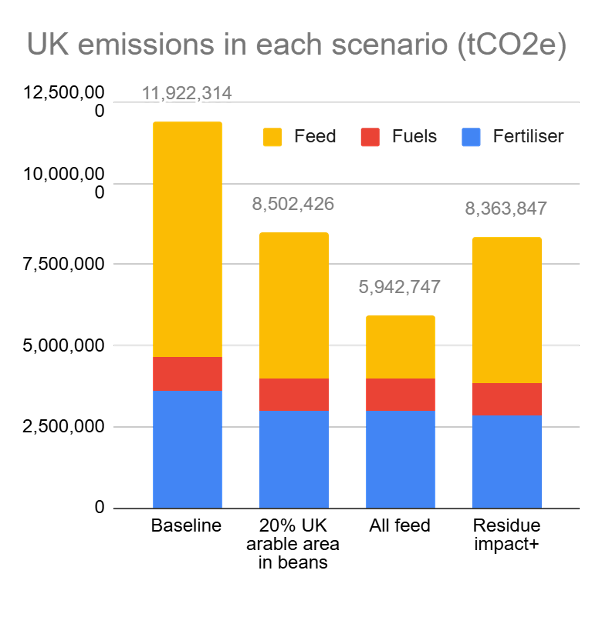
Increasing pulses to 20% of arable rotations has the potential to reduce emissions by as much as 600,000 tonnes (t) of carbon dioxide equivalent (CO2e) or 9.4%. This is primarily driven by the reduction in fertiliser needed in the arable supply chain. 

However, under the current five-year average economics of arable farming, the environmental benefits of reducing emissions are offset by losses in margins as rotations move towards 20% pulses. While increasing pulse consumption delivers a net benefit for the livestock sector, the same is not currently true for arable producers.

“If we don’t incentivise arable farmer to produce the beans then the beans won’t be there to deliver the vast improvements that could be realised in the intensive livestock sector. 

“We will need 1.6 million tonnes of beans to make it happen, and we simply don’t have that at the moment.”

The findings highlight the urgent need for targeted intervention across the supply chain, said Tom Allen-Stevens, founder and managing director of the British On-Farm Innovation Network (BOFIN) which leads the on-farm trials within the NCS project.

“This analysis shows very clearly that the environmental gains are there for the taking, but the system is currently misaligned. Livestock producers and society would benefit from lower emissions, yet arable farmers are being asked to carry the financial risk. 

“If we want UK-grown pulses to replace imported soya at scale, we must put meaningful incentives in place to make bean production a viable and attractive option for growers.”

Categories
NCS News

Speaker line-up set to ‘accelerate change’ in UK’s food system

Bringing together farmers, researchers, policy specialists, economists and industry leaders, the programme reflects the breadth of expertise contributing to the UK’s move towards homegrown, lower-carbon livestock feed.

Organised by partners in the Defra-funded NCS project, the conference takes place at the KingsGate Centre, Peterborough, on Wednesday 28 January 2026.

Soya in the supermarket

The first panel session will explore how retailers, policymakers and supply chains can shift towards more sustainable protein sources. Professor Neil Ward of the University of East Anglia brings decades of expertise in agri-food policy, rural development and climate change. A former adviser to the Cabinet Office, Neil co-leads the AFN Network+, a national initiative connecting over 3,000 researchers and practitioners focused on achieving net zero in the UK food system.

Joining him is Nicola Brennan of WWF UK, a leading figure in the move towards deforestation- and conversion-free (DCF) supply chains. With strong international experience and a focus on soy sourcing, Nicola has worked closely with major retailers to navigate barriers and opportunities in transforming supply chains for people and nature.

Embracing change

The second panel session turns attention to the science and practice of replacing imported soya with homegrown pulses. Chairing the discussion is John McArthur, Managing Director of McArthur BDC and lead of Work Package 4 of the NCS Project which is investigating how heat-treating faba beans can improve their feeding potential.

Professor Jos Houdijk of SRUC brings world-leading expertise in monogastric nutrition. His research has demonstrated that peas and faba beans can fully replace soya bean meal in balanced pig rations – a breakthrough now informing NCS trials in poultry.

They are joined by Brian Kenyon, Senior Poultry Nutritionist at ABN, who has decades of experience supporting high-performance, sustainable poultry feeding. Brian contributes to NCS research demonstrating how UK-grown beans can reduce reliance on imported soya without compromising bird performance.

John said: “Replacing imported soya with homegrown pulses isn’t just possible – it’s already happening. What we need now is collaboration and momentum and that’s what From Soya to Sustainability is all about. It’s a place to share expertise and shape the future of UK livestock feeding together.”

Pulse Pioneers

In a workshop for the NCS project’s Pulse Pioneer farmer trialists, Jamie Burrows, NFU Combinable Crops chair, will lay out the NFU’s Sustainable Protein Action Plan and encourage growers to get behind it. The plan includes measures to boost UK production and use of protein crops – including peas, beans and lupins – in arable rotations to enhance food security, reduce reliance on imports and improve farm sustainability.

Tom Allen-Stevens of the British On-Farm Innovation Network encouraged all Pulse Pioneers to attend. He said: “This is an opportunity for our farmers to shape future policy by influencing the NFU’s feedback to Defra to ensure there is a plan we can deliver and that Defra has the confidence to support.”

The workshop will also shape the future of the project’s trials based on findings and experiences from the first two years of trials and will prioritise areas for further on-farm research. 

The price of change

The final panel session will focus on the economic and carbon implications of scaling pulses and reducing soya dependence. James Webster-Rusk of The Andersons Centre leads the NCS cost-benefit analysis on expanding pulse production to 20% of UK arable land and replacing 50% of imported soya.

Liz Bowles, Chief Executive of the Farm Carbon Toolkit, will provide vital insight into emissions reduction and on-farm carbon opportunities.

With its diverse programme of speakers (and more to be confirmed soon), the conference aims to advance the NCS project ambitions to increase pulse production and reduce reliance on imported soya.

Roger Vickers CEO of PGRO and NCS project lead said: “We have the science, the farmers and the will to build a protein system that delivers for nature, climate and food security. At From Soya to Sustainability we will bring those threads together and accelerate change. I encourage anyone who wants to see British agriculture move forward to join us on 28th January.”

Tickets to the event are on sale at www.tinyurl.com/FSTS26

Categories
NCS News

NCS On-farm open day

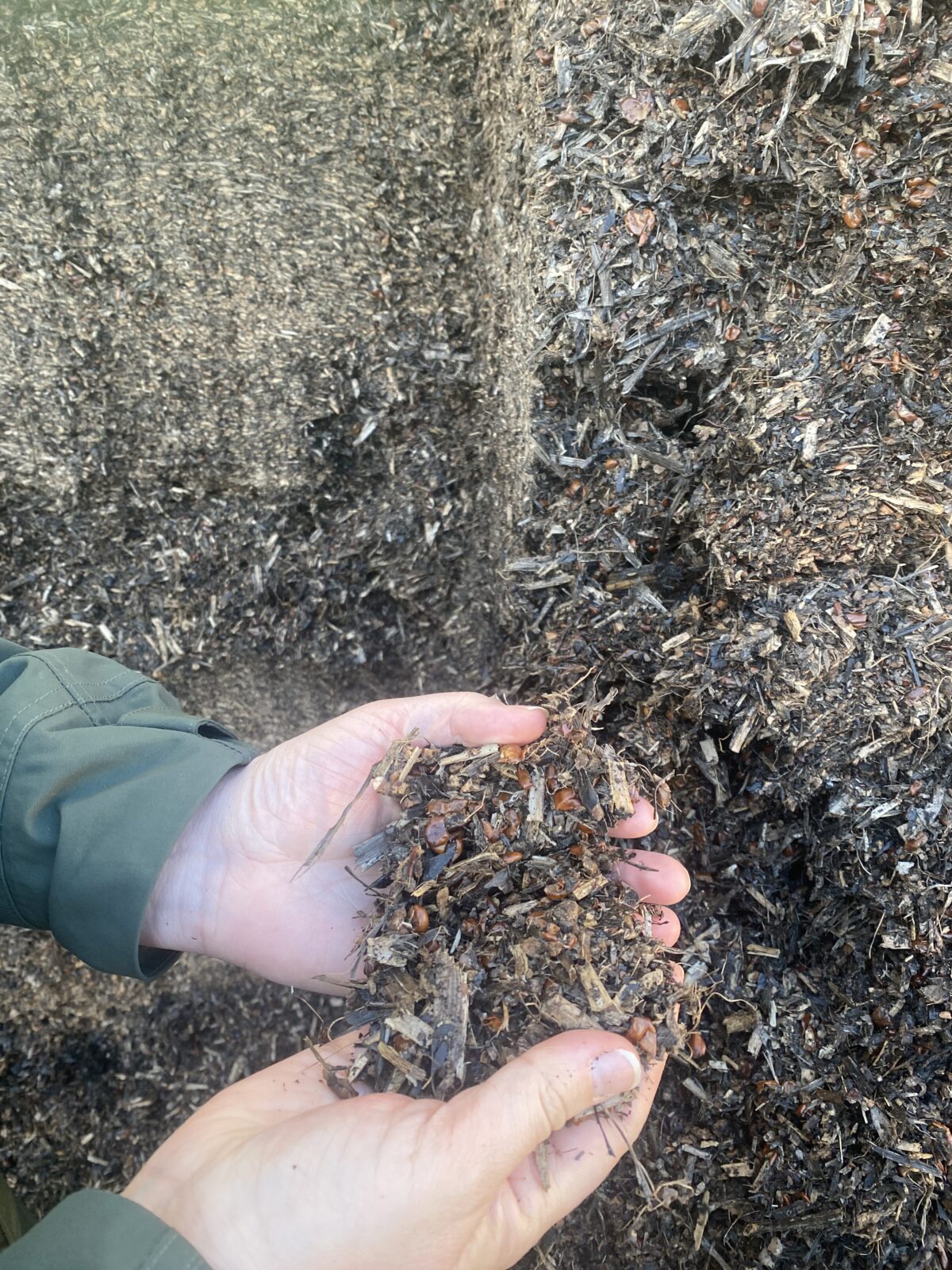
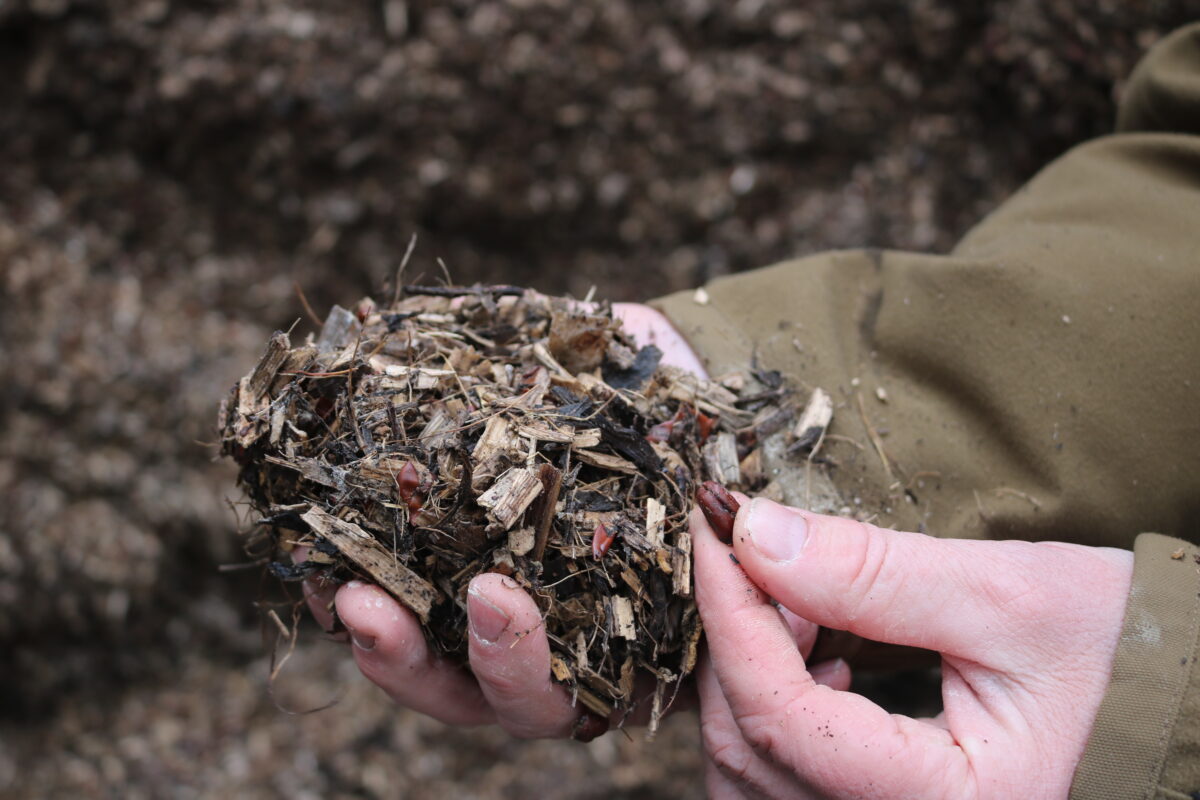
Wholecrop beans can improve livestock performance, reduce reliance on imported proteins, and strengthen the sustainability of both arable and livestock systems, according to experts speaking at the NCS project’s on-farm open day in December.

Hosted by Yorkshire beef and arable farmer Richard Barker, the event brought together producers, advisers, seed specialists and processors to share their expertise, practical experience and trial results from the Defra-funded NCS project.

Richard, who farms in partnership with his father and nephew, finishes Aberdeen Angus cattle for Dovecote Park under a Waitrose contract. The business has increasingly focused on feeding homegrown crops, including beans, crimped wheat and barley, supported by the introduction of herbal leys to increase grazing.

“We initially began growing spring beans as a homegrown protein source, but yields were inconsistent,” Richard explained. “However, in the cattle ration they performed very well, with noticeable improvements in animal performance. The cattle are more settled and content.”

As part of the NCS project, Richard worked with beef nutritionist Lizz Clarke to trial beans in calf diets too. His 140 calves were split into two groups – one fed a total mixed ration (TMR) including herbal ley silage and the other a TMR based on wholecrop beans.

“From the get-go the animals on the bean diet were flourishing more,” Richard said. The group on the wholecrop beans TMR gained an average of 1.19kg/day, compared with 1.05kg/day on the herbal ley ration – an advantage of 140g/day. Over the course of the trial, this translated into a 66% total weight gain for the beans group versus 49% for the herbal ley group.

He plans to continue using beans wherever possible. “Our challenge is growing beans consistently when we can’t control the weather. We want to deliver a consistent end product for Dovecote and the consumer, and by working with experts through NCS we hope to improve how beans are grown and used.”

Sustainability is also a key driver for processors. Chloe Bridgett of Dovecote Park explained the company’s shift away from imported soya: “Our main customer, Waitrose, was concerned about soya coming from deforested areas. Every year we must declare that we don’t have soya in our supply chain.”

Heather Oldfield of Limagrain highlighted the opportunities for growers: “It’s encouraging to see government supporting projects like the NCS that bring together the whole supply chain to make impactful change. The added value of beans when fed to livestock can be significant, and together with the agronomic benefits this makes them a very viable break crop on a mixed farm”.

Seed specialists also encouraged growers to explore new approaches. David Watson of Nickerson recognised the reliability challenges of beans, suggesting different approaches including bi-cropping peas and beans to stabilise yields.

Further insights from the NCS project included harvesting efficiency trials from Kelvin Cave, showing that maize headers outperformed standard headers for bean wholecrop. Erin Matlock of PGRO reinforced the importance of good agronomy, including rotation, soil testing, seed quality and early weed control, alongside awareness of diseases such as chocolate spot and rust.

Categories
NCS News Uncategorized

From Field to Feed – NCS Open Day

Yorkshire farmer Richard Barker is inviting visitors to his farm near Richmond on Tuesday 2 December to see how home-grown beans can cut feed costs, boost sustainability and reduce reliance on imported soya.

The From Field to Feed open day is organised by the NCS Project, in which Richard is a ‘Pulse Pioneer’ trialling wholecrop beans in his beef herd’s diet.

Visitors will discover how beans are grown, harvested, stored and fed on farm – and how they can provide a high-protein, home-grown alternative to bought-in feeds.

Richard said: “As livestock farmers we need to balance cost, sustainability and performance. Wholecrop beans have proved a valuable option for my business – they fit well in my rotation, yield well and provide a reliable protein source for my cattle. I’m looking forward to sharing my experience and hearing from others.”

The open day will start at 10am at the Black Bull Inn, Moulton (DG10 6QJ) with presentations from leading experts including PGRO’s Erin Matlock on the agronomy of successful bean production, and an update on varieties from Limagrain. Michael Carpenter from Kelvin Cave Ltd will share insights into harvesting, processing, preservation and storage, and livestock nutritionist Lizz Clarke will tackle bean nutrition and ration formulation.

After lunch, a tour of Richard’s farm will include a look at the wholecrop bean storage, along with an opportunity to discuss feeding results and practical adoption with specialists.

The event is free to attend, but please register HERE.

Categories
Uncategorized

From Soya to Sustainability 2026

The From Soya to Sustainability conference returns to Peterborough on Wednesday 28th January 2026, bringing together leaders from across the agri-food sector to accelerate the shift towards a more sustainable, secure, and resilient UK food system.

Building on the momentum of last year’s event, the 2026 conference will spotlight the environmental, economic, and nutritional benefits of integrating pulses – especially faba beans – into livestock feed. Hosted by partners in the NCS project at the KingsGate Conference Centre, Peterborough, the event will explore how reducing reliance on imported soya can cut carbon emissions, enhance soil health, and contribute to national net zero goals.

“We know that imported soya presents a sustainability challenge, but we also know the solution is already in our fields,” said Roger Vickers, CEO of PGRO and NCS project lead. “This conference is about sharing practical, science-backed strategies to increase production of UK-grown pulses to feed our livestock, which will create lasting impact across the supply chain.”

Industry leading speakers will tackle topics including:

  • How faba beans and other UK-grown pulses can reduce the quantity of imported soya needed for livestock feed, while also bringing environmental benefits.
  • The role of sustainable feed in reducing Scope 3 emissions, which account for up to 70% of food sector carbon footprints*.
  • New data from on-farm trials and collaborative projects driving change in the UK and beyond.
  • The power of cross-sector collaboration in building more transparent and sustainable supply chains.

John McArthur of McArthur BDC, one of the NCS partner organisations added: “Every tonne of UK-grown pulses we use in place of imported soya is a step towards a more resilient, lower-carbon future. 

“It is vital we bring everyone from across the supply chain together with policymakers and environmentalists to work towards this shared aim.”

The conference will be of particular value to food industry and retail professionals, farmers, animal feed manufacturers and nutritionists, policymakers, environmental NGOs and other agri-food professionals.

Tickets to the event are on sale now at www.tinyurl.com/FSTS26 For speaking, exhibiting or collaboration opportunities please contact info@bofin.org.uk

*Source for figure used is https://www.unglobalcompact.org.uk/scope-3-emissions/

Categories
NCS News

Opportunities for paid on-farm trials

A major project aiming to cut agriculture’s carbon footprint through increased inclusion of pulses in arable systems and livestock diets is looking for more farmers to participate in paid on-farm trials.

Now in its third year, the NCS (Nitrogen Climate Smart) project is led by PGRO alongside a consortium of 16 other organisations. Roger Vickers, CEO of PGRO and NCS project lead said: “We are now moving towards looking at the legacy effects of the trials – comparing the effect of previous pulse crops on subsequent crops as well as different treatments designed to optimise production and reduce carbon emissions.

“Together we are exploring all aspects of the production of beans from agronomy to harvest through to processing and use in livestock feed.”

The project’s ambition is to show the benefits of increasing pulse production in arable rotations to 20% which could replace around 50% of the imported soya currently consumed by UK livestock. This in turn could lead to carbon savings of around 3.4Mt CO2 equivalent.

John McArthur, of partner organisation McArthur BDC explained that this was equal a 7% reduction in UK agriculture’s emissions. “This one intervention would make a huge difference to both the arable and livestock sectors and is something that with continued progress we believe can be achieved,” he said.

John McArthur

Part of the project led by McArthur BDC is exploring the effect of dehulling and thermal treatment on the nutritive value of beans to increase the soya substitution potential of faba beans, he explained. Other partner organisations are looking at the production side aiming to increase knowledge of understanding of pulse crops, explained Dr Thomas Wilkinson of ADAS.

This includes trials by partner organisations and the Pulse Pioneer farmers which all lookat maximising pulse crops and getting the best from them. “We are now moving towards looking at the legacy effects of the trials – comparing the effect of previous pulse crops on subsequent crops as well as different treatments designed to optimise production.” ADAS is also combining these findings with data from the Pulse Yield Enhancement Network (YEN).

“At the moment many growers don’t seem to be reducing nitrogen rates after pulse crops,” said Dr Wilkinson. “We want to have a deeper understanding of residual nitrogen so that we know how growers could modify nitrogen rates, which would have a significant impact on their carbon footprint.”

Tom Allen-Stevens of the British On-Farm Innovation Network (BOFIN) which recruits and supports the farmer triallists explained that more Pulse Pioneers were needed for the 2025-26 trials. “We currently have 23 farmer trialists on this project and need to increase that to 40 for the upcoming year,” he said. “We are looking for farmers who are at the top of their game and keen to know how they can grow beans better and share that knowledge with other farmers. 

“As with all BOFIN projects our farmer trialists are paid for their role in the project and also gain from collaborating with other farmers, scientists and industry experts.

“Pulses promise huge opportunities for UK agriculture, and our Pulse Pioneers are driving that.”

Another aspect of the project is improving links with the supply chain, he said. “As a direct result of this project, and particularly our conference in January 2025, we are in discussion with processors and manufacturers keen to have better surety of supply. We hope that the setting up of grower groups will be another great outcome from this project.” 

Other partner organisations include Farm Carbon Toolkit who were supporting farmers to carbon footprint their businesses to quantify the changes brought about by increased pulse production. The Andersons Centre is also carrying out Cost Benefit Analyses of pulse production over the life of the project.

Categories
NCS News

Partner report:

Agricultural emissions could potentially be reduced by 3.4Mt CO2e by replacing half of soyabean meal in livestock feed with homegrown pulses as a result of reduced deforestation and land use change, lower synthetic fertiliser use and fuel savings.

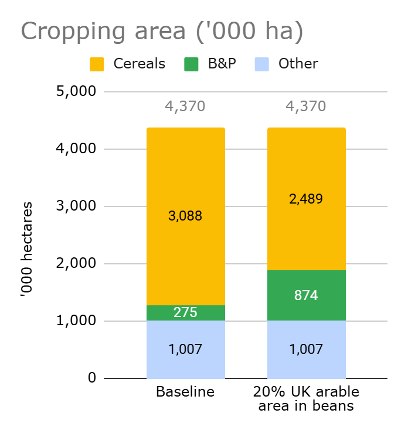
In 2023, only 6.3% of the UK’s 4.3 million hectares of cropping land grew beans or pulses. These crops have significant agricultural potential; offering soil health benefits, livestock feed options, and alternatives to currently stressed rotations. The NCS project hopes to harness this potential by expanding the pulse cropping to 20% of the total arable area in the UK. This would involve increasing the annual area of beans and pulses grown from 275,090 ha’s (6.3%) to 874,026 ha’s (20%).

The impact of expanding pulse cropping

Expanding the pulse cropping area will result in GHG emissions reductions in the areas highlighted below:

  • Reduced fuel usage
  • Direct fertiliser avoidance
  • Indirect fertiliser avoidance as a result of leguminous residues
  • Providing a low emission feed alternative to imported soya
Reducing fuel usage

Growing and harvesting pulses requires less fuel than growing cereal crops. FCT modelling on the operations needed to grow cereals indicates that 91 litres of diesel/ha is required, compared to 84 litres/ha to grow beans and pulses. This reduces emissions by 13,166.79 tCO2e when scaled out across the UK arable area.

Reducing fertiliser reliance

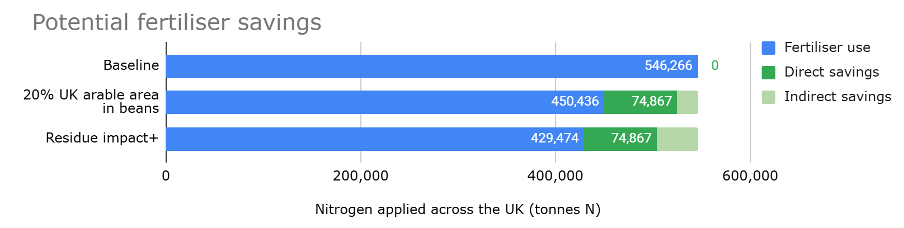
Growing pulses like peas and beans reduces reliance on synthetic nitrogen fertilisers both during the pulses cropping year and for subsequent crops, as these plants fix nitrogen into the soil. In 2023, the UK applied an average of 125 kg N/ha of fertiliser, totalling 546,266 tonnes and emitting 3.6 MT CO2e. By expanding pulse cultivation, the UK could save 74,867 tonnes of nitrogen fertiliser annually, directly avoiding 494,925 tCO2e emissions. Moreover, pulse residues can enhance nitrogen availability for subsequent crops, amounting to 35–70 kgN/ha (depending on soil conditions etc.). This could save an additional 20,963–41,926 tonnes of nitrogen annually across the UK, equating to 138,580-277,160 tCO2e.

Substitution of imported soya feed

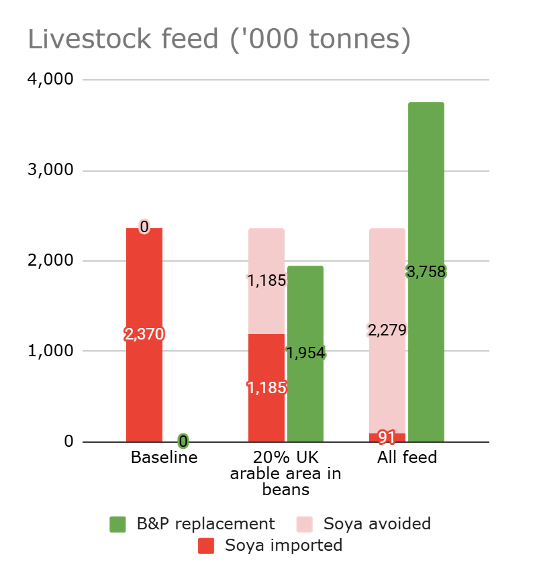
In 2023, the UK imported 2.37 million tonnes of soya feed, 74% from South America, resulting in 7.3 MT CO2e emissions. UK grown beans could replace some of this soya, substantially reducing the footprint of animal feed. If all UK-grown beans within the scenario proposed by NCS were used within compound feeds and straights, they could replace 96% of soya imports, avoiding 5.3 MT CO2e.  

A more realistic scenario is replacing 50% of imported soya with 1.95 million tonnes of UK beans, requiring 454,468 hectares (52% of beans/peas cropping area). This would cut feed emissions to 4.5 MT CO2e, saving 2.8 MT CO2e compared to current levels of soya imports.

Conclusion

The expansion of beans and pulses to cover 20% of the UK cropping area could save 3.4 MT CO2e (equivalent to 7% of UK agriculture’s total emissions). This would increase if more of the beans and pulses grown could displace imported soyabean meal.

Sources:
  • Fertiliser data from the British survey of Fertiliser practice 2023
  • Land use data from DEFRA land use and crop areas 2023
  • Fuel usage based on FCT modelling of the field operations
  • Soya imports from EFECA and UK soya manifesto 2024 progress report
  • Protein content: Johnston et al 2019 https://doi.org/10.1016/j.livsci.2018.12.015
Categories
Uncategorized

From Soya to Sustainability:

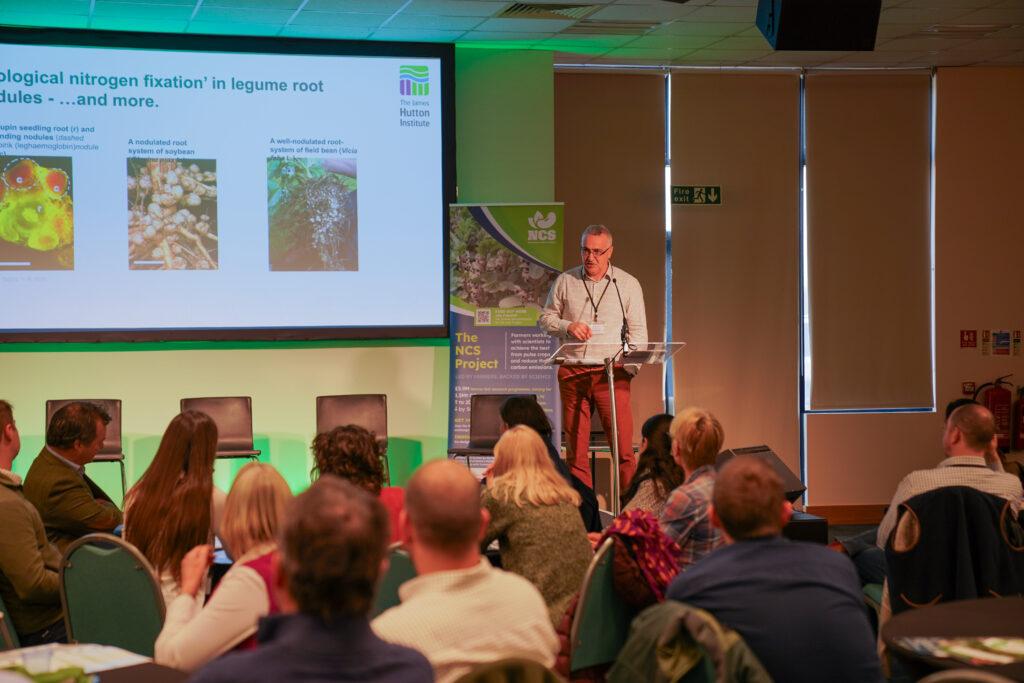
Including legumes in the arable rotation clearly has the potential to lower environmental footprints, said Prof Pete Iannetta of The James Hutton Institute. “It’s not just greenhouse gases. There’s water quality improvement to be gained and a whole host of other benefits.” 

Citing NCS research on unique long-term crop rotation data from the ‘Centre for Sustainable Cropping’, which compares spring barley crops that had been preceded by either spring beans or spring barley, he said: “There was a 1.2t/ha yield uplift in the barley following beans, despite synthetic nitrogen fertiliser use reductions in-line with RB209 recommendations. The environmental impact reductions were apparent despite a winter fallow after the beans.

Prof Pete Iannetta

“That’s interesting because the bean nitrogen-rich residues left in-field after their harvest would have been all-but lost by the time the following spring barley crop was sown. We need more data on that, but I don’t believe the barley benefits are simply due to soil nitrogen levels. There are likely changes to the soil structure, and we know already that beans support a ‘symbiotic microbiome’ – changing the diversity of the microbes associated with plant roots to more-favourable types.”

Consistency of performance of field beans is “a bit of a nightmare” admitted Agrii agronomist Todd Jex. “A lot of the potential is lost in the very early stages. You cannot grow them tightly in rotation because of build-up of soil-borne pests and diseases and you need to consider all three aspects of soil health – physical, chemical and biological.”

When it comes to putting the crop in the ground there are four considerations: drilling date, variety, establishment system and seed rate. Todd stressed the importance of early drilling.  

“As soon as wheat drilling is finished, we’ll put winter beans in, from the middle of October onwards.” Spring beans could be drilled in January, he added. “The earlier the better.”

Pulse Pioneers

Oxfordshire farmer and founder of the British On-Farm Innovation Network (BOFIN) Tom Allen-Stevens called for more farmers to sign up as Pulse Pioneers, who are paid to carry out the on-farm trials in the NCS Project. 

“This year we have 20 taking part but next year we are ramping that up to 40. Supported by the scientists and other experts in our partner organisations the trials are a real opportunity to find ways to grow better, more consistent crops.” 

Sharing that knowledge between Pulse Pioneers, the ‘Pulse PEP’ NCS community and the wider industry, was another large part of the project and BOFIN’s role within it, he explained. 

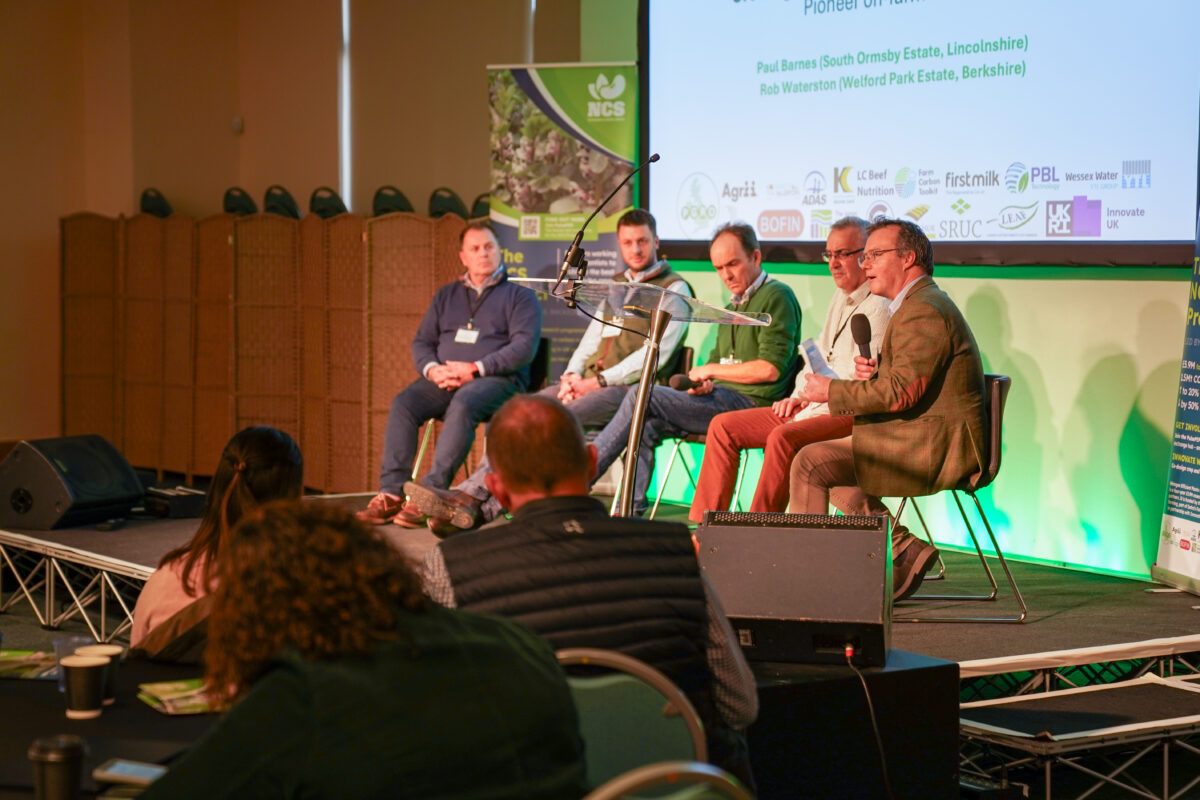
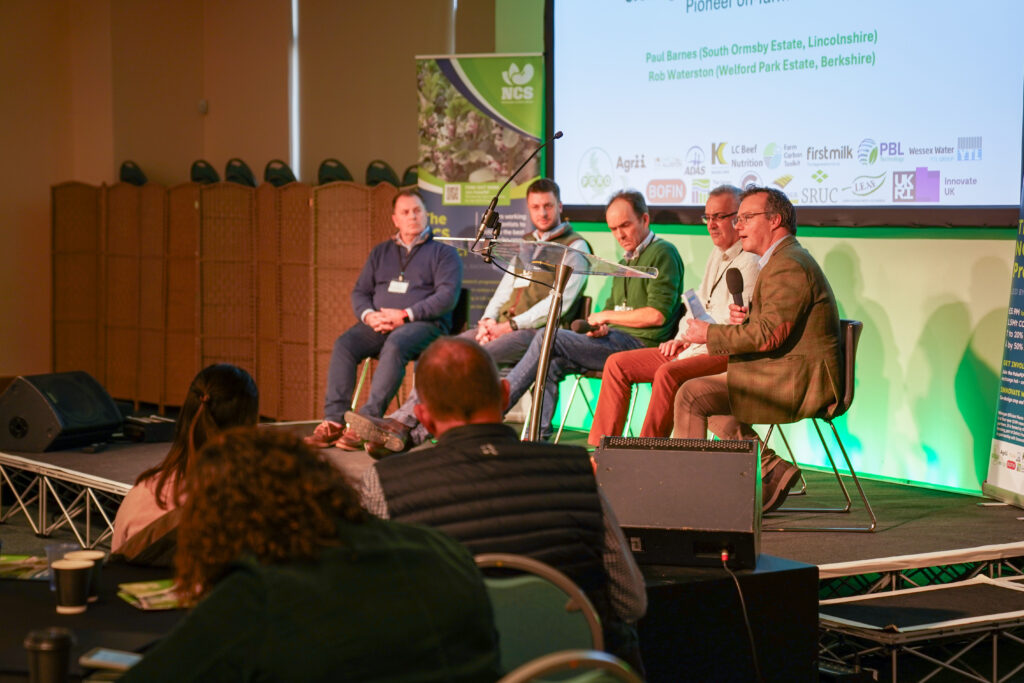
Achieving consistency is the main goal for NCS bean trials carried out by Rob Waterston, farm manager at Welford Park Estate. “The inconsistency drives me mad. I love them some years, but then others they are sparse and I think, why do we bother?”

His Pulse Pioneer trial was a 3ha block of beans from which he took leaf samples to send away for analysis. “On the back of that we tailor made a nutritional programme. We did that twice in the build up towards flowering to make sure the plant gets everything it needs to maximise the flowering potential. It was quite an expansive list of micronutrients that went on.”

He achieved a 0.2t yield uplift in that area and a wealth of benchmark data from ADAS Bean YEN, into which his crop was entered, to analyse and interpret its performance.  

Paul Barnes, Estate Manager at South Ormsby Estate said that as an organic producer beans were an important part of his seven-year rotation. As a Pulse Pioneer within NCS he runs trials on his farm. In year one he was looking at applications of two products that capture atmospheric N, comparing plant health above and below the ground with those of untreated crops. This revealed higher levels of nodulation, plant growth and vigour scoring in the treated crops compared with untreated. This year he will also be assessing the following spring milling wheat crop to confirm the impact the beans had made, as part of the NCS on-farm trials.

Paul stressed how important knowledge exchange was and the value of the 20 Pulse Pioneers involved in the NCS Project sharing what their learning had been from the on-farm trials. 

“Let’s get more on board – bring it on,” he said. 

The conference brought together more than 100 representatives of feed companies, research institutes, farmers and others across the supply chain. But despite invitations sent to the UK’s major retailers, none were directly represented, a point noted by several delegates during discussions.

Categories
NCS News

From Soya to Sustainability:

Solutions presented at From Soya to Sustainability in Peterborough on Wednesday 22nd January included presentation of research carried out by SRUC, The James Hutton Institute and Agrii and the experience of farmers involved in the project.

Lee Truelove, Head of Regenerative Farming at First Milk said the cooperative was working to support the supply chain to find a ‘route out of soya’.

“Is certified deforestation-free soya the end game? I suggest it isn’t,” he said. “Even if that soy is certified questions still exist about how it’s grown. 

“We also need to think about ghost acres. It’s all very well being efficient on the farm, but that can be undermined by how many acres somewhere else in the world are needed to supply feed for the cows.”

The alternative was obvious, he said. “We’re talking about UK-grown proteins including beans, and we definitely support that at First Milk.” Feeding trials by First Milk producers had been positive and would be repeated this winter, he said. 

“We’re going to expand it, but we do think the potential is there. As a dairy cooperative, we’re looking to help the supply chain because we do think there is a route out of soya.”   

Jos Houdijk of SRUC said that faba beans were also viable as an alternative to soya for growing pigs and chickens, but processing made them better. 

“If we dehull faba beans we lift the digestibility and the concentration of amino acids, and that gives us opportunity to increase soya replacement potential.” 

An NCS trial using the bean variety Lynx, combined with dehulling and toasting, found that broilers (meat chickens) fed this variety up to 30% reached the same finished weights as those fed on soya, but with an improved feed conversion ratio. 

“We produced these chickens with 68% less soya bean meal input and the carbon footprint saving was almost 40%,” he said. 

Arable and poultry producer John Seed said he started looking to replace soya when the egg price was below the cost of production, but soon also saw the environmental cost. “Eighty-two per cent of the carbon emissions from my farm came from purchased feed and the soya predominantly.”

He praised the NCS Project, in which he is involved as a Pulse Pioneer, paid to carry out on-farm trials. Trialling new approaches can be both expensive and ‘heartbreaking’ he said. “You need to have government sponsored research like this.”

He found that by feeding beans, even at 10% he reduced emissions by about 400t/year. 

Farmers shouldn’t be taking sole responsibility, he concluded. “We are the front line but we are dealing with the broken promises, the sudden loss of subsidy and trade deals favouring unsustainable imports.” 

Read more: The potential for pulses in the arable rotation