Groundbreaking conference spotlights untapped potential of pulses and legumes
Pulses and legumes have long been undervalued in arable rotations, but could play a key role in reducing agriculture’s environmental impact.
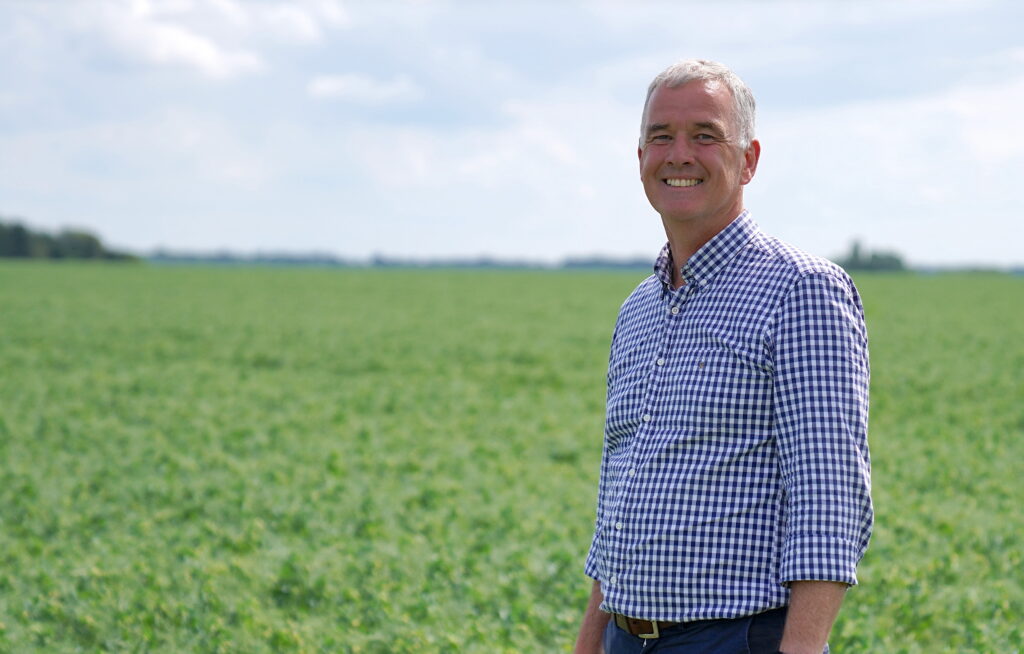
That’s the message from Roger Vickers, Chief Executive of the Processors and Growers Research Organisation (PGRO), leader of the NCS Project and speaker at the From Soya to Sustainability conference in Peterborough on 22nd January.
Roger says: “It’s widely understood that pulses and legumes offer considerable benefits for UK farming systems. Until recently they had never been truly and accurately measured, so their true value has been underplayed while their potential to address the climate crisis has gone unrecognised.”
The NCS Project, an unprecedented initiative in scale and ambition, set out to accurately measure and harness the full potential of these crops. With 17 partners the four year project involves organisations across the agricultural supply chain.
Roger Vickers
“By working together we have brought together the science, the tools and the know-how among UK farmers, not only to tap into that potential, but to develop it further. It’s now time to share our findings so far, and to bring the wider industry together to take this movement forward.
“From Soya to Sustainability is a call to arms to all in the agri-supply chain to take note, take action and make changes that are vital to the future of food production in this country.”
The Processors and Growers Research Organisation is uniquely focussed upon conducting independent applied crop research. Its’ ultimate objectives being knowledge exchange and dissemination for the benefit of growers and industry and the improvement of pulse and vegetable legume production in the UK.
From Soya to Sustainability promises to be a pivotal event for farmers, researchers, and industry professionals looking to improve sustainability of agricultural production.
Reducing soya imports has ‘never been more important’
The urgency for meaningful change in food production systems will take centre stage at the ‘From Soya to Sustainability’ conference in Peterborough.
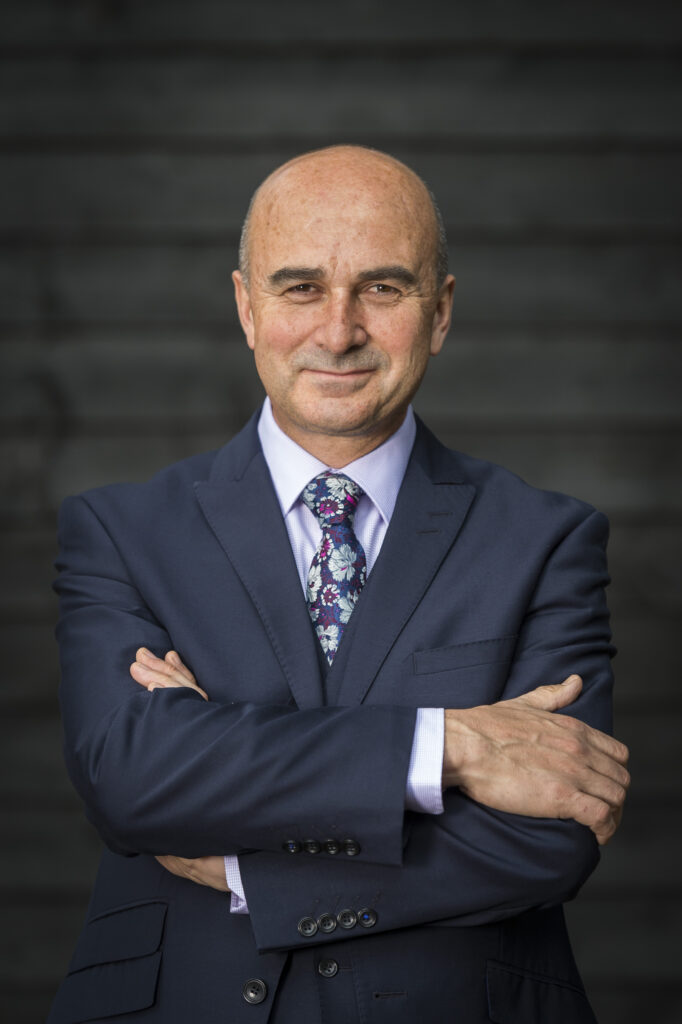
Keynote speaker Philip Lymbery, Global Chief Executive of Compassion in World Farming (CIWF) and author of Sixty Harvests Left, will address the critical need to reduce the amount of imported soya in livestock feed.
Organised by partners in the NCS Project, the event on 22nd January 2025 will bring together key players from across the supply chain. Delegates will discuss innovative strategies for incorporating beans and other pulses into animal diets, with the aim of reducing carbon emissions, boosting soil health, improving food security and creating more resilient farming businesses.
Philip says: “I am delighted to be speaking at this new event which is setting out to drive the transition to a more sustainable, resilient and secure food system in the UK through reduced dependency on imported soya.
“It has never been more important to reduce soya imports for animal feed. Vast areas of rainforest and savannah in Brazil and Argentina are cleared essentially to grow soya to feed industrially reared animals, not least in the UK and Europe. The consequences are devastating to wild animals and the environment.
“There are much more compassionate, environmentally friendly, and sustainable ways to produce food, and I am looking forward to exploring these with participants at the conference.”
By bringing together industry professionals, farmers, and policymakers, the conference organisers aim to drive meaningful change in our approach to animal feed and sustainable agriculture.
Book your tickets now and join the conversation that could shape the future of food production.
About Philip Lymbery
Alongside his role of Global Chief Executive of CIWF Philip is visiting professor at the University of Winchester in the UK, president of the Brussels-based umbrella body of nearly 100 leading animal welfare societies in Europe, Eurogroup for Animals, and is a founding board member of the World Federation for Animals (WFA), a global membership organisation to represent the animal protection movement at intergovernmental level.
He is also a leadership fellow of St George’s House, Windsor Castle and fellow of the Oxford Centre for Animal Ethics. Philip was appointed UN ambassadorial ‘Champion’ for the 2021 Food Systems Summit in New York and was appointed co-lead of the Summit’s Sustainable Livestock Solutions Cluster.
Philip is an animal advocate, naturalist, photographer, and author. He regularly writes and speaks internationally on animal ethics and the global effects of industrial agriculture, including its impact on animal welfare, wildlife, soil and natural resources, biodiversity and climate change.
His other recent books include Farmageddon: The True Cost of Cheap Meat, Dead Zone: Where the Wild Things Were, and Cultivated Meat to Secure Our Future co-edited with Michel Vandenbosch.
A new event is setting out to drive the transition to a more sustainable, resilient and secure food system in the UK through reduced dependency on imported soya.
‘From Soya to Sustainability’will be held on January 22, 2025 at KingsGate Conference Centre, Peterborough. It will bring together farmers, processors, manufacturers, researchers, policymakers and industry leaders to explore innovative strategies for integrating beans and other pulses into livestock diets, reducing the need for imported soya.
Headline speaker Philip Lymbery will emphasise the urgent need for change in our food systems. Philip is Global Chief Executive of Compassion in World Farming and author of Sixty Harvests Left: How to Reach a Nature-Friendly Future with other roles including visiting Professor at the University of Winchester.
Photo credit: CIWF Richard Dunwoody
He was appointed UN ambassadorial ‘Champion’ for the 2021 Food Systems Summit in New York and co-lead of its Sustainable Livestock Solutions Cluster.
Other speakers will include experts leading the charge for reduced use of soya in the UK who will share the latest research and innovations in the production and use of peas and beans.
There will also be ample networking opportunities enabling delegates to connect with like-minded experts from across the supply chain.
Roger Vickers of PGRO and lead of the NCS Project which is coordinating the event said: “This event is a call to action for all in the agri-food supply chain to play their part in the move from soya to sustainability, which is urgently needed if we are to reduce our environmental impact.
“Growing more pulse crops in the UK and using them in livestock feed would help tackle our dependency on imported soya while also promoting agricultural practices that benefit farmers and the environment. There are multiple wins, but it is not an easy fix.
“We need urgent and concerted action across the supply chain if we are to make a difference. I encourage anyone working in the agri-food supply chain to attend and be part of a movement for change.”
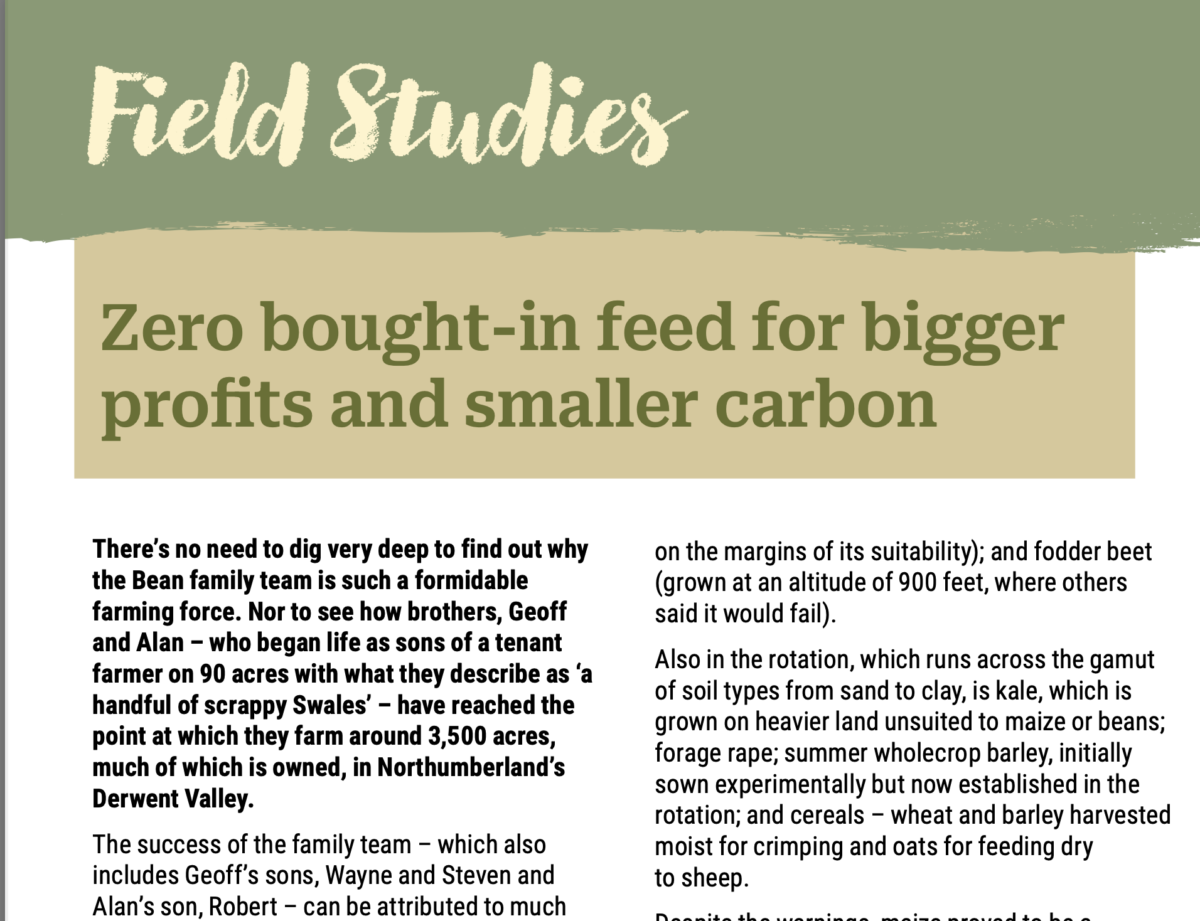
There’s no need to dig very deep to find out why the Bean family team is such a formidable farming force. Find out about their approach including use of wholecrop beans in this case study from NCS project partner Kelvin Cave.
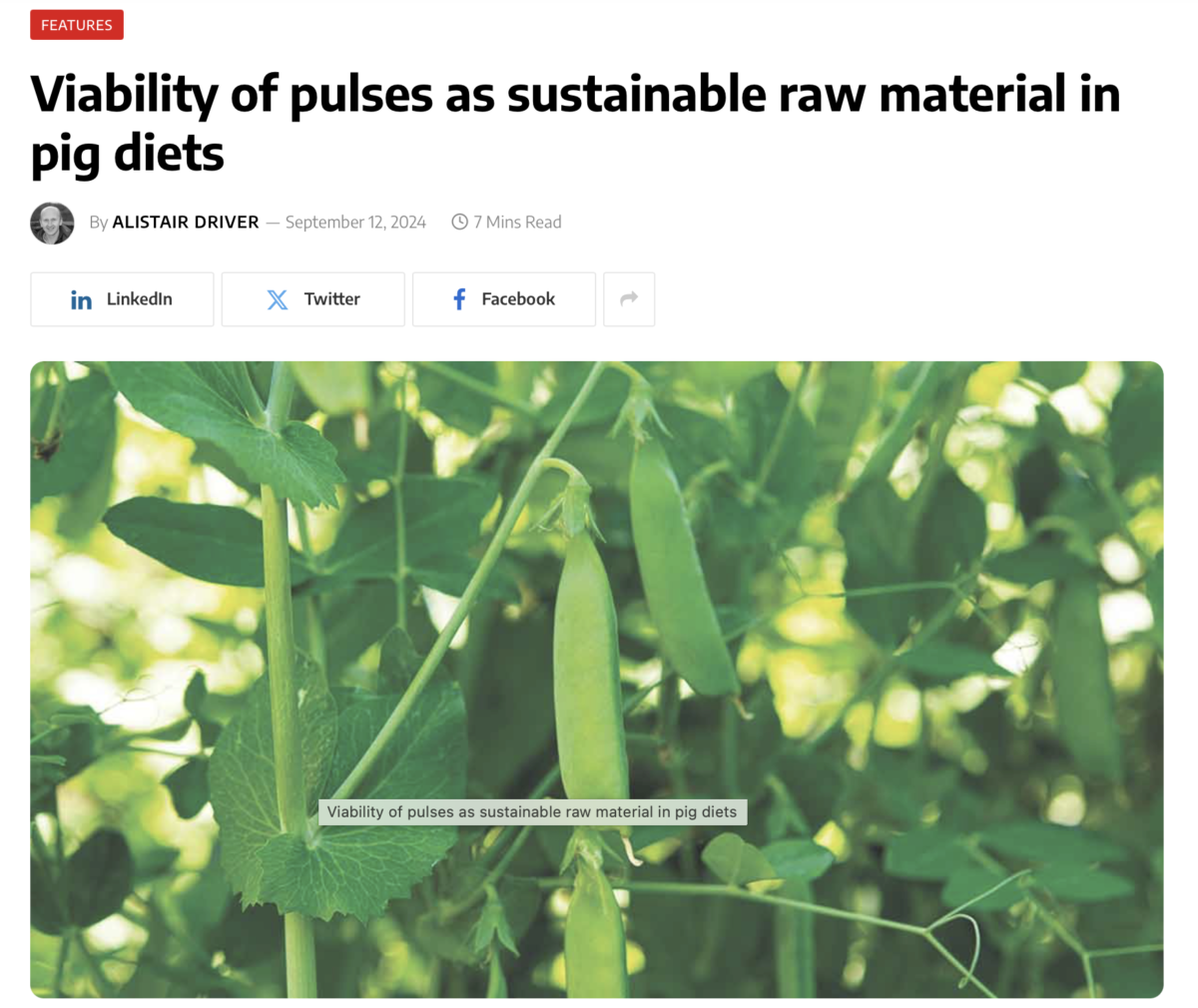
The search for alternatives, ideally home-grown ones, particularly in pig and poultry diets, has never been more important. Pig World’s Alistair Driver considers pulses as an alternative to soya. Read the article in full here.
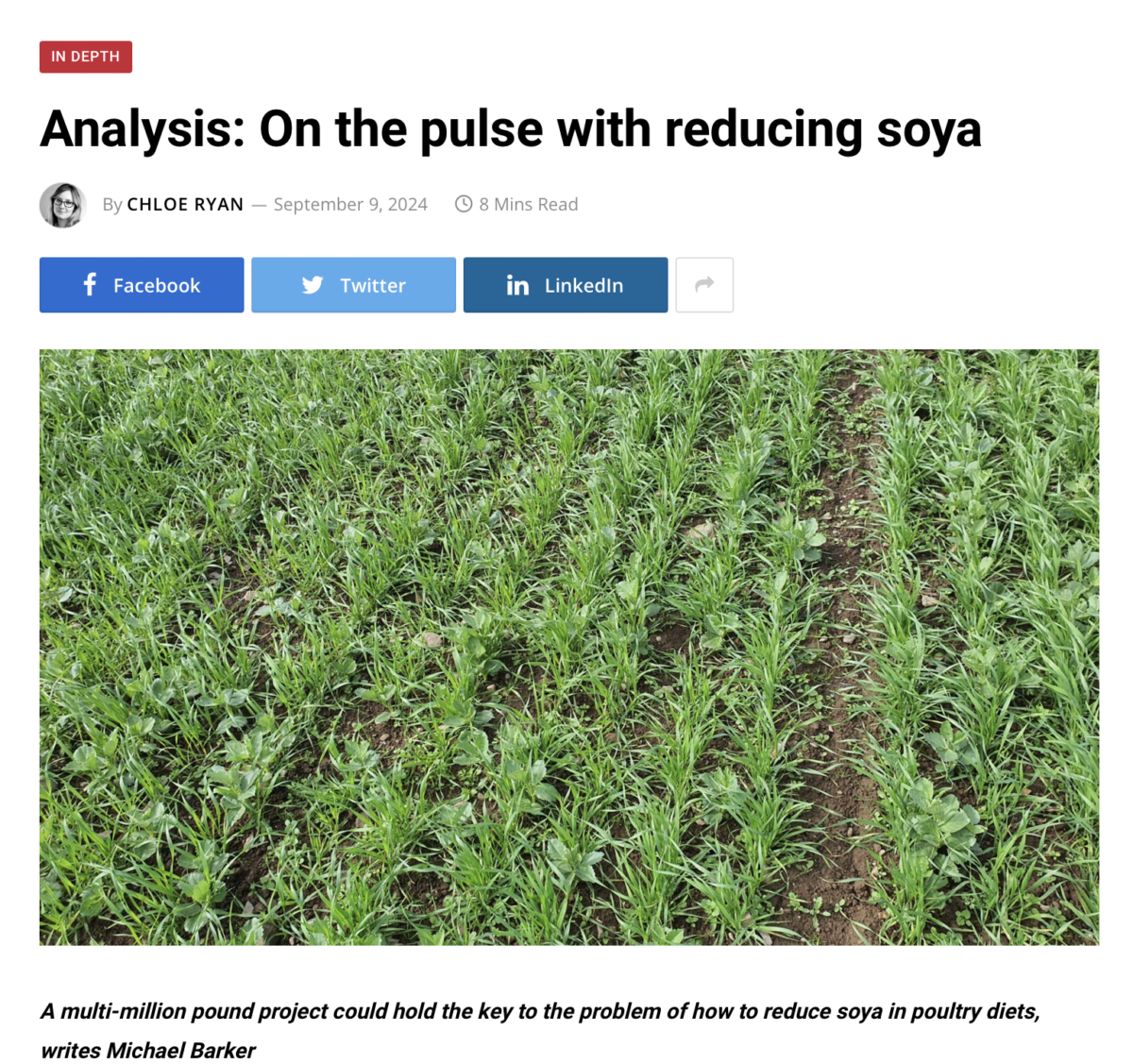
A multi-million pound project could hold the key to the problem of how to reduce soya in poultry diets, writes Michael Barker of Poultry News. Read the article in full here.
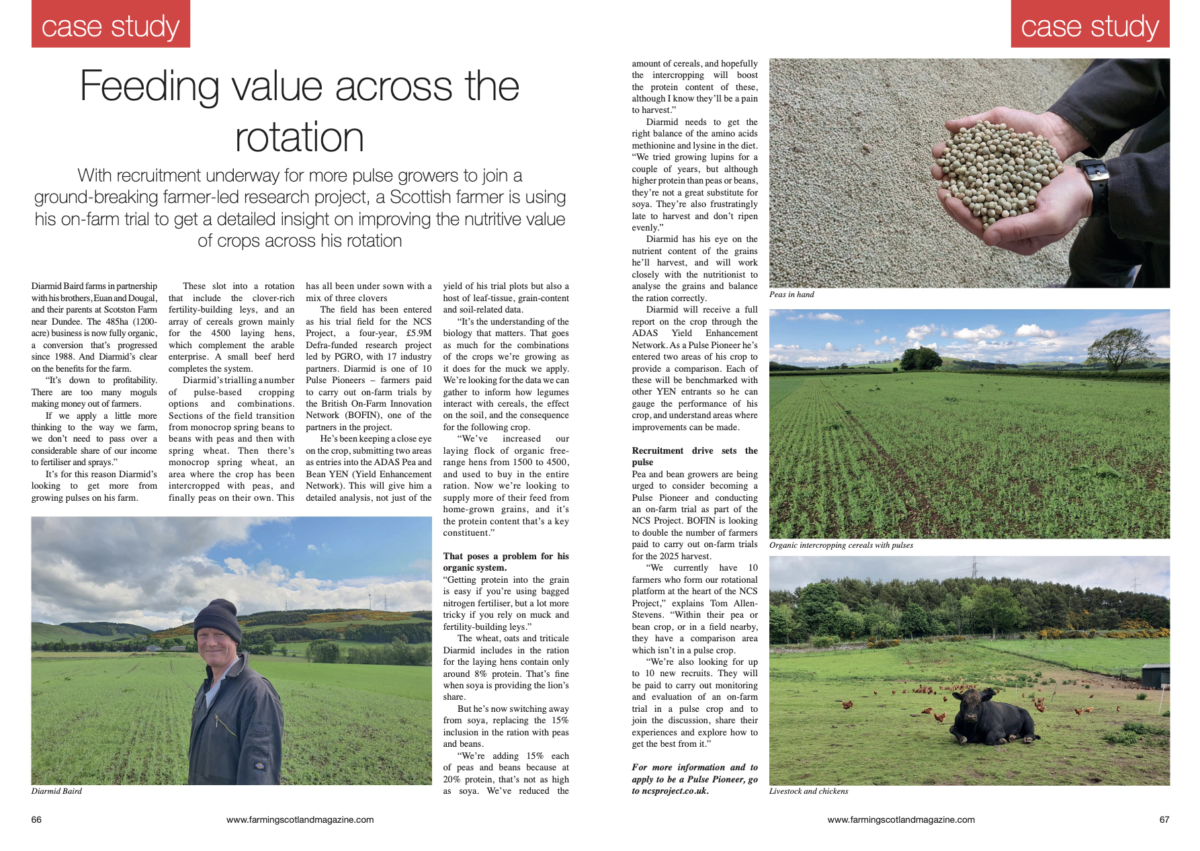
Farming Scotland explores how Diarmid Baird is getting more from the pulse crops on his farm near Dundee. For the full article (on pages 66-67) click HERE.
Exploring the potential of pulses in the dairy cow diet
Published in British Dairying Sept 2024
A £5.9m project investigating the potential of pulses in the UK embarks on feeding trials this autumn, to explore how UK-grown faba beans can replace soya in the dairy cow diet. British Dairying explores the project’s findings so far and looks ahead at the next step.
Growing more pulse crops in the UK would generate benefits across the dairy and arable sectors including significant carbon savings, according to the partners behind the Nitrogen Efficient Plants for Climate Smart Arable Cropping Systems (NCS) project.
Led by PGRO the project is funded by Defra through the Farming Innovation Programme, delivered by Innovate UK. A four-year £5.9m research programme, the NCS project involves 17 cross-sector partners and around 200 farmers. It was launched in 2023 with the ambition to increase pulse and legume cropping in arable rotations to 20% (from the current 5%) and replace around 50% of imported soya meal in pig, poultry and dairy herd rations with home-grown legumes (peas and beans).
Legumes’ ability to fix nitrogen from the environment and leave behind residual levels for subsequent crops can reduce arable units’ reliance on synthetic nitrogen inputs. Using those crops to partially or fully replace soya bean meal in animal feed would bring further significant gains for the livestock sector too, but the impact on productivity and carbon footprint for both growers and users of pulses has not been so well understood, until now.
Farm trials
The project’s 10 ‘Pulse Pioneers’ have been running on-farm growing trials coordinated by the British On-Farm Innovation Network (BOFIN) to evaluate the gains from growing pulses – to the health of their soil, subsequent crop and bottom lines.
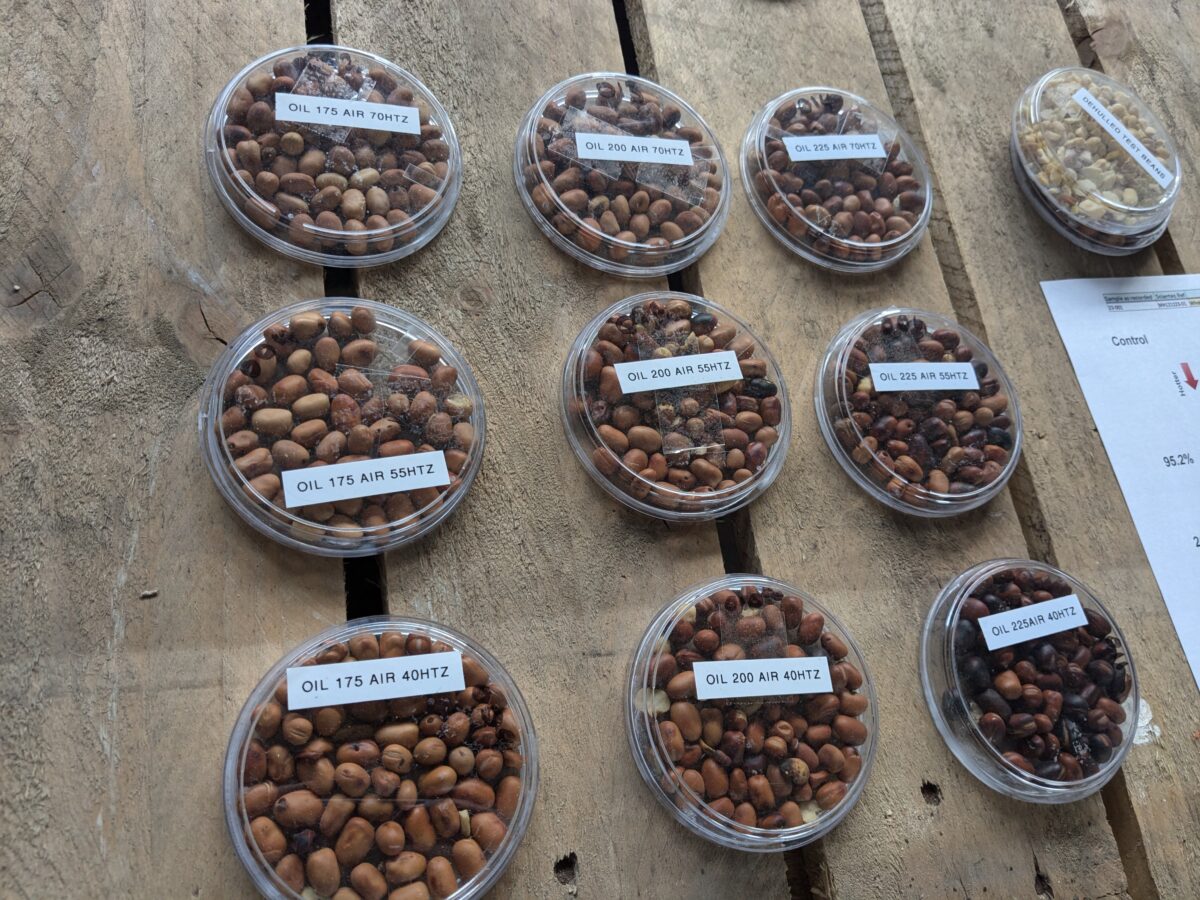
Meanwhile, other partners are developing processes that improve the nutritive value of homegrown pulses particularly beans. This work includes a study of farm-based heat treatments and dehulling processes by Scunthorpe-based McArthur Agriculture. The systems being developed have the potential to create a more local and resilient protein supply chain, says John McArthur.
Faba beans could offer a viable soya replacement in dairy cow diets
“We’ve been testing two toasting machines – one electric and one oil powered – and evaluating the nutritional composition of beans roasted at different temperatures and for different lengths of time.”
Both Mecmar manufactured machines produce similar results, but initial work suggests the electric version might be most suitable for on-farm toasting. “If farmers can process the beans themselves, it would really build the case that faba beans can provide a viable replacement for soya.”
Protein quality
Toasting beans improves the quality of the protein, explains nutritionist and consultant Andy King who has been working on the project with another partner, First Milk.
Andy says: “Protein quality is particularly important for high yielding dairy cows in early lactation as they need protein to reach the hind gut and not be degraded in the rumen first.”
Density of protein is also important, he adds. “A benefit of faba beans is that they also provide a good starch component to the diet which means we can take out cereals or maize to make more space for beans.”
This autumn First Milk is embarking on feeding trials. First Milk’s Regenerative Programme Manager Roger Briddock explains that the processor ran a preliminary trial with one farm in 2023, which was a midway through its autumn calving block when it started. The plan now is to step that up to 10 farms representing different systems for 2024-5.
“In the first trial we replaced soya gradually with faba beans. It all went to plan, and our results showed that the cows performed just as well after replacing the soya with beans and adjusting the ration,” explains Roger.
Roger Briddock, First Milk
In this first trial fresh beans were crushed and added to the herd’s total mixed ration (TMR), but the 2024-5 trials will evaluate other feeding systems and introduce toasted beans.
Andrew says: “Part of my role is developing a grid to identify where the yield break point is for toasted versus non-toasted beans so we can see where we can use fresh beans whilst maintaining cow performance and health.”
Processing costs
This will be particularly useful given the current low availability of toasted beans and the added cost due to the additional processing, he added.
“Overall, the most difficult part of using beans in the dairy cow diet is lack of availability,” adds Andrew. “We just don’t have the home-grown supply at the moment, which is one reason why this project is so important. We need arable farmers to see that there is an opportunity here.”
Roger explains that First Milk will be looking to run the trial on 8-10 farms over two years. “We will choose the farms carefully. Participants need to have meticulous and consistent management and be committed to the aims.”
First Milk will take silage analyses before any changes are made to the diet and will need access to the herd’s milk recording and metabolic testing data so that any changes from the changes can be scrutinised.
The beans will be sourced within the project where possible and (as with the ‘Pulse Pioneer’ growers) participants will take carbon baselines of their unit before and after with Farm Carbon Toolkit.
Roger adds: “Being part of the NCS project is really important to us. We always seek holistic solutions that are aligned with our regenerative ethos. Accredited deforestation free soya is only a partial solution to ensuring dairy cow diets are more sustainable.
Regenerative farming
Our strategy is to focus on more milk from forage and hence reduce the need for supplementary feeds, whilst ensuring that those feeds are grown regeneratively and wherever possible from UK farms.
“A joined-up supply-chain approach to the current irregularity of the demand for and supply of UK beans could provide a win-win for arable and dairy farmers alike.”
The farmers who take part will be invited to farm visits and meetings and will have full support from the processor. They will also be encouraged to discuss their experiences with each other and outcomes will be shared far and wide, he concludes.
“We won’t be keeping this information to ourselves, we want it to benefit the wider industry. Our belief is that cow performance can be maintained, whilst improving the sustainability and transparency of feed purchased for milk production.”
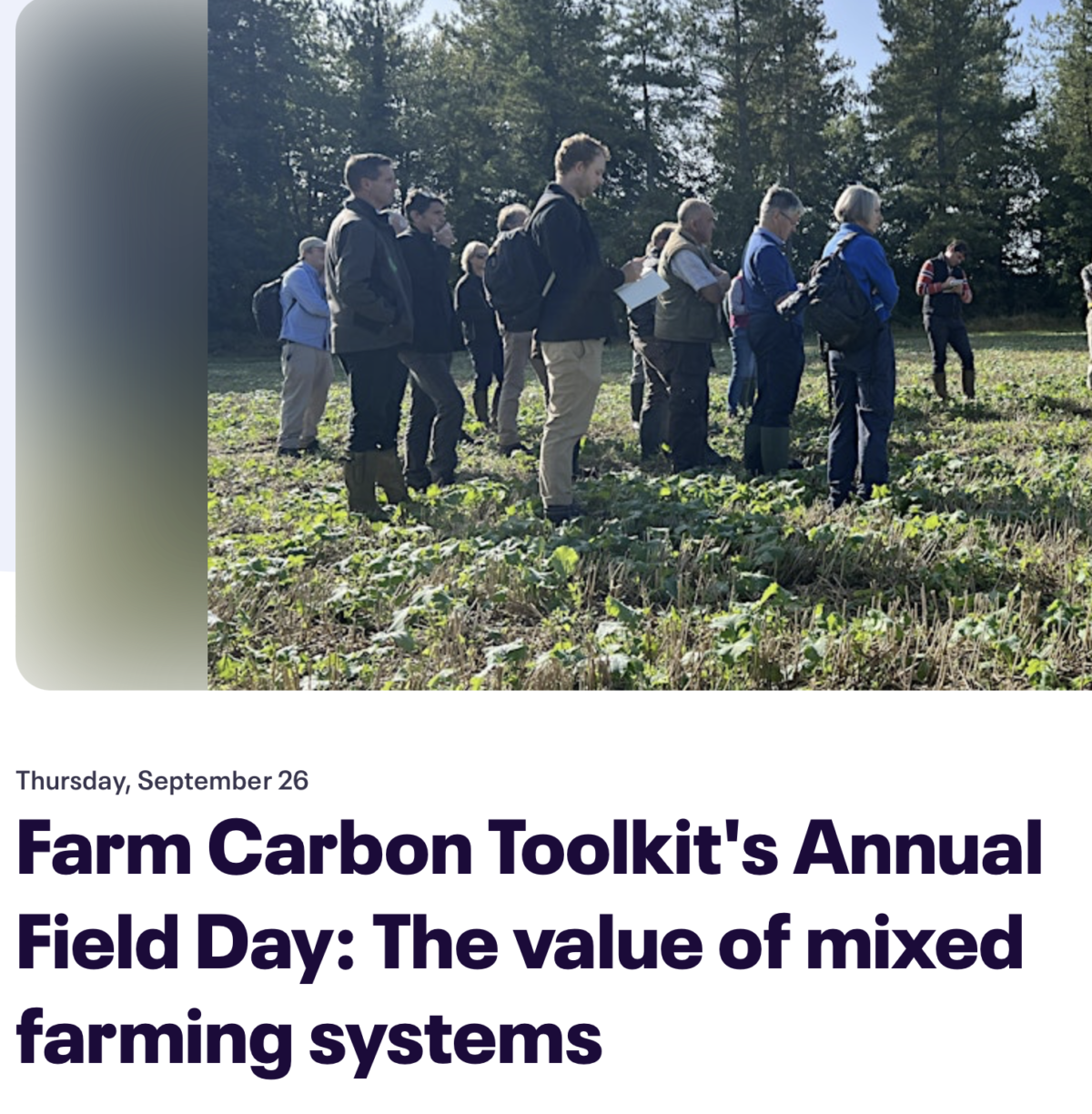
Farmers are invited to find out more about the Farm Carbon Toolkit calculator via online drop-ins or at a field day.
These will particularly be of interest to Pulse Pioneers whose involvement in the NCS Project includes completing a carbon footprint of their farms, but are open to all farmers who are keen to learn more.
Those attending the FCT field day in Herefordshire on Thursday September 26 will hear from farmers and the FCT team about how farmers are reducing greenhouse gas emissions while building soil health and business resilience.
Amongst the farmer speakers is host Billy Lewis, Ed Horton, Angus Gowthorpe, Thomas Gent and Tom Burge.
For more information or to book a ticket click here
The online drop-in sessions provide an opportunity to find out how to use the calculator, how to fill in a report and how to get the most from it.
To attend the online drop-ins simply click the links below at the appropriate time: