
The NCS Project –
Work Packages
Work Package 1
Environmental, climate, social and economic impact evaluation (Life Cycle Analysis, data integration and data management)
Lead: James Hutton Institute
Contributors: Farm Carbon Toolkit, McArthur BCD, PGRO
Work Package 2
Active Farm Case Studies (Nitrogen Use Efficiency (NUE) arable and vegetable farm case studies – farm network data collection)
Lead: ADAS
Contributors: BOFIN, The Allerton Project, LEAF, Wessex Water, Agrii, PGRO, Farm Carbon Toolkit and PBL Technology
Work Package 3
Experimental platforms: Nitrogen Use efficiency in arable and vegetable rotations
Lead: PGRO
Contributors: James Hutton Institute, Cranfield University, GWCT, Agrii, PBL Technology
Work Package 4
End use in animal feeds (development of new treatment technology, replacement of soya in diets and livestock sector data collection)
Lead: McArthur BDC
Contributors: SRUC, Kelvin Cave, First Milk, LC Beef & Nutrition, AB Agri, PGRO and Farm Carbon Toolkit
Work Package 5
Environmental, social and economic cost benefit analysis
Lead: PGRO
Contributors: Farm Carbon Toolkit, LEAF and McArthur BDC
Work Package 6
Community engagement, dissemination and knowledge exchange
Lead: BOFIN
Contributors: All
Work Package 1

This is one of the project partner logos.

This is a project partner logo.

This is a project partner logo.

This is a project partner logo.
Work Package Objectives:
1: WP1 will use data gathered from all the other work packages for impact evaluation crop/field- and farm-levels (WP2). This analysis is informed by strategic research data acquired from experimental data gathered at farm, field, and ex-situ scales (WP3), plus data from animal feeding trials (WP4).
2: Ensure knowledge-flow and -quality from existing databases, and project Case Studies in WP’s 2-4. WP1 will be informed via feedback on data and data-synthesis provisions made to WPs 5 and 7. WP1 will also be informed by discussion with external stakeholders via WP6.
Farm level assessment will be carried out using the Farm Carbon Tool (FCT) (WP2). Insights gained at the levels of crop (WP2 & 3) and animal feeding (WP4) will help develop and advance capacities of the Farm Carbon Calculator and inform overall national system level synthesis.
In addition to the assessment of global warming potential (GWP), the WP1-based Life Cycle Assessment exercise will account for additional environmental impact categories such as for eutrophication, acidification, and land use. Data on ecosystem functions (or services) will also be provided to WP1 from: farmers field trials (WP2); data from strategic science studies (WP3), including long term field-scale legume-based platforms (e.g., Hutton’s Centre for Sustainable Cropping), ex situ experiments; and animal feeding-trial data (WP4).
The impact evaluation of scaling-up legume cropping and legume-based cropped systems to national levels and at various scales will also be assessed using a derivative of the new biophysical model, GOBLIN (Duffy et al., 2021, 2022). Here, the crop, field, and national scenarios on the balance of feed-fertiliser-energy usage from WP1, will inform the whole system level syntheses to be carried out in WP5.
Important data (e.g., emission factors, climatic variables, market options) will be integrated into a suite of important tools LCA, GOBLIN, and FCT tools, adding considerable value to these tools and consolidating their existing practical value as ‘state-of-the-art’. This will inform best practice for optimised management of existing cropped systems across scales, from farm to governance, and with respect to a range of key metrics (GHG, economics, other important ecosystem services).
Towards these ends the four (final) public project reports (D1.2 -D1.5), will be exploited to develop a series of: i: technical notes for practitioners (farmers, feed specialists) (feed into WP’s 5 and 6); ii: Policy Briefs, for decision makers at local and national levels (feed in to WP5); iii: scientific publications in peer-reviewed journals, for the research community; and iv: all these dissemination routes will be drawn upon to generate popular public and trade-press articles in plain English too.
Work Package 2

This is one of the project partner logos.
This is one of the project partner logos.

This is a project partner logo.
This is a project partner logo.

This is a project partner logo.

This is a project partner logo.
This is a project partner logo.

This is a project partner logo.

This is a project partner logo.
Work Package Objectives:
1: Validation of on farm practices using historic farm data
2: Generate real farm data, using systems change, based on the hypothesis that increased pulse cropping can substantially reduce carbon emissions from agriculture
3: Determine the effect of additive legume crops in rotations on successive non-leguminous crops such as cereals
4: Determine N losses to water from existing data
5: Incorporate farm data into the Farm Carbon Toolkit
This work package will focus on data collection from networks of existing farm practices utilising ADAS YEN’s, and the LEAF and BOFIN farmer networks (approximately 200 farms in total).
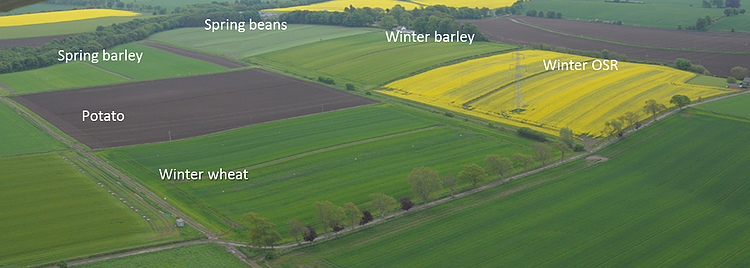
The LEAF and BOFIN networks will be used for validation of on farm practices using historic farm data and using system changes to generate real farm data based upon the hypothesis that increased pulse cropping can substantially reduce carbon emissions from agriculture. Selected case studies will make changes to their cropping, demonstrating the opportunities for reduced N usage, reduced GHG emissions, reduced costs, increased sustainability, lowered environmental impact, and improved water quality. Included in these studies will be the role of catch/ cover, legume fallow and bicropping in relation to these factors.
Work Package 3
This is one of the project partner logos.
This is a project partner logo.
This is a project partner logo.
This is a project partner logo.

This is a project partner logo.
This is a project partner logo.
Work Package Objectives:
1: Identify and quantify the resilience of soil GHG emissions of legume-based cropping systems under climate change
2: Provide a baseline and historical context to quantify the combined effect of management and legume inclusion in the crop rotation on GHG emissions, carbon footprint, environmental impact and economic returns
3: Evaluate the relative GHG emissions, soil health and N benefits of legumes in rotations
Cranfield University aim to identify the mechanisms and resilience of soils for GHG emission reduction, linking nitrogen and carbon cycling, and benefits to soil health where legumes have been included in crop rotations as cash and/or cover crops.
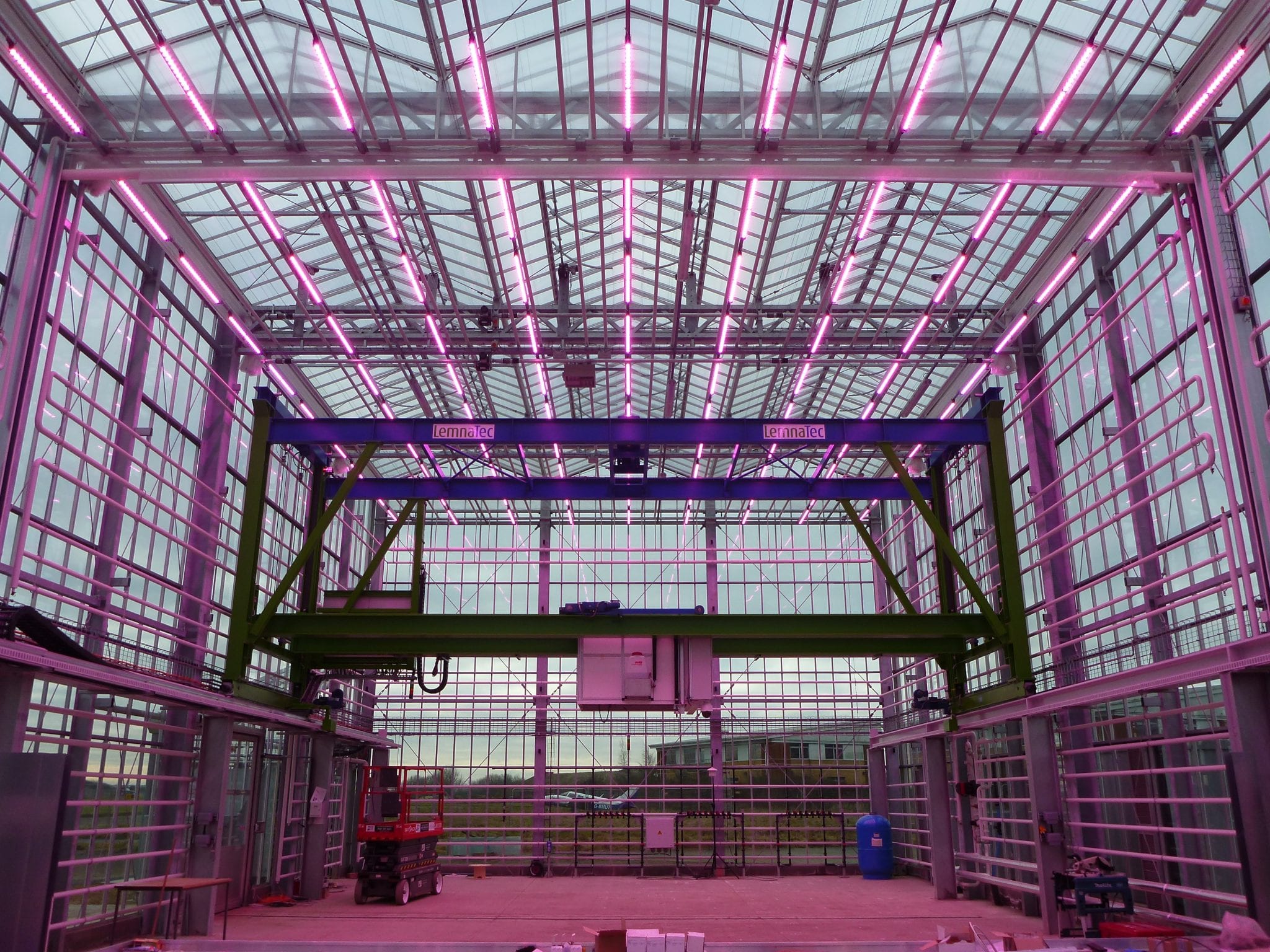
Mechanisms: Test the following research question: Crop rotations that integrate legumes result in greater nitrogen use efficiency and soil carbon storage potential, resulting in lower GHG emissions. An experimental platform of soil planted with legume and cereal crops, with 3 rotations over 2 years under accelerated growth conditions in a controlled glasshouse environment will be evaluated. This experimental platform will use large soil modules (1m cubed) to enable replication of plant-root-soil conditions at near-field scale. During the experiment, the interaction of N and C pools and GHG emissions will be determined to understand the plant-soil interactions resulting in improved N use efficiency, soil carbon storage potential and impacts on GHG emissions. The insights and expertise from WP2 project partners with active field trials will guide selection of appropriate crops, soil type and inorganic N requirements, so that results are transferable to a UK farming context. The experiments will be set up in controlled conditions using the Innovate UK Agri-tech centre CHAP glasshouse and additional Cranfield University laboratory facilities.
Resilience: Test the following research question: Soils with legumes integrated into crop rotations have greater resilience to climate change pressures shown by reduced response in GHG emissions under climate warming and drought. Soil will be obtained from ongoing trials (from the JHI Sustainable cropping long term platform (3.2) and farm trials in WP2 with legumes already integrated into rotations as cash or cover crops. This will allow a space-for time substitution to investigate the resilience of soil under different legume types and length of rotations. We will also use soil from the priming experiment (cf mechanisms) to identify interactive effects of short rotation legumes in cropping systems and their resulting resilience under climate warming. The experimental platform will be a pot trial to determine the changes in GHG emissions under elevated temperatures and reduced soil moisture on multiple soil types, legume type and length of rotation. The experiment will take place in controlled growth rooms and incubators at Cranfield University.
JHI Centre for Sustainable Cropping long-term platform was established in 2009 at Balruddery Farm near Dundee provides a whole systems framework for designing and testing cropping systems to optimise yield and environmental health for long-term food security. The aim is to enhance and utilise biodiversity for ecosystem function and internal regulation of system processes (population regulation, carbon turnover and nutrient cycling, detoxification, productivity), thereby minimising reliance on agrochemical inputs and increasing the resilience of crop production systems. With less inputs, better resource use efficiency and fewer losses from the system, the environmental footprint is reduced while maintaining high quality yields comparable with conventional practice.
The 42-hectare field site and associated datasets are available on an open access basis and will be used here to provide:
1: A baseline and historical context to quantify the combined effect of management and legume inclusion in the crop rotation on GHG emissions, carbon footprint, environmental impact and economic returns. These measures, together with results from carbon footprint calculators applied to the CSC data will be used to calibrate and scale results against outputs from commercial farm sites in WP2 and provide production scale data on key systems indicators for parameterisation (and/or validation) of the LCA in WP1.
2: Soil from two distinct cropping systems for experimental work in 3.1. The integrated cropping system has been in place for 12 years and includes a range of best practice options to optimise system processes: Increased organic matter content (crop residue incorporation, green waste municipal compost amendments, cover cropping and companion crops); Reduced soil disturbance (no-till cereals and beans, non-inversion till oilseed and full cultivation 1 year in 6 for potato); Optimised fertilisation (BNF from legumes, cover crops to reduce losses, soil nitrogen supply calculations and timings adjusted seasonally, resulting in 30-40% reduction in mineral inputs); Integrated Pest Management (forecasting, threshold monitoring, biofortification) to minimise reliance on crop protection inputs.
This composite treatment is applied to one half of each field in a split-field design to compare system properties over multiple 6-year rotations against standard commercial practice, implemented in the other field half. Relative to the conventionally managed rotation, integrated soils have lower bulk density, greater organic matter content, pore size diversity, microbial biomass, mycorrhizal hyphae and earthworm abundance, along with faster nutrient turnover and decomposition rates.
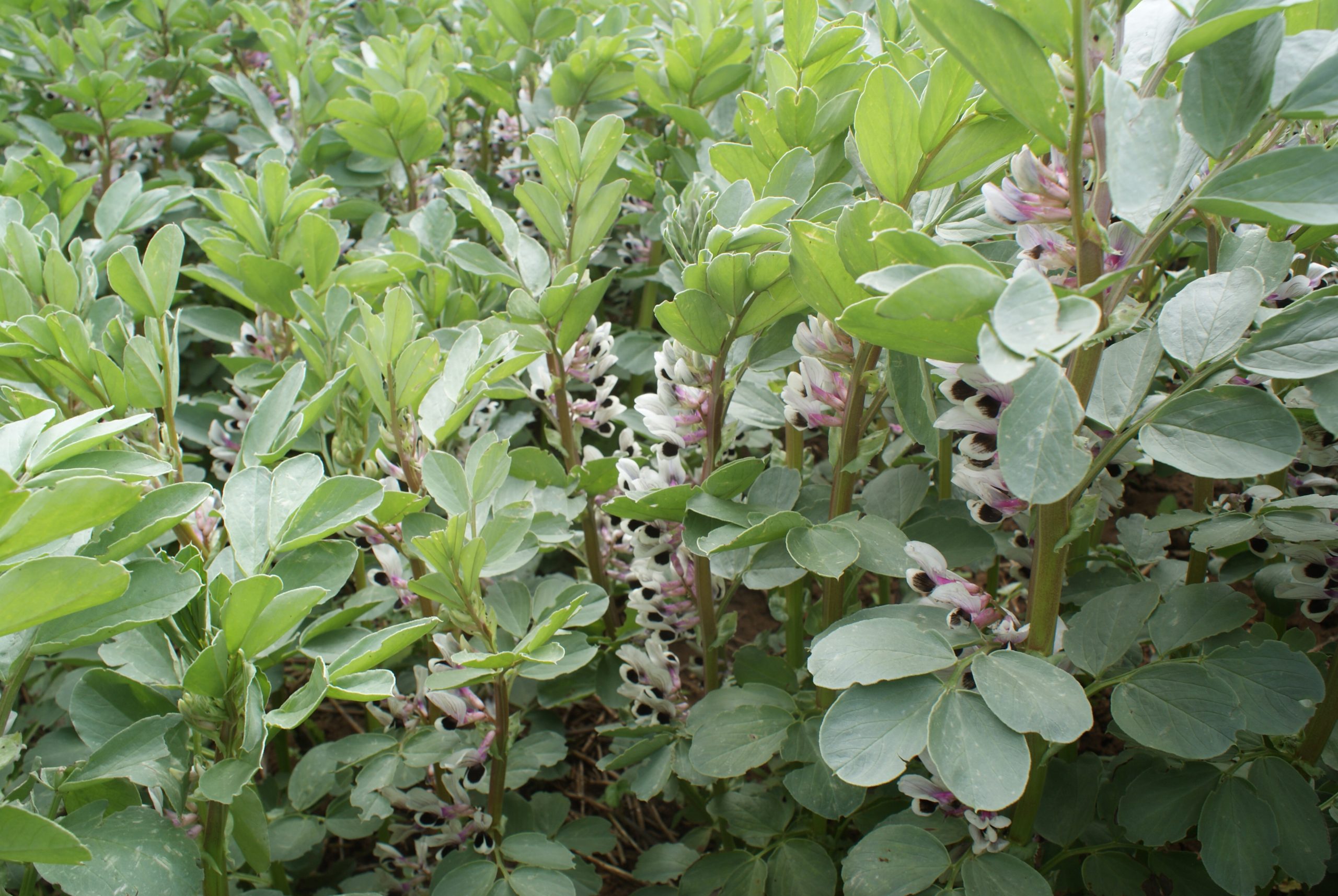
PGRO aim to evaluate the relative GHG emissions (with GWCT), soil health and N benefits at the PGRO experimental trial ground in Lincolnshire of three legume crops (field beans, combining peas, lentils or vining peas) and a comparable cereal/ OSR crop, established at our 10-hectare site each year.
The PGRO site is part of a large commercial farm (Beeswax Farming) and rotated as part of the farm rotation (cereals, potatoes, field beans, oilseed rape, CS). As such, PGRO will collect data from the last 5 years trial ground sites to determine longer-term soil N supply following different legumes, taking into account intermediate farm inputs and cropping. Historic data for inputs, cropping and yield will be collected from the farm managers to evaluate the historic contribution of legumes in the rotation. Evaluation of soil health will be undertaken using standard measures (SOM%, earthworm content, nutrition, pH, VESS).
Work Package 4
This is one of the project partner logos.
This is a project partner logo.

This is a project partner logo.
This is a project partner logo.

This is a project partner logo.

This is a project partner logo.
This is a project partner logo.
Work Package Objectives:
1: Conduct meta-analysis on pulses, including treatment techniques, for poultry, ruminantsand pigs to identify optimal inclusion levels, potential to replace soybean meal and impact on performance and quality
2: Understand the current commercial usage of homegrown legumes and pulses in animal feeds and barriers to their wider adoption by both compounders and home mixers
3: Assess and optimise the production, harvesting, processing and storage of nitrogen efficient plants for use as animal feed
4: Conduct feeding trials under both controlled and commercial conditions to assess animal performance, carbon impact and economics of replacing soybean meal with homegrown legumes and pulses
5: Develop best practice protocols for growing, harvesting, and preserving homegrown legumes and pulses, identifying the extent to which soybean meal may be economically substituted for all land-based farmed animal species and the carbon impact
A meta-analysis will be conducted for the use of faba beans in animal feed diets, including techniques for poultry, ruminants, and pigs, to identify optimal inclusion levels, potential to replace soybean meal and impact on performance and quality. Research will be undertaken to better understand the current commercial usage of homegrown legumes and pulses in animal feeds, and barriers to their wider adoption by both compounders and home mixers.
Benchmarking of carbon, financial and environmental situation of farms will be conducted prior to feeding trials and a carbon and economic assessment of standalone value-added processes. Changes resulting from new technology and best practice will be measured against the benchmark.
The production, harvesting, processing and storage of nitrogen efficient plants for use as animal feed will be evaluated and optimised including: assessment of harvest efficiency of forage headers for whole crop legumes; studies of additive efficacy for ensiling and preserving whole crop legumes, monitoring crop quality and comparing measurement techniques for ensiled crop quality; the effectiveness of farm-based heat treatment, de-hulling and a combination of both processes on the nutritive value of fava beans for ruminants and monogastrics.
Feeding trials will be conducted under both controlled and commercial conditions to assess animal performance, carbon impact and economics of replacing soybean meal with homegrown legumes and pulses in: Beef calf, grower and finisher diet trials on 10 commercial farms; Lactating dairy cow trails on 10 commercial farms; Broiler trials on 4 commercial farms and under controlled conditions, including digestibility trials; Layer trials on 3 commercial farms. Analysis of trials and processes will lead to the production of external reports and best practice guidance.

This WP will also establish a farmer and stakeholder KE forum specifically for farm trials and to disseminate information from animal feed and feed processing trials.
Work Package 5
This is one of the project partner logos.
This is a project partner logo.
This is a project partner logo.
This is a project partner logo.
Work Package Objectives:
1: Establish the best scenarios for delivering optimum environmental impact and financial return on investment for the farmer/grower
2: Establish the carbon cost benefit analysis of transitioning to increased production of legumes and pulses in the UK, alongside changes in livestock diets in favour of home-grown legumes and pulses and away from soya bean meal
External and project data in WP’s1, 2, 3 and 4 will be collated and will contribute to WP5.
The analysis at farm level will be done across a whole rotation, modelling the crops to be grown over the rotation, identifying a range of possibilities with financial and carbon modelling. The physical data to be included will be informed by the farmers involved in the project from BOFIN, LEAF and FCT where they are identified as having either changed practice or already included legumes/ pulses in their rotations alongside other sources of farm business data.
Socio-economic Impact Assessment will be carried out based on data and insights achieved within WP1, as informed by the other WPs. The assessment will consider the impact of proposed changes across the value chain, including the impacts of implementing new processing capacities (on animal diets), large-scale replacement (of imported grains), and displacing of other non-legume crops in the rotation. PGRO (via subcontractor) will complete the financial modelling and FCT will then take these models and use the Farm Carbon Calculator to determine the impacts on both emissions and sequestration. The impact on overall emissions for livestock farmers from moving away from soya inclusion in livestock diets will be modelled separately for ruminants and monogastrics. These calculations will be informed by the project’s work to increase the understanding of the impact on overall farm carbon footprint of including legumes and pulses in crop rotations including these new factors where they are credible. For monogastrics there is the additional factor of suitability and need for processing of pulses and legumes alongside the impact of such diet change on animal performance which needs to be better understood for poultry with suitable physical performance metrics adopted.
Detailed cost benefit analysis will determine the full range of potential pulse inclusion into the UK arable farming rotation. We will then identify the total change in cropping and harvest, and its location throughout the UK. We will treat the UK as a single farm for this analysis, also identifying that some arable land is in livestock or dairy rotations, so less inclined to harvest crops for sale. The large amounts of data on the change of carbon emissions on farm generated by the initial work packages in this study will enable us to calculate the detailed impact of carbon saving on a national basis. Farm financial models, using partial budgets, will demonstrate the impact of switching from a cereals-led rotation to one with substantial amounts of pulses and impacts nationally as well as on farm. Other supply businesses will be impacted, from sprayer machinery and agrochemical firms, cultivation equipment and other tools for managing crops, providing opportunities for new tools and cultivation techniques. These impacts will be calculated and demonstrated at national level. The increase of pulse production across the UK will generate new processing opportunities. Whilst it is difficult to estimate the entrepreneurial spirit of UK businesspeople, an estimate can be made of the opportunity. The costs of loss of some of the existing infrastructure designed to process cereal crops will be examined, either with a view of its re-deployment or reduced output.
The study will examine how the UK food supply chain could adapt to incorporate the additional pulse crop, reduction of other arable crops and any other special impacts at farm level. Secondary benefits will emerge. For example, health of the population. The study will identify ways to raise the overall health of the population, by identifying small adjustments to food ingredients. Data generated in WP4 will be used to calculate the likely reduction of lost workdays through reduced ill health.
A feasibility report will be produced examining the exploitation of processes investigated in WP’s 2, 3 and 4, and end uses. A policy report will be produced.
Work Package 6

This is one of the project partner logos.
This is one of the project partner logos.

This is a project partner logo.
This is a project partner logo.

This is a project partner logo.
This is a project partner logo.
This is a project partner logo.

This is a project partner logo.

This is a project partner logo.

This is a project partner logo.
This is a project partner logo.

This is a project partner logo.
This is a project partner logo.
This is a project partner logo.
This is a project partner logo.
This is a project partner logo.
Work Package Objectives:
1: Build awareness of the Pulse-PEP platform and related knowledge resource
2: Grow membership of Pulse-PEP >500 farmers, scientists & KE managers
3: Provide each farmer in innovation community at least five ‘opportunities to see’ (OTS) outcomes, updates and insight on the project for each year of the project
4: Use at least five communication channels to engage the innovation community, with at least one OTS per channel per year
5: Engage a media partner (farming press) who will commit to giving the project coverage
Target audience: Farmers, agronomists, vets (as an audience and as a route to farmers), scientists and tech innovators, knowledge exchange and technical managers, supply chain representatives
Communication channels: Pulse-PEP (through discussion, dissemination & related activity), the farming technical press (through feature articles and press releases), social media (through coordinated campaigns), farming technical events (through stand presence and seminar presentations), direct communications (e.g., pdf summary info through in-house mailing lists from Project Partners), webinars (WP’s activity, presentations and opportunity for discussion), website (dedicated site for project – may be part of Pulse-PEP)
Content and contributors: Case studies and farm visits (from WP’s), interpretation of key findings, trial outcomes and results, life cycle analysis and data analysis (WP1), N use efficiency experimental platforms (WP3), end use in animal feeds (WP4), environmental cost-benefit analysis (WP5)
Main activity (co-ordinated by BOFIN): Press releases (x1 per quarter), features written and submitted to key target publications (x3 per quarter), media partner liaison, knowledge exchange literature – easy-read documents or web pages summarising outcomes/results (x1 per quarter), attendance and presentations at farmer engagement events (e.g., Cereals, CropTec, DairyTech, Agri-Scot) (x6 per year), annual open day (hosted by a Pulse Pioneer), set up and maintain website, social media engagement (Facebook, Twitter, LinkedIn)
