New pea and bean benchmarking guide to help growers unlock crop potential
A pea and bean benchmarking guide designed to help pulse growers assess crop development, optimise management decisions and improve crop performance will be launched at the Cereals event by partners in the NCS project.
Developed by researchers from PGRO and ADAS as part of the NCS project, the guide summarises the development of well-performing crops monitored through the Pea and Bean Yield Enhancement Networks (YEN). It brings together key measures of crop growth and performance into a set of practical developmental benchmarks that growers can use to compare how their own crops are progressing throughout the season.
The guide is intended to support both new and experienced pea and bean growers by enabling them to compare crop performance against development observed through the YEN programme.
Erin Matlock, PGRO research agronomist, said: “There’s no single formula for growing high-performing pulse crops, but these benchmarks give growers and agronomists a practical way to compare crop progress against the development patterns typically seen in successful pea and bean crops. By doing so, they can identify where seasonal conditions or management decisions may have influenced performance, while also highlighting opportunities to refine management in future seasons.”
Tom Wilkinson, senior research consultant for ADAS, said the publication – alongside the PGRO agronomy guide and the BASF-sponsored growth guides – brings the guidance available for peas and beans in line with that available for cereals and oilseed rape.
“It’s a great outcome from many years of support and monitoring by the pulse industry and YEN growers. One thing that’s particularly exciting is that because the measurements were taken through the YEN, most of them should be replicable on individual farms too.
“We hope it supports experienced growers and also encourages new pulse growers to give peas and beans a try by removing some of the mystery around how they usually develop over the season.”
Free copies of the guide will be available at the Cereals Event from participating project partners, including PGRO, ADAS and BOFIN. A digital version is available to view and download below.
Yorkshire farm to showcase beans as sustainable livestock feed
Yorkshire farmer Richard Barker is inviting visitors to his farm near Richmond on Tuesday 2 December to see how home-grown beans can cut feed costs, boost sustainability and reduce reliance on imported soya.
The From Field to Feed open day is organised by the NCS Project, in which Richard is a ‘Pulse Pioneer’trialling wholecrop beans in his beef herd’s diet.
Visitors will discover how beans are grown, harvested, stored and fed on farm – and how they can provide a high-protein, home-grown alternative to bought-in feeds.
Richard said: “As livestock farmers we need to balance cost, sustainability and performance. Wholecrop beans have proved a valuable option for my business – they fit well in my rotation, yield well and provide a reliable protein source for my cattle. I’m looking forward to sharing my experience and hearing from others.”
The open day will start at 10am at the Black Bull Inn, Moulton (DG10 6QJ) with presentations from leading experts including PGRO’s Erin Matlockon the agronomy of successful bean production, and an update on varieties from Limagrain. Michael Carpenter from Kelvin Cave Ltd will share insights into harvesting, processing, preservation and storage, and livestock nutritionist Lizz Clarke will tackle bean nutrition and ration formulation.
After lunch, a tour of Richard’s farm will include a look at the wholecrop bean storage, along with an opportunity to discuss feeding results and practical adoption with specialists.
The event is free to attend, but please register HERE.
Industry leaders to explore soya alternatives at national conference
The From Soya to Sustainability conference returns to Peterborough on Wednesday 28th January 2026, bringing together leaders from across the agri-food sector to accelerate the shift towards a more sustainable, secure, and resilient UK food system.
Building on the momentum of last year’s event, the 2026 conference will spotlight the environmental, economic, and nutritional benefits of integrating pulses – especially faba beans – into livestock feed. Hosted by partners in the NCS project at the KingsGate Conference Centre, Peterborough, the event will explore how reducing reliance on imported soya can cut carbon emissions, enhance soil health, and contribute to national net zero goals.
“We know that imported soya presents a sustainability challenge, but we also know the solution is already in our fields,” said Roger Vickers, CEO of PGRO and NCS project lead. “This conference is about sharing practical, science-backed strategies to increase production of UK-grown pulses to feed our livestock, which will create lasting impact across the supply chain.”
Industry leading speakers will tackle topics including:
How faba beans and other UK-grown pulses can reduce the quantity of imported soya needed for livestock feed, while also bringing environmental benefits.
The role of sustainable feed in reducing Scope 3 emissions, which account for up to 70% of food sector carbon footprints*.
New data from on-farm trials and collaborative projects driving change in the UK and beyond.
The power of cross-sector collaboration in building more transparent and sustainable supply chains.
John McArthur of McArthur BDC, one of the NCS partner organisations added: “Every tonne of UK-grown pulses we use in place of imported soya is a step towards a more resilient, lower-carbon future.
“It is vital we bring everyone from across the supply chain together with policymakers and environmentalists to work towards this shared aim.”
The conference will be of particular value to food industry and retail professionals, farmers, animal feed manufacturers and nutritionists, policymakers, environmental NGOs and other agri-food professionals.
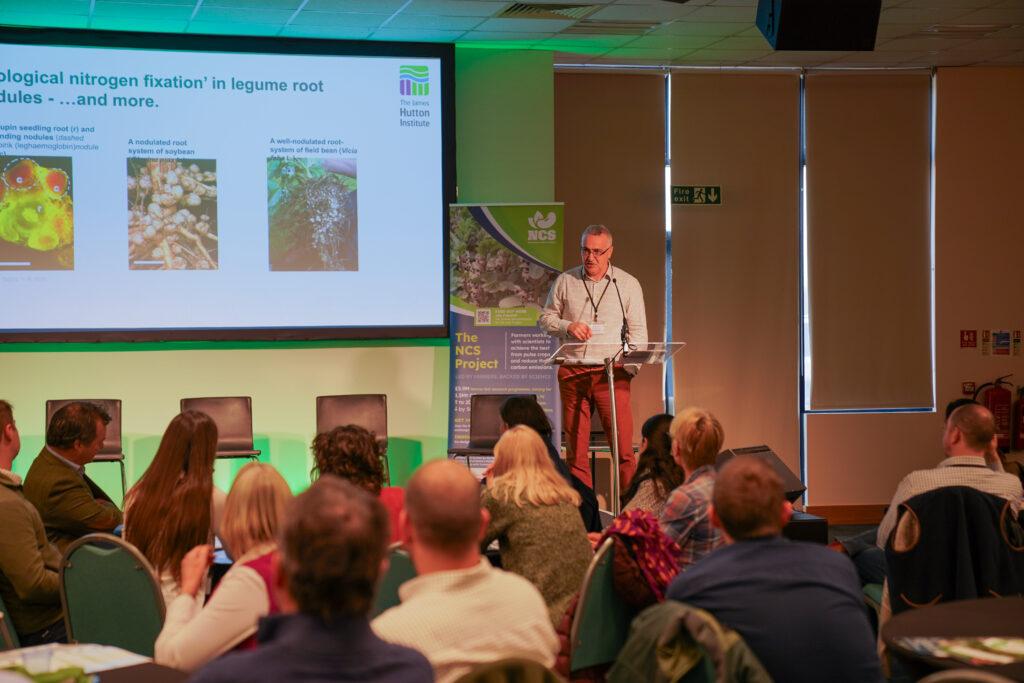
Including legumes in the arable rotation clearly has the potential to lower environmental footprints, said Prof Pete Iannetta of The James Hutton Institute. “It’s not just greenhouse gases. There’s water quality improvement to be gained and a whole host of other benefits.”
Citing NCS research on unique long-term crop rotation data from the ‘Centre for Sustainable Cropping’, which compares spring barley crops that had been preceded by either spring beans or spring barley, he said: “There was a 1.2t/ha yield uplift in the barley following beans, despite synthetic nitrogen fertiliser use reductions in-line with RB209 recommendations. The environmental impact reductions were apparent despite a winter fallow after the beans.
Prof Pete Iannetta
“That’s interesting because the bean nitrogen-rich residues left in-field after their harvest would have been all-but lost by the time the following spring barley crop was sown. We need more data on that, but I don’t believe the barley benefits are simply due to soil nitrogen levels. There are likely changes to the soil structure, and we know already that beans support a ‘symbiotic microbiome’ – changing the diversity of the microbes associated with plant roots to more-favourable types.”
Consistency of performance of field beans is “a bit of a nightmare” admitted Agrii agronomist Todd Jex. “A lot of the potential is lost in the very early stages. You cannot grow them tightly in rotation because of build-up of soil-borne pests and diseases and you need to consider all three aspects of soil health – physical, chemical and biological.”
When it comes to putting the crop in the ground there are four considerations: drilling date, variety, establishment system and seed rate. Todd stressed the importance of early drilling.
“As soon as wheat drilling is finished, we’ll put winter beans in, from the middle of October onwards.” Spring beans could be drilled in January, he added. “The earlier the better.”
Pulse Pioneers
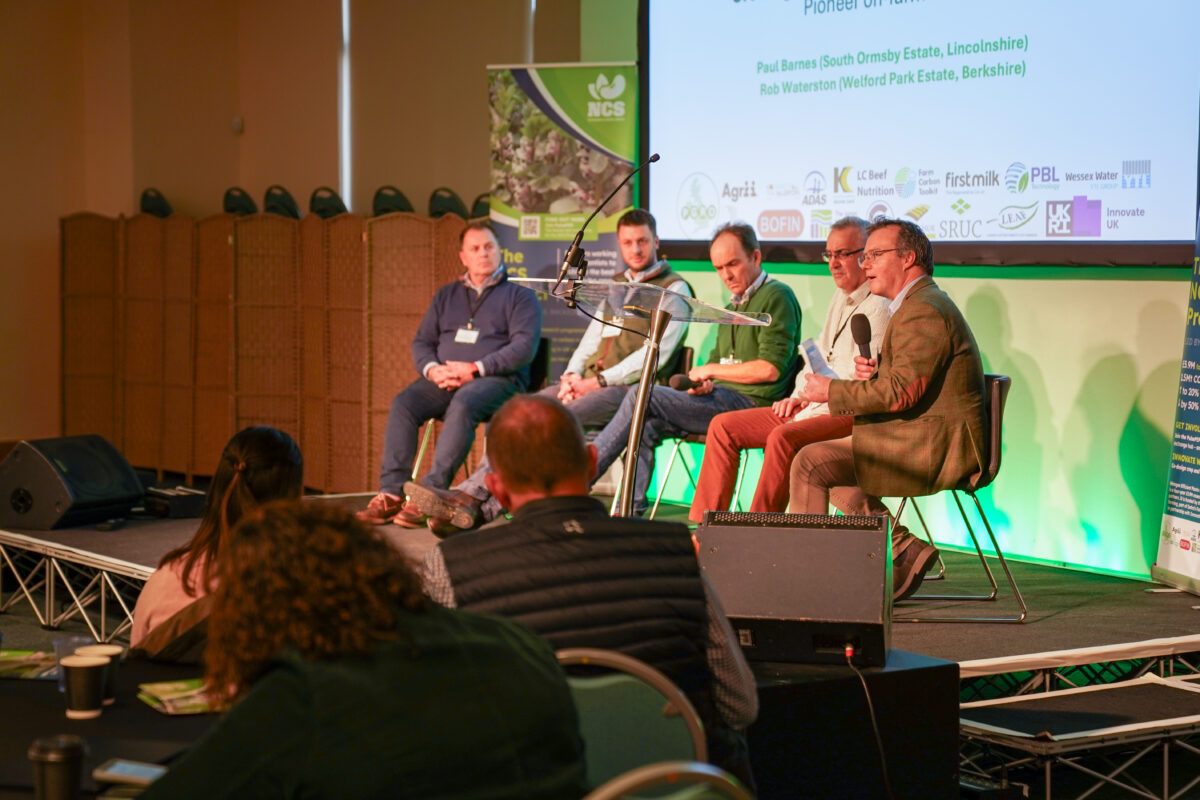
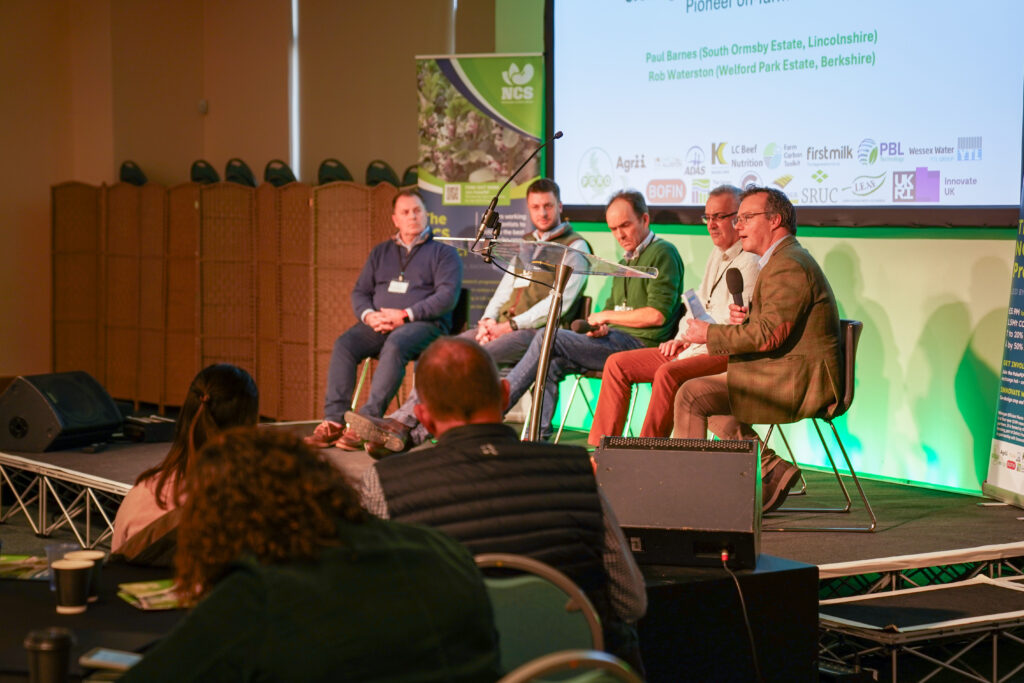
Oxfordshire farmer and founder of the British On-Farm Innovation Network (BOFIN) Tom Allen-Stevens called for more farmers to sign up as Pulse Pioneers, who are paid to carry out the on-farm trials in the NCS Project.
“This year we have 20 taking part but next year we are ramping that up to 40. Supported by the scientists and other experts in our partner organisations the trials are a real opportunity to find ways to grow better, more consistent crops.”
Sharing that knowledge between Pulse Pioneers, the ‘Pulse PEP’ NCS community and the wider industry, was another large part of the project and BOFIN’s role within it, he explained.
Achieving consistency is the main goal for NCS bean trials carried out by Rob Waterston, farm manager at Welford Park Estate. “The inconsistency drives me mad. I love them some years, but then others they are sparse and I think, why do we bother?”
His Pulse Pioneer trial was a 3ha block of beans from which he took leaf samples to send away for analysis. “On the back of that we tailor made a nutritional programme. We did that twice in the build up towards flowering to make sure the plant gets everything it needs to maximise the flowering potential. It was quite an expansive list of micronutrients that went on.”
He achieved a 0.2t yield uplift in that area and a wealth of benchmark data from ADAS Bean YEN, into which his crop was entered, to analyse and interpret its performance.
Paul Barnes, Estate Manager at South Ormsby Estate said that as an organic producer beans were an important part of his seven-year rotation. As a Pulse Pioneer within NCS he runs trials on his farm. In year one he was looking at applications of two products that capture atmospheric N, comparing plant health above and below the ground with those of untreated crops. This revealed higher levels of nodulation, plant growth and vigour scoring in the treated crops compared with untreated. This year he will also be assessing the following spring milling wheat crop to confirm the impact the beans had made, as part of the NCS on-farm trials.
Paul stressed how important knowledge exchange was and the value of the 20 Pulse Pioneers involved in the NCS Project sharing what their learning had been from the on-farm trials.
“Let’s get more on board – bring it on,” he said.
The conference brought together more than 100 representatives of feed companies, research institutes, farmers and others across the supply chain. But despite invitations sent to the UK’s major retailers, none were directly represented, a point noted by several delegates during discussions.
Agricultural supply chains must improve their practices to address deforestation concerns, according to Gemma Hoskins, Mighty Earth’s UK Director.
Gemma will be speaking at ‘From Soya to Sustainability’ later this month where she will outline her recent Foul Play report which links Brazilian soy to UK animal feed, and outlines the implications of upcoming EU and UK deforestation law.
“My report reveals how the UK chicken sector, including leading supermarkets and fast-food restaurants, risk exposure to illegal deforestation-linked soy. Without robust regulations in upcoming UK deforestation law, British businesses will be unable to eradicate illegal deforestation in soy and chicken supply chains and Brazil will continue to burn, with dire consequences for the climate, and the people and wildlife of the forests.”
Unlike the EU regulation, the proposed UK law does not cover legal deforestation and defers to “relevant local laws” to determine whether it is legal, she warns.
“Legal deforestation contributes to nearly one-third of all deforestation, which in turn drives biodiversity loss and climate change. There are a range of solutions I can offer which include increased traceability and disclosure from soy traders, legislation, the use of 11 billion hectares of already degraded land and farm-led efficiencies.”
Click HERE to find out more about ‘From Soya to Sustainability’ and to book tickets
Gemma Hoskins is Mighty Earth’s UK Director, with responsibility to build and lead its UK deforestation campaign to persuade corporations, financial institutions, and government officials to implement strong environmental and human rights policies. Gemma has led numerous soy supply chain investigations, linking cases of Brazilian deforestation to the UK.