
Could you be a Pulse Pioneer?
A major project aiming to cut agriculture’s carbon footprint through increased inclusion of pulses in arable systems and livestock diets is looking for more farmers to participate in paid on-farm trials.
Now in its third year, the NCS (Nitrogen Climate Smart) project is led by PGRO alongside a consortium of 16 other organisations. Roger Vickers, CEO of PGRO and NCS project lead said: “We are now moving towards looking at the legacy effects of the trials – comparing the effect of previous pulse crops on subsequent crops as well as different treatments designed to optimise production and reduce carbon emissions.
“Together we are exploring all aspects of the production of beans from agronomy to harvest through to processing and use in livestock feed.”
The project’s ambition is to show the benefits of increasing pulse production in arable rotations to 20% which could replace around 50% of the imported soya currently consumed by UK livestock. This in turn could lead to carbon savings of around 3.4Mt CO2 equivalent.
John McArthur, of partner organisation McArthur BDC explained that this was equal a 7% reduction in UK agriculture’s emissions. “This one intervention would make a huge difference to both the arable and livestock sectors and is something that with continued progress we believe can be achieved,” he said.

Part of the project led by McArthur BDC is exploring the effect of dehulling and thermal treatment on the nutritive value of beans to increase the soya substitution potential of faba beans, he explained. Other partner organisations are looking at the production side aiming to increase knowledge of understanding of pulse crops, explained Dr Thomas Wilkinson of ADAS.
This includes trials by partner organisations and the Pulse Pioneer farmers which all lookat maximising pulse crops and getting the best from them. “We are now moving towards looking at the legacy effects of the trials – comparing the effect of previous pulse crops on subsequent crops as well as different treatments designed to optimise production.” ADAS is also combining these findings with data from the Pulse Yield Enhancement Network (YEN).
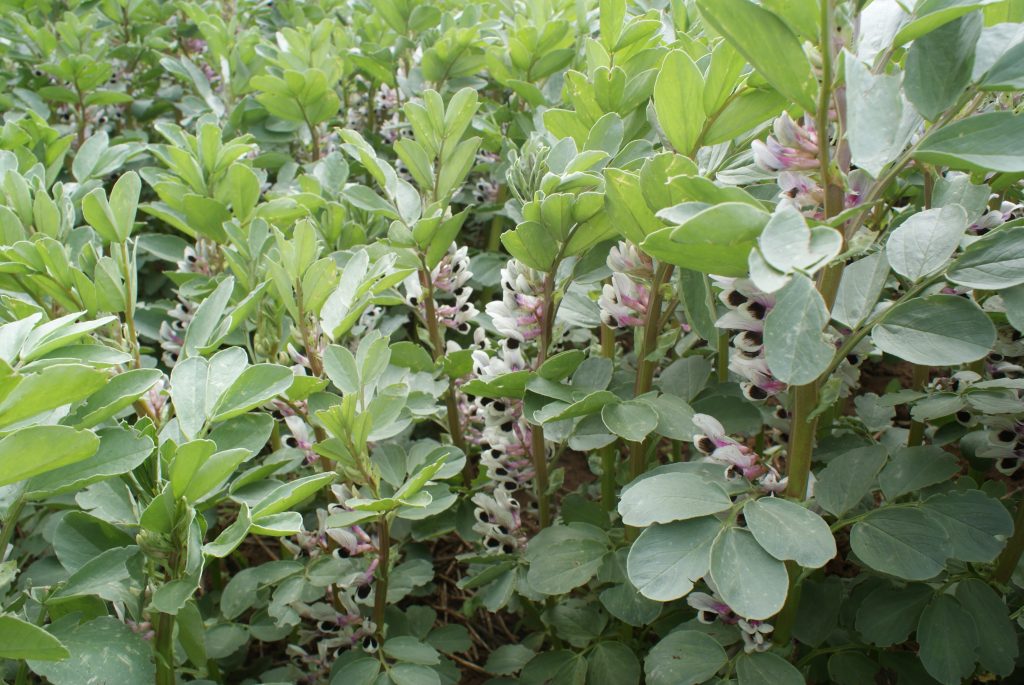
“At the moment many growers don’t seem to be reducing nitrogen rates after pulse crops,” said Dr Wilkinson. “We want to have a deeper understanding of residual nitrogen so that we know how growers could modify nitrogen rates, which would have a significant impact on their carbon footprint.”
Tom Allen-Stevens of the British On-Farm Innovation Network (BOFIN) which recruits and supports the farmer triallists explained that more Pulse Pioneers were needed for the 2025-26 trials. “We currently have 23 farmer trialists on this project and need to increase that to 40 for the upcoming year,” he said. “We are looking for farmers who are at the top of their game and keen to know how they can grow beans better and share that knowledge with other farmers.
“As with all BOFIN projects our farmer trialists are paid for their role in the project and also gain from collaborating with other farmers, scientists and industry experts.
“Pulses promise huge opportunities for UK agriculture, and our Pulse Pioneers are driving that.”
Another aspect of the project is improving links with the supply chain, he said. “As a direct result of this project, and particularly our conference in January 2025, we are in discussion with processors and manufacturers keen to have better surety of supply. We hope that the setting up of grower groups will be another great outcome from this project.”
Other partner organisations include Farm Carbon Toolkit who were supporting farmers to carbon footprint their businesses to quantify the changes brought about by increased pulse production. The Andersons Centre is also carrying out Cost Benefit Analyses of pulse production over the life of the project.
Any arable farmers who would like to learn more about becoming a Pulse Pioneer can visit www.ncsproject.co.uk or email info@bofin.org.uk.
BOFIN is also hosting a free webinar on Weds 16th July (8.30am) for anyone interested in finding out more about opportunities for paid on-farm trials. To register click HERE.