Categories
NCS News

Farmer-led research key to on-farm change

Farmer-led research is missing link between science and on-farm change

Agricultural research should put farmers at the heart of project design if it is to deliver lasting changes in farming practice, argues a new paper from researchers involved in the Nitrogen Efficient Plants for Climate Smart Arable Cropping Systems (NCS) project.

Dr Emily Guest, lead author of the paper.

The paper Nitrogen Climate Smart: Cutting UK Agricultural Emissions using a Farmer-Focused Theory of Change, sets out a framework for future agricultural research that prioritises farmer participation, on-farm trials, peer-to-peer learning and supply chain collaboration. 

It argues that involving farmers from the start leads to research that is more relevant, more readily adopted and more likely to deliver environmental and economic benefits.

Lead author Dr Emily Guest, postdoctoral researcher at Cranfield University, explained that the NCS project aimed to reduce agriculture’s carbon emissions by 3.4MtCO2e per year through increased production and use of pulses. 

She said: “There is a wealth of scientific evidence about the benefits of pulses, but that alone isn’t what makes farmers decide to grow them. Research must support farmers to build confidence, see the results for themselves and learn from each other if we want to create meaningful change.

“Research programmes must bridge the gaps between research, practice and policy. The impact of the project needs to be considered from the start, not as an afterthought or box ticking exercise.” 

Led by PGRO the NCS project is a four-year £5.9M research programme involving 200 UK farms and 17 partners. Farmers have worked alongside scientists throughout the project to co-design and carry out on-farm trials that answer both scientific questions and practical farming challenges. 

PGRO CEO and NCS project lead Roger Vickers welcomed the publication: “From the outset, NCS was designed to do more than answer scientific questions. We wanted farmers, researchers and industry to work together to understand not only how pulses can reduce greenhouse gas emissions, but also what’s preventing their wider adoption. 

“We hope this paper will help influence the way future research is designed – showing that bringing farmers, researchers and industry partners together from the outset delivers outcomes that are more likely to bring the change needed.”

Tom Allen-Stevens, managing director of BOFIN which leads the on-farm trials and farmer engagement elements of the NCS project said: “Farmer-led research is the missing link. Good science on its own isn’t enough if doesn’t make it beyond the page. When farmers help shape the research, test it on their own farms and share what they’ve learned with others, that’s when research can drive real change.” 

Read the full paper here: https://onlinelibrary.wiley.com/doi/10.1111/aab.70146

Categories
Uncategorized

New pea and bean benchmarking guide to help growers unlock crop potential

A pea and bean benchmarking guide designed to help pulse growers assess crop development, optimise management decisions and improve crop performance will be launched at the Cereals event by partners in the NCS project.

Developed by researchers from PGRO and ADAS as part of the NCS project, the guide summarises the development of well-performing crops monitored through the Pea and Bean Yield Enhancement Networks (YEN). It brings together key measures of crop growth and performance into a set of practical developmental benchmarks that growers can use to compare how their own crops are progressing throughout the season.

The guide is intended to support both new and experienced pea and bean growers by enabling them to compare crop performance against development observed through the YEN programme. 

Erin Matlock, PGRO research agronomist, said: “There’s no single formula for growing high-performing pulse crops, but these benchmarks give growers and agronomists a practical way to compare crop progress against the development patterns typically seen in successful pea and bean crops. By doing so, they can identify where seasonal conditions or management decisions may have influenced performance, while also highlighting opportunities to refine management in future seasons.”

Tom Wilkinson, senior research consultant for ADAS, said the publication – alongside the PGRO agronomy guide and the BASF-sponsored growth guides – brings the guidance available for peas and beans in line with that available for cereals and oilseed rape. 

“It’s a great outcome from many years of support and monitoring by the pulse industry and YEN growers. One thing that’s particularly exciting is that because the measurements were taken through the YEN, most of them should be replicable on individual farms too.

“We hope it supports experienced growers and also encourages new pulse growers to give peas and beans a try by removing some of the mystery around how they usually develop over the season.”

Free copies of the guide will be available at the Cereals Event from participating project partners, including PGRO, ADAS and BOFIN. A digital version is available to view and download below.

Categories
NCS News

Breaking the Bean Barrier: Benchmarking and Confidence Building at Yattendon Estate

How Yattendon Estate is Boosting Confidence and Crop Performance

For Pulse Pioneer, Nick Down, Yattendon Estate‘s Farm Manager, beans aren’t just a break crop, they’re a way to connect soils, markets, biodiversity, and business resilience.

    “Beans deserve the same focus as the rest of the rotation – the monitoring, the attention to detail, and the same level of management we give to our key crops.” – Nick Down

It’s a mindset rooted in Integrated Farm Management (IFM) – a practical, whole-farm approach that supports thoughtful decision-making, continuous learning and improvement, and responsible use of natural resources. It underpins both Nick’s day-to-day management and Yattendon’s commitment as a LEAF Demonstration Farm, sharing good practice and fostering open, honest discussion across the industry.

This approach has guided Yattendon’s journey over the years – analysing field performance, matching land use to its strengths, and building a more resilient, climate-smart rotation for the future. 

A diverse estate, shaped by resilience 

The 2,200-hectare Berkshire estate combines 1,750 ha of arable land with permanent pasture and commercially managed forestry. Farming decisions balance productive ambition with environmental stewardship, supported by Countryside Stewardship and SFI agreements on land better suited to nature recovery than production. 

Soils vary widely across the estate, from calcareous silts to heavy, flinty clay loams, which makes crop placement and flexibility essential. Partnerships with local graziers help manage herbal leys, while forestry, retail and local brewing enterprises contribute to a diverse and resilient business model. Collaboration with colleagues, partners, and the local community remains central to every decision.

IFM in practice means more than just managing land well, it’s about organisation and planning, engaging people, and strengthening the landscape as a whole. Yattendon demonstrates IFM at scale: working with the land’s assets and integrating them into a wider, joined-up system.

Integrated Farm Management (IFM), a practical, whole-farm approach pioneered by LEAF, NCS project partners 

Why beans and why the Nitrogen Climate Smart (NCS) Project?

With the challenges around oilseed rape previously standing alone as the break crop, Nick wanted to diversify while reducing reliance on fertiliser and plant protection products. Winter beans offered a route to improved soil structure, nitrogen fixation, reduced synthetic inputs, and new market opportunities.

“I’ve always had a thirst for knowledge and for improving what we do. NCS gives us the chance to benchmark beans properly, and to learn from growers we’d never normally be compared with.” says Nick.

As a Pulse Pioneer in the project, Nick now benefits from:

  • Detailed bean-specific benchmarking
  • Access to specialist agronomy and crop health expertise
  • Reliable data-sharing and technical support
  • Peer-to-peer learning – which he rates as the most valuable part of the programme. 

Together, these elements provide confidence in treating beans not as a rotational compromise, but as a crop with genuine strategic potential. It’s helping growers approach beans with ambition, not hesitation and providing the evidence to support better decisions.

Learning from real-world variation

Yattendon’s NCS trial splits one field between winter beans and legume fallow, monitoring differences in rotational and legacy benefits, particularly on the following wheat crop.   The first year brought challenges: a delayed drilling window and severe summer drought halved yields compared to their five-year average, and the legume fallow had lower competitiveness against blackgrass. But for Nick highlights that “the greatest value” from the trial is “hearing what others are trying and from knowing what’s working and what isn’t”. Learning remains the win, reinforcing the importance of farmer-led knowledge exchange.  

Knowledge exchange across the NCS Project, through events, data-sharing and open discussion, offers reassurance that pulses can be productive and marketable. 

Yattendon grows for human consumption first, with value-added feed routes available when quality specifications aren’t met. With tight cost control, including cleaning home-saved seed, beans already enhance rotation performance, even in tougher seasons. 

Advice for growers thinking about pulses

Nick is honest about what beans (and the British weather) can throw at you. His advice:

  • Know your costs – not just averages but crop-by-crop, field-by-field, year-by-year.
  • Be realistic – plan for poor seasons as well as the good ones.
  • Be bold and act decisively – both when something works and when it doesn’t 
  • Play the long game – focus on rotational value, not just benefits you can sell by the tonne. 

“The challenges keep changing, and they don’t get any easier, but our ability to navigate them can improve” Says Nick.

Looking ahead

With first-year data due shortly, Nick is eager to understand the nitrogen legacy gains in the following wheat crop, and to build evidence across multiple seasons. He continues to pursue targeted input reduction, including trialling BYDV-tolerant varieties and reducing insecticide use. For Yattendon, beans are not a stop-gap. They are an investment in resilience, supported by evidence, guided by IFM, and enabled by the NCS project.

Categories
NCS News

Huge potential for UK pulses as NCS Project progress accelerates

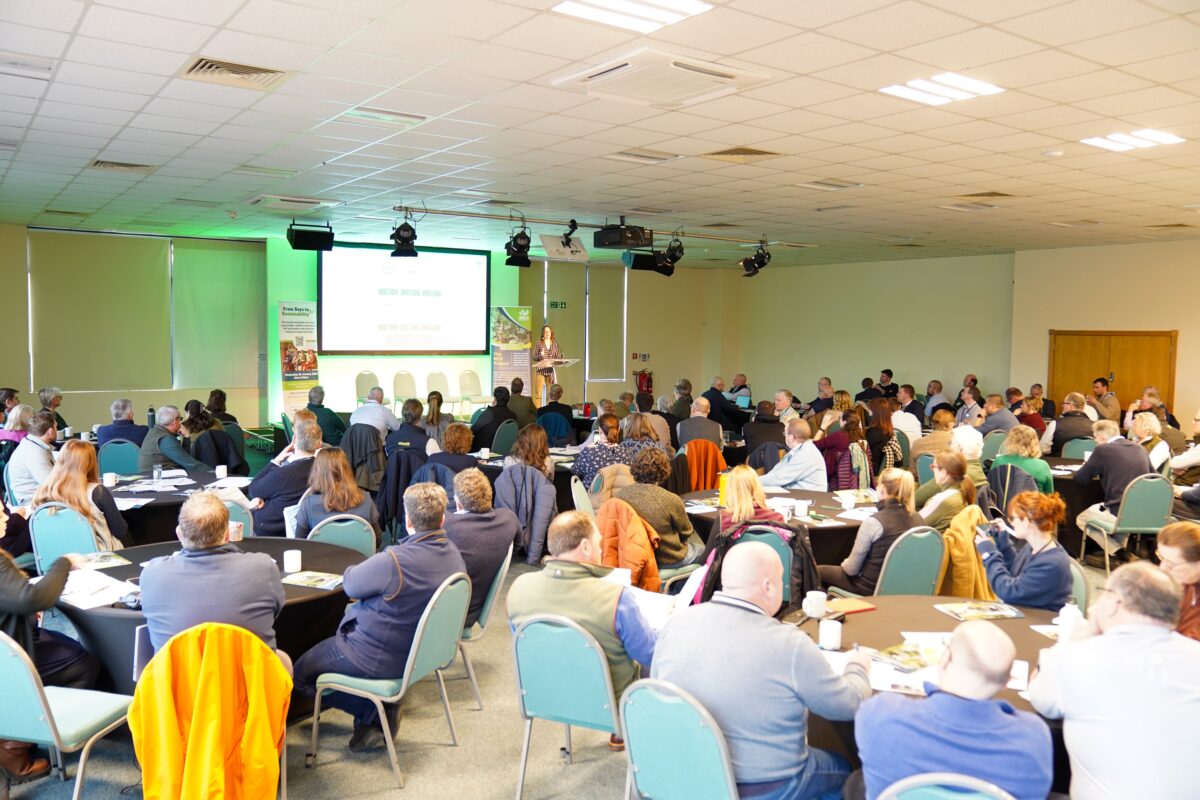
The scale of the opportunity for UK peas and beans to significantly reduce reliance on imported soya and deliver substantial environmental gains was laid bare at From Soya to Sustainability 2026.

The cross-industry conference in Peterborough heard how a combination of science, applied research, farmer-led trials and growing supply chain engagement is creating the conditions for a major shift towards domestic pulse production.

A diverse audience saw how significant progress has been made in key areas of the supply chain where, previously, doubts had been cast on whether unsustainable proteins – such as uncertified South American soya – could ever be replaced. 

Integrating beans into livestock and poultry rations on a commercial scale, and the financial modelling to demonstrate how UK arable cropping could flex to meet greater demand for pulse protein, were among the studies unveiled at the event. 

Balancing expectations with commercial realities 

Keynote speakers Nicola Brennan and Professor Neil Ward set out the impact that the livestock feed industry’s reliance on soya is having on UK agriculture’s carbon footprint, and what needs to change. 

Nicola, a supply chain specialist with WWF-UK, linked the issue to national resilience and security, referencing recent government assessments.

“Accelerating nature loss is not just an environmental issue. It is a foundational threat to global stability and UK security,” she said. “The UK has a major role to play in setting global trends, with a disproportionate footprint per tonnes of product consumed. It is critical that the private sector starts supporting farmers to produce food with positive environmental impacts both abroad and in the UK .”

Professor Ward, who specialises in rural and regional development at the University of East Anglia, highlighted the growing links between climate change, food systems and economic stability.

“Climate change is already affecting supply chains and driving food price inflation. Adaptation is non-negotiable,” he said. “We need to think about food resilience and security in a way we haven’t for decades.”

Window of opportunity 

Data from The Andersons Centre shows that about 1.6 million tonnes of beans would be needed to replace half of the soya currently used in UK livestock feed. 

To grasp this opportunity, yields need to increase and the consistency of crops improve at the same time. The NCS Project has appointed 30 Pulse Pioneers who are paid to conduct a variety of on-farm trials in their areas of interest and share results among their peers. With improvements, the economics of growing a pulse crop would change dramatically.  

“But we won’t get there unless value generated further down the chain is shared back with arable growers,” said The Andersons Centre’s James Webster-Rusk, who led the research on behalf of the project. 

Meaningful progress on poultry 

Monogastric expert Professor Jos Houdijk from SRUC outlined feeding trials he had conducted at Scotland’s rural college which found that post-harvest processing of beans can overcome previous limitations associated with higher bean inclusion in poultry rations. 

“When we feed more beans to poultry, we get a dent in production efficiency because the animal can’t digest it. But when we de-hull or de-hull and toast beans, that dent is taken away. The animal performs as if that detriment was never there. 

“This work tells us that, both in broilers and in laying hens, processing beans helps us increase the soya replacement potential of faba beans.” 

ABN’s Senior Poultry Nutritionist, Brian Kenyon, has extrapolated this work into commercial broiler and laying flocks. 

Using de-hulled beans in a free-range egg flock, while keeping a control flock on a conventional, soya-based ration, he has seen positive results. 

He said: “There has been no real impact on egg size from introducing beans into the ration, and everything is looking good.

“We’re getting more confident in using beans to feed poultry and livestock. It’s not unusual to use it in a diet, but what we’re doing is increasing the level. Even boosting inclusion from 5% to 10% of the poultry diet is going to have a significant impact on the carbon emissions from UK agriculture.” 

The NCS Project is led by the Processors and Growers Research Organisation. CEO Roger Vickers said: “There’s great momentum around this project. The work being done by farmers, researchers and those in the supply chain is developing the huge potential we know exists for domestic pulses to displace imported soya and reduce UK agriculture’s carbon footprint.”  

The date of the 2027 From Soya to Sustainability conference will be announced soon.