Agricultural supply chains must improve their practices to address deforestation concerns, according to Gemma Hoskins, Mighty Earth’s UK Director.
Gemma will be speaking at ‘From Soya to Sustainability’ later this month where she will outline her recent Foul Play report which links Brazilian soy to UK animal feed, and outlines the implications of upcoming EU and UK deforestation law.
“My report reveals how the UK chicken sector, including leading supermarkets and fast-food restaurants, risk exposure to illegal deforestation-linked soy. Without robust regulations in upcoming UK deforestation law, British businesses will be unable to eradicate illegal deforestation in soy and chicken supply chains and Brazil will continue to burn, with dire consequences for the climate, and the people and wildlife of the forests.”
Unlike the EU regulation, the proposed UK law does not cover legal deforestation and defers to “relevant local laws” to determine whether it is legal, she warns.
“Legal deforestation contributes to nearly one-third of all deforestation, which in turn drives biodiversity loss and climate change. There are a range of solutions I can offer which include increased traceability and disclosure from soy traders, legislation, the use of 11 billion hectares of already degraded land and farm-led efficiencies.”
Click HERE to find out more about ‘From Soya to Sustainability’ and to book tickets
Gemma Hoskins is Mighty Earth’s UK Director, with responsibility to build and lead its UK deforestation campaign to persuade corporations, financial institutions, and government officials to implement strong environmental and human rights policies. Gemma has led numerous soy supply chain investigations, linking cases of Brazilian deforestation to the UK.
‘Collective action’ needed for UK grown pulses to replace soya
Quantifying the benefits of pulses for the arable grower is a major outcome of the NCS Project, which will be shared at the From Soya to Sustainability conference on January 22nd.
Now in its second year, the multi-partner project led by PGRO has recruited 18 ‘Pulse Pioneer’ farmers. They are each collecting data on pulse crops and subsequent cereal crops, to quantify the benefits to an arable unit’s carbon footprint, nitrogen use efficiency and bottom line.
The arable session at From Soya to Sustainability in Peterborough on 22nd January will outline the findings and observations so far, as well as researchers’ analysis of those results.
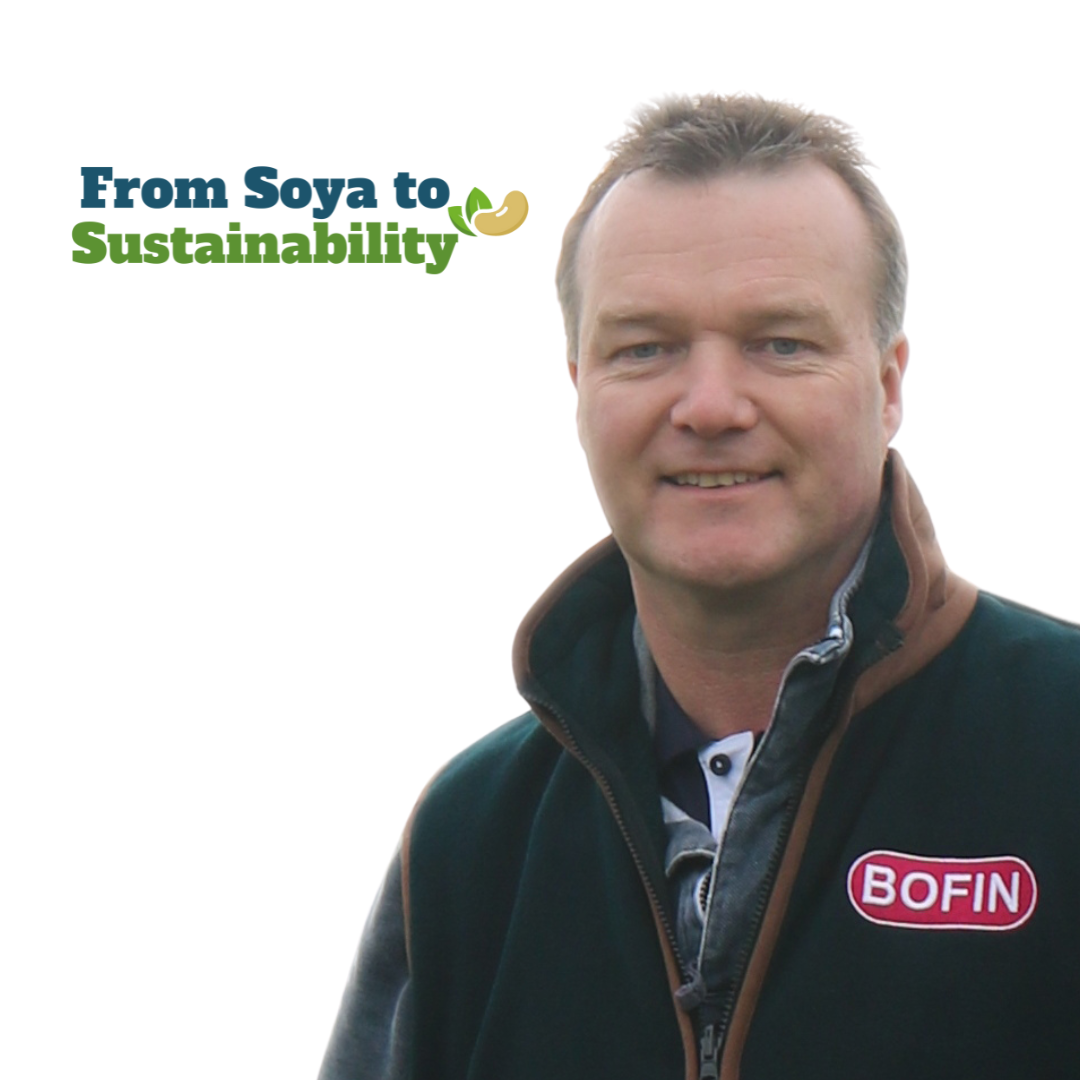
Tom Allen-Stevens is Founder of the British On-Farm Innovation Network (BOFIN) which coordinates the project’s farmer trials. He says: “Our Pulse Pioneers are beginning to deliver a really good picture of the contribution of home-grown pulses across arable rotations. For our trial farmers that will lead to huge savings in terms of their nutrition programme, and in particular, to nitrogen use efficiency.”
Tom runs a 170ha arable farm in Oxfordshire and launched BOFIN in September 2020 in recognition of the need for an organisation to represent and support the growing community of farmers wanting to be involved in leading innovations.
“The Pulse Pioneers are carbon footprinting their farms every year, so we will see the difference pulses are making to their carbon emissions. The project also explores the challenges of growing these crops and by pooling our experience and knowledge we are proving that great things happen when we work together. It’s vital now that we share those findings with other growers and the wider industry.”
With the increasing pressure for agriculture to improve its environmental credentials the conference couldn’t come at a more pertinent time, he continues.
“By increasing UK production of pulses and reducing dependency on imported soya and soyabean meal, we can reduce our carbon emissions, while realising a raft of other benefits for livestock and arable farmers.
“But success will require joint effort across the supply chain. I’m looking forward to the conference and the opportunity to discuss how we can take collective action.”
From Soya to Sustainability will be held at KingsGate Conference Centre, Peterborough on Wednesday 22nd January. For more info and to book your ticket visit www.tinyurl.com/FSTSConference
Innovative livestock feed solutions take centre stage
The upcoming ‘From Soya to Sustainability’ conference on 22nd January 2025, in Peterborough, is poised to showcase groundbreaking advances on how British grown pulses can reduce our food system’s dependence on imported soybean meal.
Delegates will hear how substituting imported soy and soybean meal with homegrown pulses is a ‘triple win’ for livestock production, the arable sector and the environment.
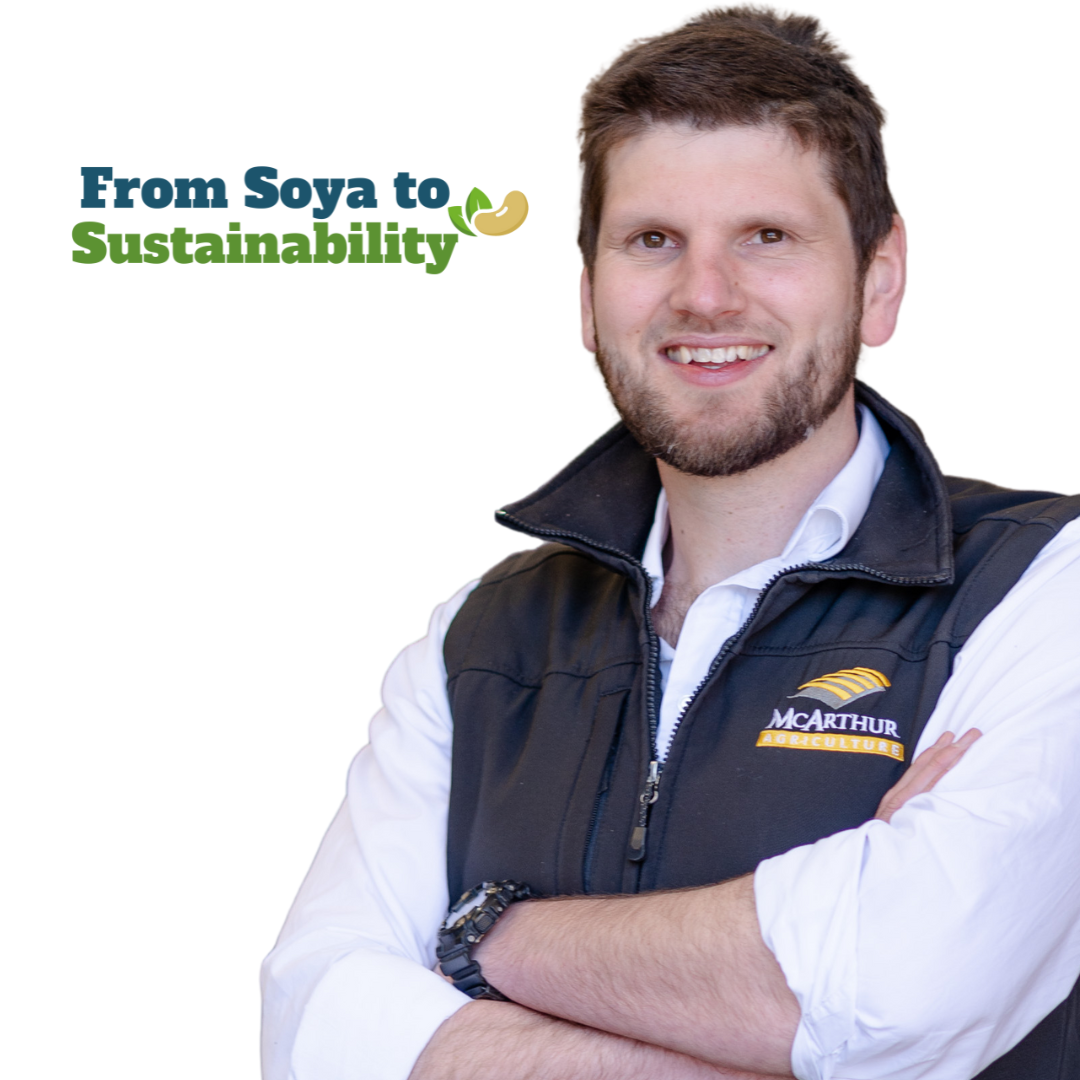
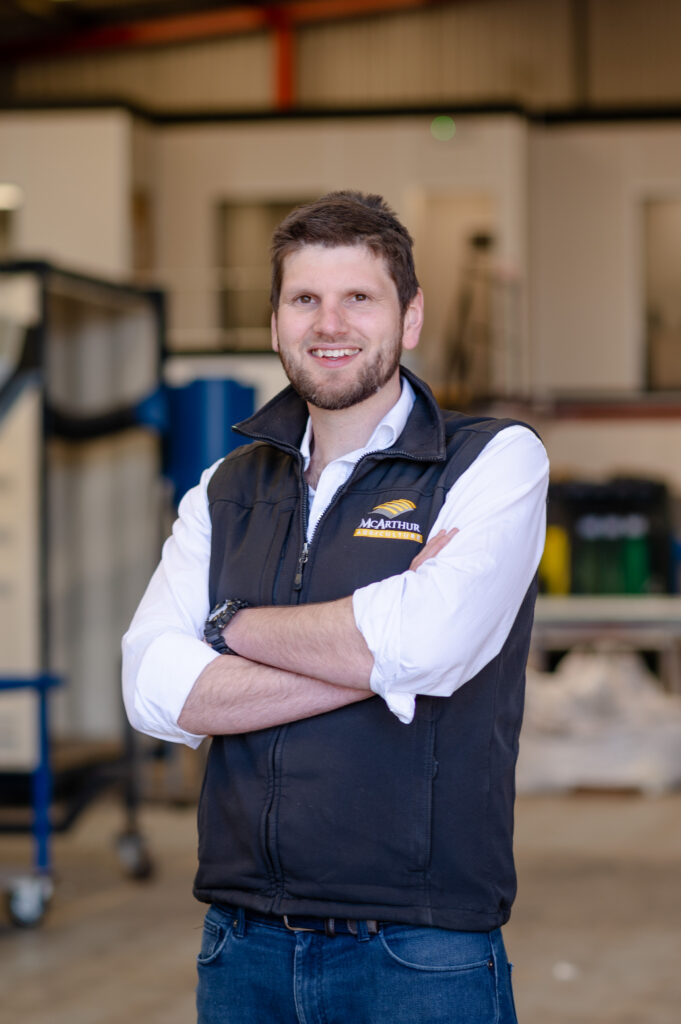
Among the highlights of the conference is the work led by John McArthur, managing director of McArthur BDC, within the NCS Project. This part of the project focuses on innovative approached to theproduction, harvesting, processing and storage of pulses as livestock feed.
“Reducing the environmental footprint of livestock products is essential, and animal feed is the logical place to start.”
John McArthur
“We joined the NCS Project to create significant beneficial change for both farm businesses and the environment,” John explains. “Increasing the quantity of pulses being grown in this country and fed to our livestock will help the industry reduce its carbon footprint while also benefiting soil health and biodiversity.”
The conference will highlight not just the importance of making change, but the viability of British grown pulses as an alternative to soy and how everyone in the supply chain can take action.
McArthur BDC designs, builds and maintains combinable crop drying, storage and processing systems for farmers and commercial operators across Great Britain and Ireland. Its specific study on the nutrient value effects of dehulling and roasting faba beans using farm-based processing equipment promises to be a key talking point.
“Consumers are increasingly conscious about the environmental impact of their food. Reducing the environmental footprint of livestock products is essential, and animal feed is the logical place to start,” John emphasised.
From Soya to Sustainability offers a unique opportunity for retailers, food manufacturers and the livestock supply chain to engage with researchers and industry experts on how the benefits of homegrown pulses can be harnessed to reduce our food system’s dependence on soybean meal.
Attendees can expect to gain valuable insights into:
– Advanced crop processing techniques
– Sustainable feed solutions for livestock
– Reducing carbon footprints in agriculture and food production
– Improving farm profitability and resilience
John concludes: “We fully support the goal of this conference to drive change towards a more sustainable, resilient and secure food system. We want to help the supply chain understand how consumer demand for better livestock products can be achieved through innovative use of homegrown legumes and pulses.”
Don’t miss this chance to be at the forefront of agricultural innovation and sustainability – book your ticket now at https://www.eventbrite.com/e/from-soya-to-sustainability-tickets-1057857593539
Over the last few months at Farm Carbon Toolkit, we have seen an increase in the interest in understanding the impact on greenhouse gas emissions of adopting more regenerative farming practices.
As a result, we are starting to develop more information on this. One of the first areas we have worked on is the impact on emissions from adopting more regenerative farming practices within the arable sector.
The Farm Carbon Toolkit carried out an emissions modelling exercise based on a constructed baseline, which is considered realistic within a UK context. The baseline consisted of a 100 ha arable enterprise, following a conventional rotation and agronomic input, growing milling wheat, feed wheat and oilseed rape. Assumptions on inputs used were based on John Nix pocketbook, RB209 and input from agronomy experts.
The Farm Carbon Calculator (FCC) was used to calculate the likely emissions from the baseline model including inputs, land area and field operations carried out on contract. A range of regenerative scenarios were then applied to this baseline, to assess their impact on greenhouse gas emissions from the 100 Ha farmed area. The potential for carbon sequestration was not modelled as part of the exercise at this stage.
What we found out
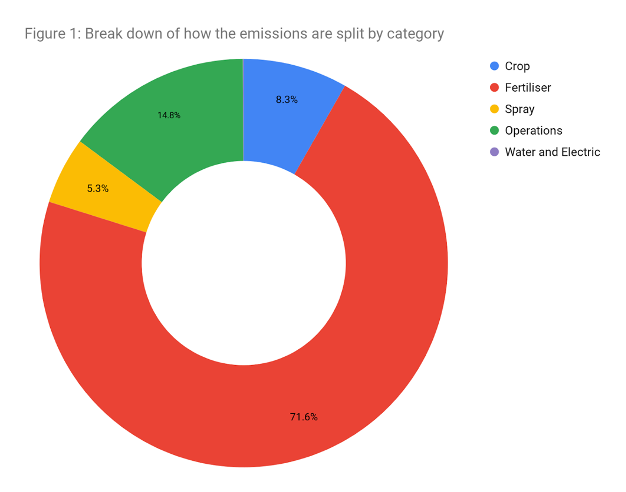
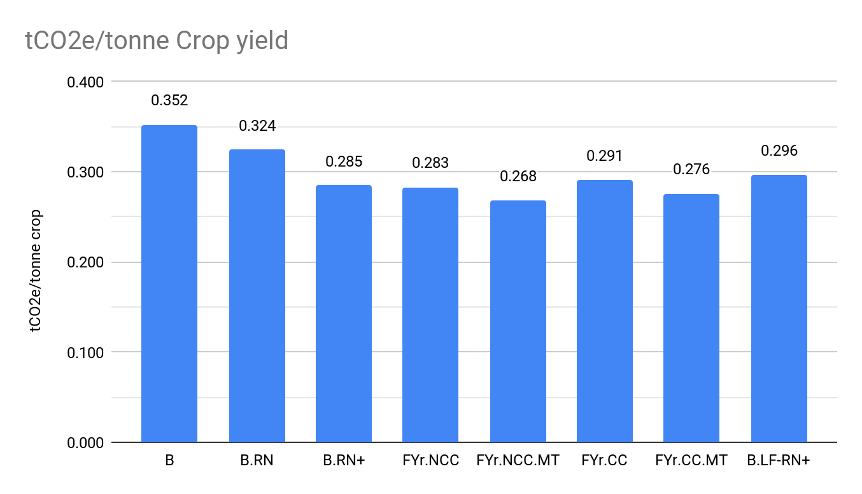
The baseline model shows that the emissions associated with the arable rotation were 2.04 tCO2e/Ha/year and 0.352 tCO2e per tonne of crop per year. Figure 1 overleaf shows the breakdown of the emissions by category. From this, the dominant emission category arises from the application of fertilisers.
Of the emissions from fertilisers the vast majority, 96.4%, arises from the application of Ammonium Nitrate or Nitrogen fertilisers. Several adjustments to conventional growing practices were modelled by FCT, primarily focused on practices and combinations of practices which would result in reductions in greenhouse gas emissions. A total of seven options were modelled.
Options explored:
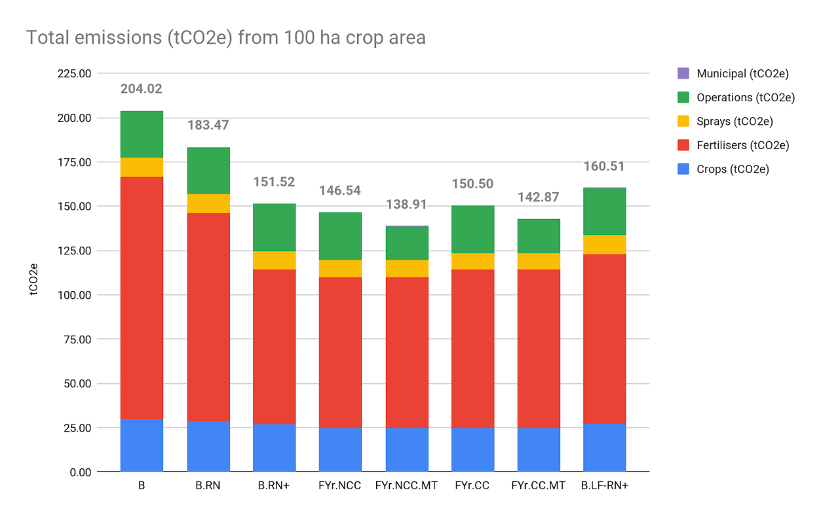
B -Baseline
BRN -Reduced N application to all crops of 30 kg/Ha
BRN+ -Extreme N reduction to cereal crops of 75 kg/Ha & 30 kg to OSR.
FYr.NCC -5 year rotation including beans with N fixing cover crop
FYr.NCC.MT -5 year rotation including beans with N fixing cover crop + min til.
FYr.NCC -5 year rotation including beans with non N fixing cover crop.
FYr.CC.MT -5 year rotation including beans with non N fixing cover crop + min til
B.LF-RN+ -Baseline with Liquid N fertiliser with halved scope 1 emissions factors and extreme N fertiliser reduction as in 2) above .
The outcomes of the emissions modelling exercise per year are set out below:
The outcomes when looked at in terms of tCO2e emissions per ton of crop/year are shown below.
Application at scale
In the UK, legumes currently represent 5.3% of the UK’s cropping area (233,000 ha). If UK beans and pulses were increased from 5.3% cropping area to 20% (877,200 ha) i.e. one year in five as set out in the options shown above there could be a reduction of around 1,855,296t CO2e across the whole UK arable area (4.386 million has) which is equivalent to close to 4% of the total emissions from UK agriculture[2]. Within this calculation it is assumed that all arable rotations are in line with the baseline scenario before adopting beans into the rotation. This is unlikely to be the case, so this reduction in emissions needs to be looked at within this context.
Conclusion
The modelled results indicate that the adoption of regenerative growing practices can deliver reductions in anticipated greenhouse gas emissions and the greatest reduction of greenhouse gas emissions per ton of crop yield comes from a combination of including beans in rotation and pursuing regenerative cover cropping and tillage practices.
The introduction of a modelled five-year rotation including bean and an N fixing cover crop using min till cultivations reduces the overall GHG emissions by 33% compared to the baseline and results in a projected reduction of 24% GHG emissions per ton of crop. The inclusion of beans and perhaps other legumes in the rotation can aid the reduction and reliance on N fertiliser and has a likely consequential reduction in greenhouse gas emissions, but there is an anticipated negative impact on overall crop yields.
Alongside the anticipated reduction in the financial and environmental cost of crop production through reduced input costs, we [i]anticipate an increase in carbon sequestration due to improved soil health. However, changes in soil organic carbon have not formed part of the modelling exercise as the impact on soil health would depend on farm specific conditions such as soil type, management practices and weather. Nevertheless, this demonstrates the potential for even greater carbon reductions, with carbon sequestration augmenting the environmental benefit alongside the input emissions avoidance.
[1] Acknowledgement: with support from Finance Earth and the Soil Association
Proving Sustainability: Pulse-Based Farming Systems
Sustainability is the buzzword in today’s markets, whether in farming, business, or policymaking. Though, what does it really mean for you, asks Professor Pete Iannetta?
Sustainability isn’t one-size-fits-all.
The key question is: who or what benefits from these practices? To market a product or farming method as sustainable, solid evidence is essential. This means gathering reliable data to support claims about its advantages. However, the methods used to gather this data can sometimes miss the mark. For instance, tools like Life Cycle Analysis (LCA) focus on reducing environmental impacts but don’t always actually measure real-world improvements, such as cleaner water or better yields. Imagine if we had a “fitbit” for farming systems that measured actual benefits and trade-offs across the qualities of soil, water, air crops, and bank-balance?
Farm carbon calculators are starting to evolve toward this idea. They now often include measures for biodiversity, showing progress toward a more comprehensive view of sustainability. Still, these tools are only as good as the data we provide. On-the-ground evidence from real farms is crucial.
Here’s an important fact: the environmental and rotational benefits of pulse crops (like beans, lentils, and peas) are lost if they aren’t grown locally. While importing crops like soybeans has its place in global food security, relying too heavily on imports can reduce the incentives to grow pulses at home. This not only affects the environment but also misses the economic benefits pulses bring to UK farmers, and society more generally.
The data is clear: pulse-based crop rotations can maximise productivity while reducing the need for synthetic nitrogen fertilisers. New long-term research, using LCA methods, also highlights how including crops like faba beans can cut environmental impacts and increase yields of following non-legume crops.
Prof. Pietro (Pete) Iannetta is one of the expert speakers at the upcoming From Soya to Sustainability conference on 22nd January, 2025.
Pete is a Research Leader at the James Hutton Institute; and Senior Scientist at the Centro de Biotecnologia e Quimica Fina, Universidade Católica Portuguesa, Porto (Portugal). His research activities are focused on the multi-functionality of legumes due to their potential to simultaneously address the challenges of the ‘climate change-biodiversity-nutrition nexus’.
Breaking the Barriers of Pulse Cropping Through Science
With climate unpredictability increasingly impacting the agricultural sector, the UK’s farming landscape is undergoing a novel transformative shift. Here, Sarah MacAfee, Technical Officer for LEAF finds out about a UKRI funded project that has been looking at breeding the perfect British bean.
Pulse crops, such as beans, have long held promise as a staple for sustainable farming. They are nutrient-dense, rich in protein and bring about a multitude of environmental benefits, through their natural nitrogen-fixing abilities, which help to improve soil health and reduce our reliance on chemical fertilisers.
However, beans and other pulses have traditionally been imported due to their intolerance to the UK’s unpredictable weather patterns. In recent years, this paired with rising exportation costs and growing environmental concerns, have led scientists to re-evaluate how we view this dependency.
What if the UK could produce its own pulses – resilient, nutrient-rich, and environmentally sustainable?
The answer lies in a cutting-edge scientific breakthrough: ‘Designer’ beans bred to thrive in British climates. Lincolnshire farmer, Andy Ward, alongside Agrii and the University of Warwick, are making these aspirations a reality by being early adopters of these bean varieties.
The Science of Adaptation
UK weather has historically presented a barrier to pulse cropping. Summer rains, paired alongside temperature variability have often led to inconsistent yields, deterring farmers from large-scale adoption of this practice. But now, science is promising to bridge this gap.
By using pioneering plant-breeding techniques, researchers are designing beans specifically tailored to withstand the unique challenges of UK summers. These crops are not only resilient, but also high yielding- turning what was once a prominent challenge into an opportunity for change.
The Knock-on Effects of Crop Innovation
The implications of these designer beans extend far beyond weather adaptation. By successfully cultivating pulses in the UK, scientists are embracing a new era for agriculture, in which crop diversity, health and sustainability efforts converge.
Boosting Agricultural Resilience: Crop diversity is integral to a resilient farming system. A diversified crop rotation, including pulses, reduces dependency on singular crops and lowers the risk of large-scale failure due to pest and disease outbreaks. These designer beans could be key in strengthening agricultural systems against the uncertainties of climate change.
Nutritional Aid: Beans are a high source of protein, fibre, and essential nutrients. By making pulses more readily available and making consumers more conscious of the options available to them, these innovations could improve public health, offering an affordable and sustainable dietary option that aligns with modern health-conscious trends.
Sustainability and Soil Health: One of the most remarkable traits of beans is their ability to naturally fix nitrogen within the soil, unlike many of their counterparts. This reduces our reliance on inorganic chemical fertilisers, therefore curbing emissions and ensuring healthier ecosystems.
These ‘designer beans’ could become a pivotal tool in transitioning towards more sustainable farming practices, by reducing the emissions released in the UK agricultural sector. With successful seed harvesting trials occurring in 2023 – there are aspirational plans to scale up this production commercially, with an end goal of reaching our shelves by 2026.
Overcoming Challenges Through Science
The journey to this breakthrough has not been without its hurdles. Developing novel bean varieties that can withstand UK weather patterns required years of meticulous experimentation and collaboration across several disciplines. Scientists have leveraged genomics, data analysis and traditional agronomic techniques to accurately understand and manipulate the genetic makeup of pulses to ensure optimal performance. The results from the first successful harvest in 2023 therefore serve as a testament to the transformative power of science when applied to real-world problems and could pose a solution to climate variability here in the UK.
Unlocking a Future of Possibilities
The introduction of these beans is more than a solution to a single problem. It represents the potential of science to reshape the UK food system, transitioning toward greater self-sufficiency, sustainability, and health. As the UK’s first crop of homegrown designer beans emerges, it carries promise of a more ecologically resilient future, as well as bringing about economical benefits.
And we are just getting started!
With continued investment into research like this – and The NCS Project – the seeds of possibility for pulse cropping are becoming boundless. They serve as a symbol of what is possible when science and innovation meet reality.
Insights into the role of pulses in sustainable agriculture – and how to get the most from them – will be the focus for Agrii agronomist Todd Jex when he addresses delegates at From Soya to Sustainability.
The conference at the KingsGate Centre in Peterborough on January 22nd will gather individuals and organisations from across the agri-food supply chain. Together they will explore innovative strategies for integrating beans and other pulses into livestock diets, which is crucial for decreasing dependency on imported soybean meal.
“Many growers are finding success with beans, and I believe there is a strong future for pulses.”
Todd Jex, Agrii
In his presentation, Todd will emphasise the significant benefits of incorporating beans into crop rotations.
“If beans are treated with the same care as other crops in the rotation, the gains can be considerable,” he says.
While they often receive less investment compared to higher-margin alternatives, Todd’s experience demonstrates their potential. He recently helped a client achieve bean yields of 8 t/ha.
Beyond marketable yield, bean crops contribute to improved soil health and biodiversity through their extensive root systems.
“A good bean crop flowers for longer and has more density, making it a highly valuable source of nectar for insects,” he explains.
Beans can also aid in nitrogen carryover for subsequent crops and help combat grass weeds and soil-borne diseases.
Despite challenges in pulse production, Todd remains optimistic about the future of beans.
“The partners in the NCS Project are working hard to quantify the benefits of growing pulses and drive the market to help stabilise price fluctuations,” he says. “Many growers are finding success with beans, and I believe there is a strong future for pulses.”
As well as the inspiring line-up of speakers From Soya to Sustainability will also offer networking opportunities for delegates to connect with like-minded experts from across the supply chain.
Groundbreaking conference spotlights untapped potential of pulses and legumes
Pulses and legumes have long been undervalued in arable rotations, but could play a key role in reducing agriculture’s environmental impact.
That’s the message from Roger Vickers, Chief Executive of the Processors and Growers Research Organisation (PGRO), leader of the NCS Project and speaker at the From Soya to Sustainability conference in Peterborough on 22nd January.
Roger says: “It’s widely understood that pulses and legumes offer considerable benefits for UK farming systems. Until recently they had never been truly and accurately measured, so their true value has been underplayed while their potential to address the climate crisis has gone unrecognised.”
The NCS Project, an unprecedented initiative in scale and ambition, set out to accurately measure and harness the full potential of these crops. With 17 partners the four year project involves organisations across the agricultural supply chain.
Roger Vickers
“By working together we have brought together the science, the tools and the know-how among UK farmers, not only to tap into that potential, but to develop it further. It’s now time to share our findings so far, and to bring the wider industry together to take this movement forward.
“From Soya to Sustainability is a call to arms to all in the agri-supply chain to take note, take action and make changes that are vital to the future of food production in this country.”
The Processors and Growers Research Organisation is uniquely focussed upon conducting independent applied crop research. Its’ ultimate objectives being knowledge exchange and dissemination for the benefit of growers and industry and the improvement of pulse and vegetable legume production in the UK.
From Soya to Sustainability promises to be a pivotal event for farmers, researchers, and industry professionals looking to improve sustainability of agricultural production.
Reducing soya imports has ‘never been more important’
The urgency for meaningful change in food production systems will take centre stage at the ‘From Soya to Sustainability’ conference in Peterborough.
Keynote speaker Philip Lymbery, Global Chief Executive of Compassion in World Farming (CIWF) and author of Sixty Harvests Left, will address the critical need to reduce the amount of imported soya in livestock feed.
Organised by partners in the NCS Project, the event on 22nd January 2025 will bring together key players from across the supply chain. Delegates will discuss innovative strategies for incorporating beans and other pulses into animal diets, with the aim of reducing carbon emissions, boosting soil health, improving food security and creating more resilient farming businesses.
Philip says: “I am delighted to be speaking at this new event which is setting out to drive the transition to a more sustainable, resilient and secure food system in the UK through reduced dependency on imported soya.
“It has never been more important to reduce soya imports for animal feed. Vast areas of rainforest and savannah in Brazil and Argentina are cleared essentially to grow soya to feed industrially reared animals, not least in the UK and Europe. The consequences are devastating to wild animals and the environment.
“There are much more compassionate, environmentally friendly, and sustainable ways to produce food, and I am looking forward to exploring these with participants at the conference.”
By bringing together industry professionals, farmers, and policymakers, the conference organisers aim to drive meaningful change in our approach to animal feed and sustainable agriculture.
Book your tickets now and join the conversation that could shape the future of food production.
About Philip Lymbery
Alongside his role of Global Chief Executive of CIWF Philip is visiting professor at the University of Winchester in the UK, president of the Brussels-based umbrella body of nearly 100 leading animal welfare societies in Europe, Eurogroup for Animals, and is a founding board member of the World Federation for Animals (WFA), a global membership organisation to represent the animal protection movement at intergovernmental level.
He is also a leadership fellow of St George’s House, Windsor Castle and fellow of the Oxford Centre for Animal Ethics. Philip was appointed UN ambassadorial ‘Champion’ for the 2021 Food Systems Summit in New York and was appointed co-lead of the Summit’s Sustainable Livestock Solutions Cluster.
Philip is an animal advocate, naturalist, photographer, and author. He regularly writes and speaks internationally on animal ethics and the global effects of industrial agriculture, including its impact on animal welfare, wildlife, soil and natural resources, biodiversity and climate change.
His other recent books include Farmageddon: The True Cost of Cheap Meat, Dead Zone: Where the Wild Things Were, and Cultivated Meat to Secure Our Future co-edited with Michel Vandenbosch.
A new event is setting out to drive the transition to a more sustainable, resilient and secure food system in the UK through reduced dependency on imported soya.
‘From Soya to Sustainability’will be held on January 22, 2025 at KingsGate Conference Centre, Peterborough. It will bring together farmers, processors, manufacturers, researchers, policymakers and industry leaders to explore innovative strategies for integrating beans and other pulses into livestock diets, reducing the need for imported soya.
Headline speaker Philip Lymbery will emphasise the urgent need for change in our food systems. Philip is Global Chief Executive of Compassion in World Farming and author of Sixty Harvests Left: How to Reach a Nature-Friendly Future with other roles including visiting Professor at the University of Winchester.
Photo credit: CIWF Richard Dunwoody
He was appointed UN ambassadorial ‘Champion’ for the 2021 Food Systems Summit in New York and co-lead of its Sustainable Livestock Solutions Cluster.
Other speakers will include experts leading the charge for reduced use of soya in the UK who will share the latest research and innovations in the production and use of peas and beans.
There will also be ample networking opportunities enabling delegates to connect with like-minded experts from across the supply chain.
Roger Vickers of PGRO and lead of the NCS Project which is coordinating the event said: “This event is a call to action for all in the agri-food supply chain to play their part in the move from soya to sustainability, which is urgently needed if we are to reduce our environmental impact.
“Growing more pulse crops in the UK and using them in livestock feed would help tackle our dependency on imported soya while also promoting agricultural practices that benefit farmers and the environment. There are multiple wins, but it is not an easy fix.
“We need urgent and concerted action across the supply chain if we are to make a difference. I encourage anyone working in the agri-food supply chain to attend and be part of a movement for change.”