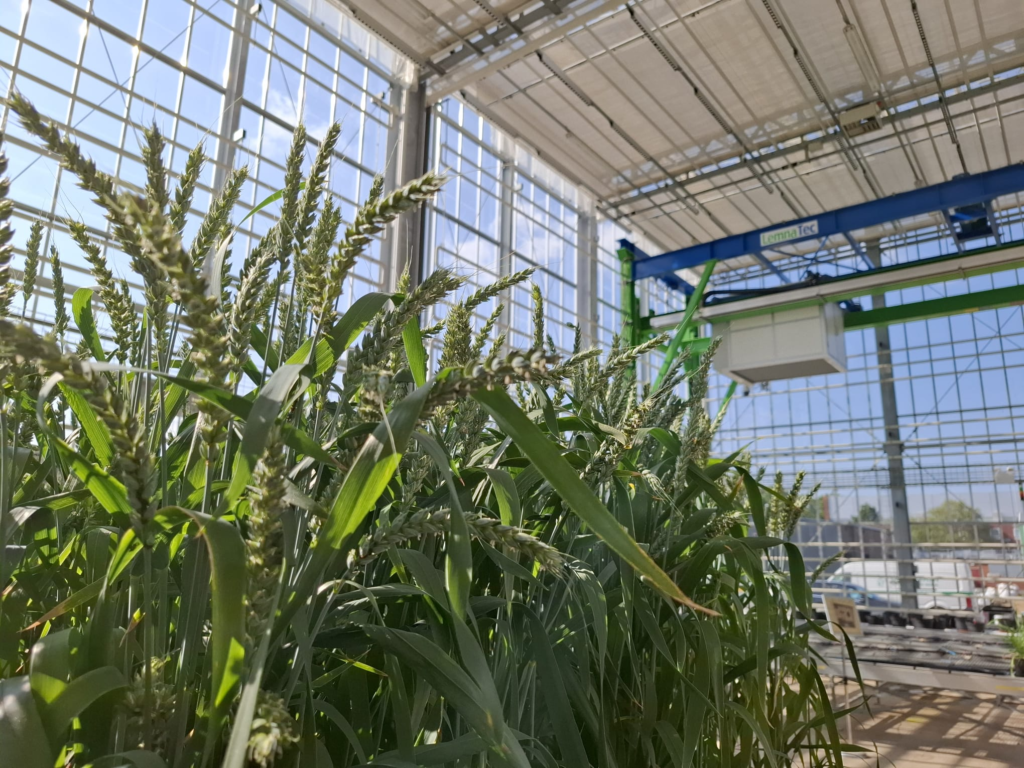
“Over the past year, the glasshouse experiment at Cranfield University has progressed through a full spring bean and oat phase followed by a wheat rotation under varying moisture regimes. Using a combination of technologies to monitor below-ground soil moisture, nitrates, roots and nodules alongside above-ground physiological assessments and hyperspectral imagery, we have investigated how a legume versus non-legume preceding crop influences soil–plant-atmosphere interactions and the performance of the following wheat. While wheat yields did not differ between previous crops, wheat following beans showed higher grain and straw nitrogen content and developed substantially larger and deeper root systems. These findings suggest that legumes may provide important below-ground benefits that are not captured by yield alone. We are now using these results to guide the next phase of work, focusing on developing a better understanding of legume-mediated soil effects and how they may improve the resilience of arable rotations to drought pressures.”
Agrii
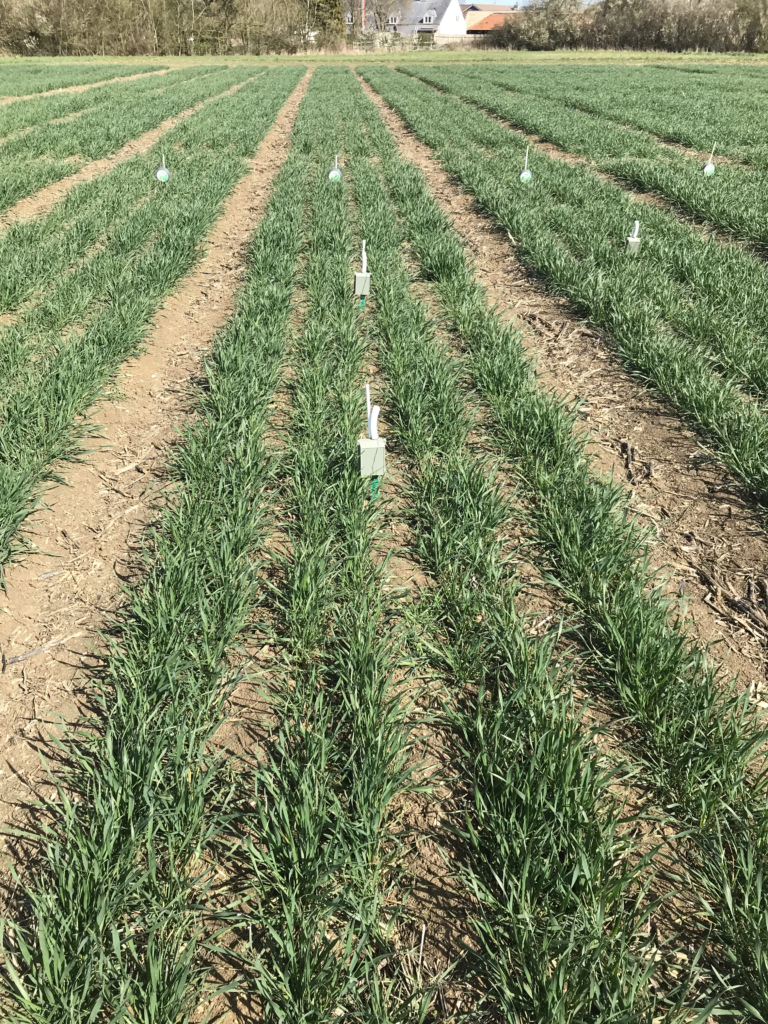
“For the 2025–26 season, Agrii is running three winter wheat trials in Lincolnshire, Bedfordshire and Essex. The wheat is following winter and spring beans and allows us to understand the benefits of including pulses in rotation and across different soil types.
The trials are in place to understand if we can we safely reduce nitrogen rates without losing yield or margin, while also lowering the crop’s carbon footprint.
Across the three sites, we’re testing four different nitrogen rates, applied as both two-split and three-split programmes. This will help us understand not just how much N is needed, but whether timing makes a difference to performance and nitrogen use efficiency.
We’re using a urea-based fertiliser treated with an inhibitor. Compared with standard ammonium nitrate (AN), this product has a lower carbon footprint and improved environmental profile. The question is whether we can combine smarter rates with improved fertiliser technology to maintain output while reducing emissions.
Ultimately, the trials are about giving growers practical, evidence-based guidance.”
LEAF
“LEAF has focused on deepening knowledge exchange and facilitating open discussion around the practical realities of integrating pulses into UK farming systems. Through LEAF Surgeries, including a webinar exploring markets, processing and on-farm feeding, and active moderation of PulsePEP discussions, LEAF has supported honest dialogue between farmers, advisors and supply-chain stakeholders.
Building on its extensive network, LEAF has continued to disseminate project activity through newsletters, digital content and industry events, while helping translate emerging insights into practical, system-level considerations aligned with Integrated Farm Management (IFM). This approach ensures that conversations around nitrogen efficiency and sustainable protein production remain grounded in farmer experience and real-world decision-making.
As the project moves into its final stages, LEAF will continue to foster collaboration and dialogue across the sector, highlighting the role pulses can play in building resilient, economically viable farming systems.”
LC Beef Nutrition
“Calf, grower, and finishing cattle have been trialled with beans in their diets. Processing the beans has ranged from crimped, micronised, toasted and wholecropped, to ensure a full array of processing methods has been tested.
Calf diets were compared with soya; soya gave a marginal lift in performance, but the difference was not significant, and beans played a useful role in the diet. Wholecrop beans showed an improvement in intake, with cattle preferring them to herbal ley, and the increase in proteins reduced the need for external sources compared to the herbal ley.
Trials are ongoing through ’26 looking at more finishers and calf diets.”