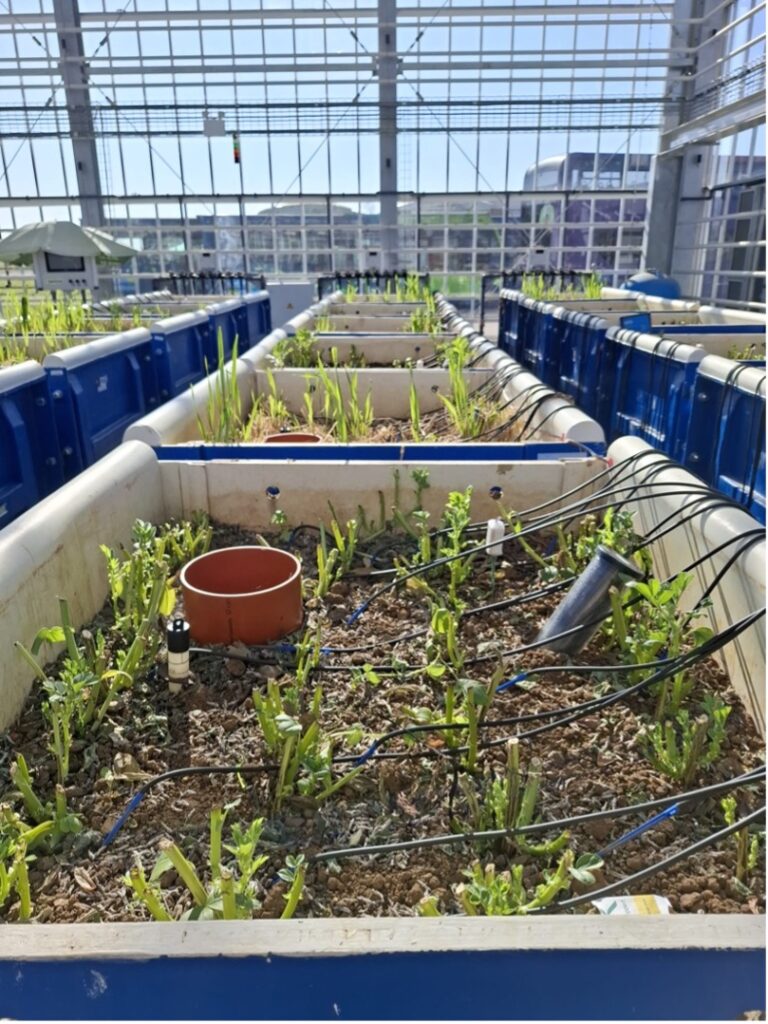
“The spring beans and oats have now been harvested in the Cranfield University glasshouse, soon to go into the following wheat rotation. Into this next rotation, we will continue to measure greenhouse gas emissions, rooting imagery, nitrate availability and take SMN samples. We will be interested to identify any differences in the wheat crops that have had a legume or non-legume previous crop, as well as between the different moisture treatments”. We will also be taking imagery using the gantry-based sensor system when the wheat is at a later growth stage to see if we can determine differences remotely, as well as parameters such as yield and Nitrogen Harvest Index (NHI).”
ADAS
“ADAS have analysed historic data from the YEN and public information to understand the approach that farms currently take towards managing their N applications following pulse crops as well as the impact of previous crops on wheat performance. A novel analysis on the most frequent rotations in the UK has been carried out to understand how cropping systems might realistically change if the pulse share in the rotation increases. These aspects are particularly important for modelling activities within the project on predicting the impact on farms across the UK if pulse cropping became more frequent. The Pulse Pioneer trials were monitored through the Yield Enhancement Network and data will be combined with Soil Mineral Nitrogen testing this year to develop understanding on how to refine N rates in pulse inclusive cropping systems.”
Agrii
“For the 24-25 season Agrii have drilled small plot trials of winter wheat at our Stow Longa Technology Centre in Cambridgeshire. These wheat plots are drilled over the top of where different pulse and legume species were last season. The species that were drilled last year comprised of winter and spring beans, combining peas, chickpeas, lupins and haricot beans.
The winter wheat plots will compare four rates of nitrogen this spring and we will be evaluating two nitrogen products across a three-split programme. The objectives of the trial is to understand how the different pulse species will benefit the wheat through residual nitrogen left and how this will aid a reduction in nitrogen rates whilst not impacting yield. Lastly, we want to understand how different products can reduce losses to the environment.”
Kelvin Cave
“In the last 12 months we have conducted a second, more detailed, harvest efficiency trial, in conjunction with Krone UK and Profi International to compare field losses and fuel use with different forager headers. The results of this will be published in Profi in the next two issues. We have also conducted further additive and fermentation trials and wet chemistry analysis of various crop preservation methods on a number of farms across the country and spoken at an on farm meeting about options for home grown proteins. The results of all the on farm trials will be collated and published at the end of next year.”
James Hutton Institute
“Data recording at the Centre for Sustainable Cropping (CSC), a long-term platform now entering its 16th year, is on-going. In 2025, Dr Cathy Hawes, the CSC Manager, said she is, “delighted to announce that “’nitrogen-blades’ from PBL Technology will be deployed to continuously monitor soil nitrogen losses at CSC, including during and after legume cropping”.
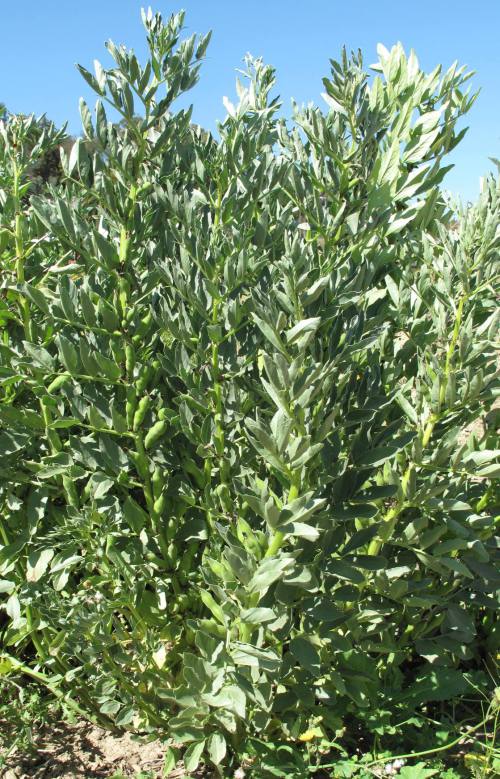
Prof. Pietro Iannetta, Agroecologist at the James Hutton Institute, also highlighted results from life cycle assessment of field bean-based crop rotations, “these showed that spring faba beans significantly lower the environmental impacts of the following spring barley crop, and allowed an average yield-uplift of 1.2 t/ha above spring-barley to spring-barley crop sequences”. He added that ”similar yield uplift has been highlighted for wheat from the ADAS pulse YENs, at a average uplift of 0.9 t/ha, though this is not simply due to residual faba bean nitrogen”.
It appears that, enhancements to soil qualities also play a role, and these need better understood, and quantified. Current research also now develops “CropGOBLIN” model, a scenario assessment tool to measure environmental impact reductions which may be possible by up-scaling faba bean production nationally – and up to 20% of the crop rotation annually – in existing UK production centres. ”
LEAF
“Tapping into our extensive network of growers, innovation centres, and demonstration farms, LEAF has played a crucial role in promoting the NCS project during its second year. Through a range of newsletter outputs, social media promotion, and online forum discussions—LEAF has reached its 3,000+ members globally, as well as encouraging their UK farmers to participate in the Pulse PEP.
The organisation has facilitated knowledge exchange through a host of farmer interviews, blog posts pertaining to common challenges farmers face, as well as project dissemination at key industry events, such as the Low Carbon Agriculture Show and Groundswell. Additionally, LEAF has encouraged their farmers to utilise the Farm Carbon Toolkit (FCT) tool and share their data with NCS partners, to help drive meaningful progress within the project.”