The NCS Project –
Case Studies
Our NCS case studies showcase some of the work to date and findings of the project , see the relevent sections below for more.
Arable
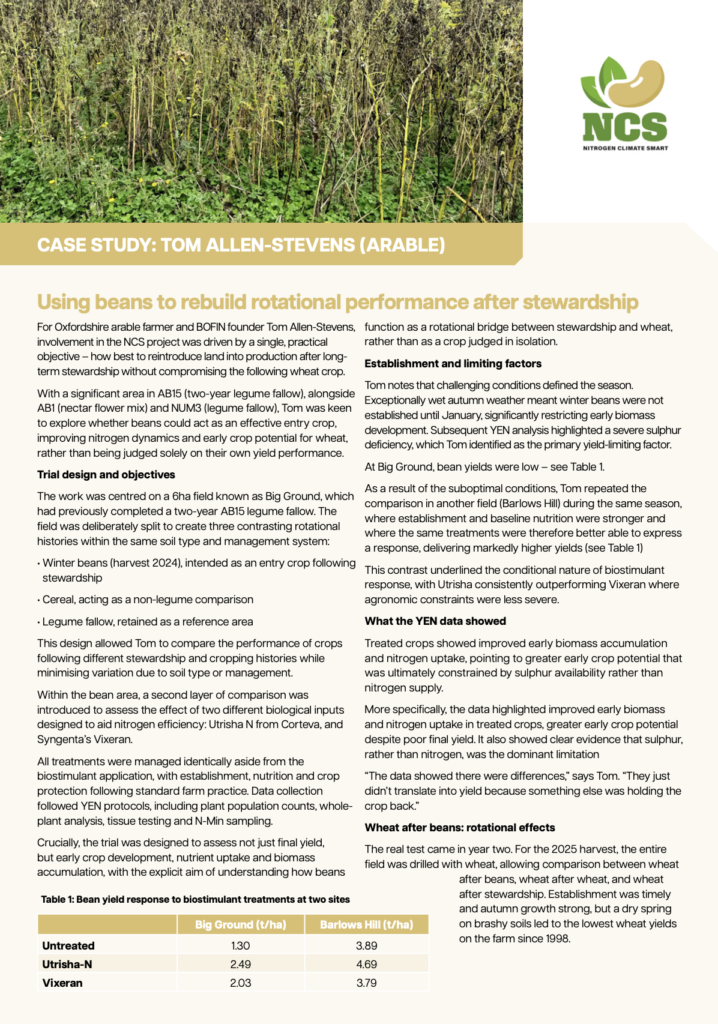
Using beans to rebuild rotational performance after stewardship
For Oxfordshire arable farmer and BOFIN founder Tom Allen-Stevens, involvement in the NCS project was driven by a single, practical objective – how best to reintroduce land into production after long-term stewardship without compromising the following wheat crop.
With a significant area in AB15 (two-year legume fallow), alongside AB1 (nectar flower mix) and NUM3 (legume fallow), Tom was keen to explore whether beans could act as an effective entry crop, improving nitrogen dynamics and early crop potential for wheat, rather than being judged solely on their own yield performance.
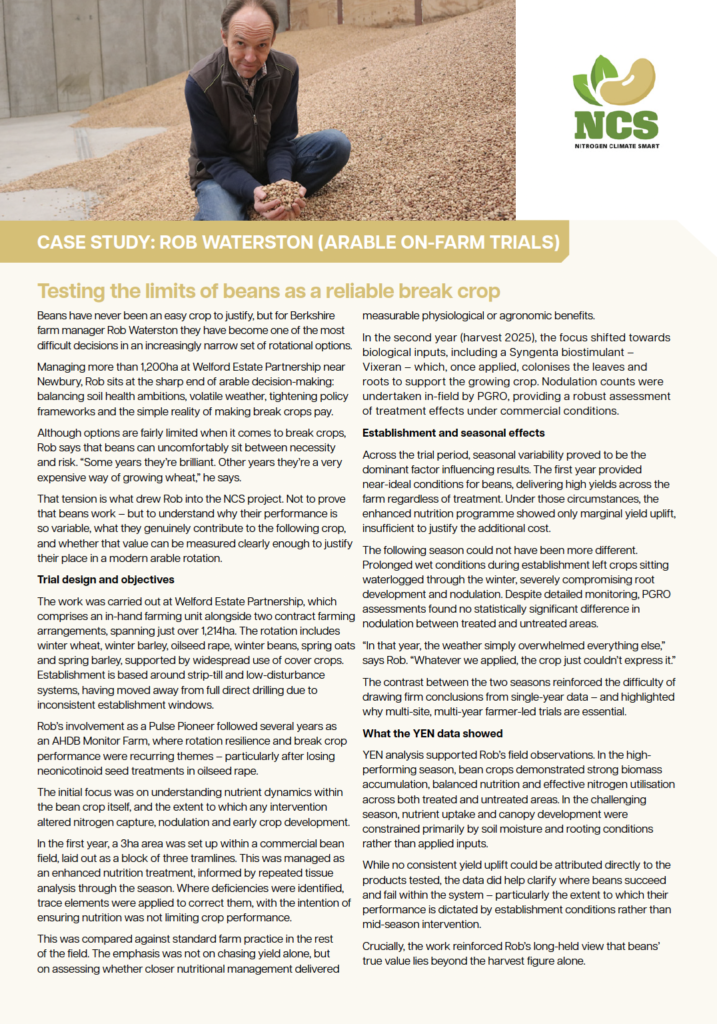
Testing the limits of beans as a reliable break crop
Beans have never been an easy crop to justify, but for Berkshire farm manager Rob Waterston they have become one of the most difficult decisions in an increasingly narrow set of rotational options. Managing more than 1,200ha at Welford Estate Partnership near Newbury, Rob sits at the sharp end of arable decision-making: balancing soil health ambitions, volatile weather, tightening policy frameworks and the simple reality of making break crops pay.
Beef
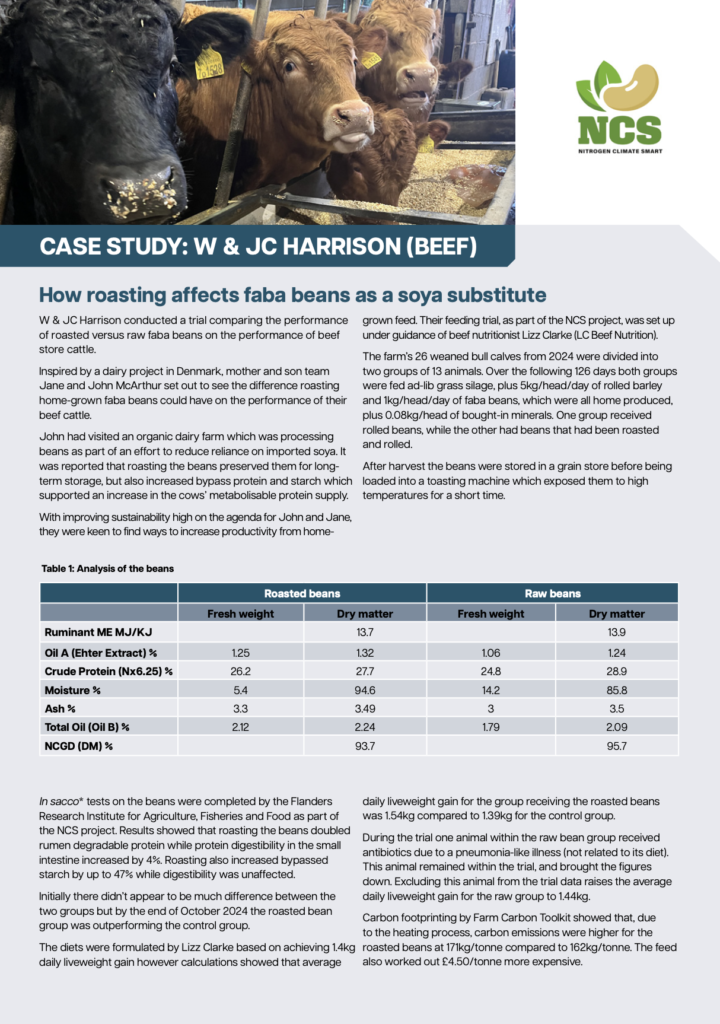
How roasting affects faba beans as a soya substitute
W & JC Harrison conducted a trial comparing the performance grown feed. Their feeding trial, as part of the NCS project, was set up of roasted versus raw faba beans on the performance of beef under guidance of beef nutritionist Lizz Clarke (LC Beef Nutrition) store cattle.
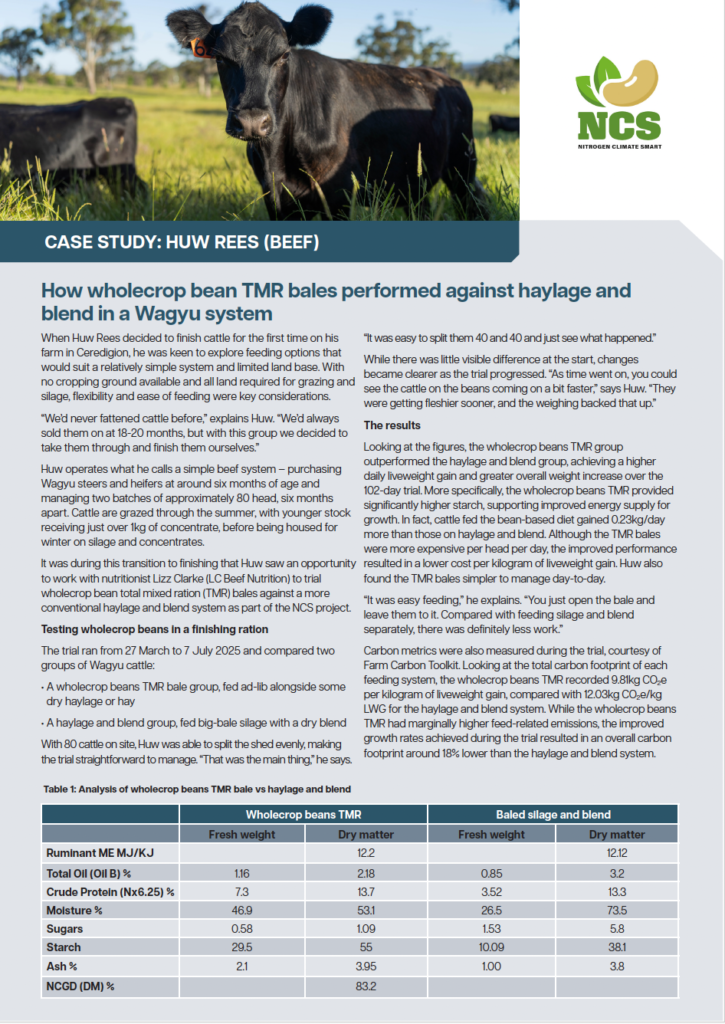
How wholecrop bean TMR bales performed against haulage and blend in a Wagyu system
When Huw Rees decided to finish cattle for the first time on his farm in Ceredigion, he was keen to explore feeding options that would suit a relatively simple system and limited land base. With no cropping ground available and all land required for grazing and silage, flexibility and ease of feeding were key considerations.
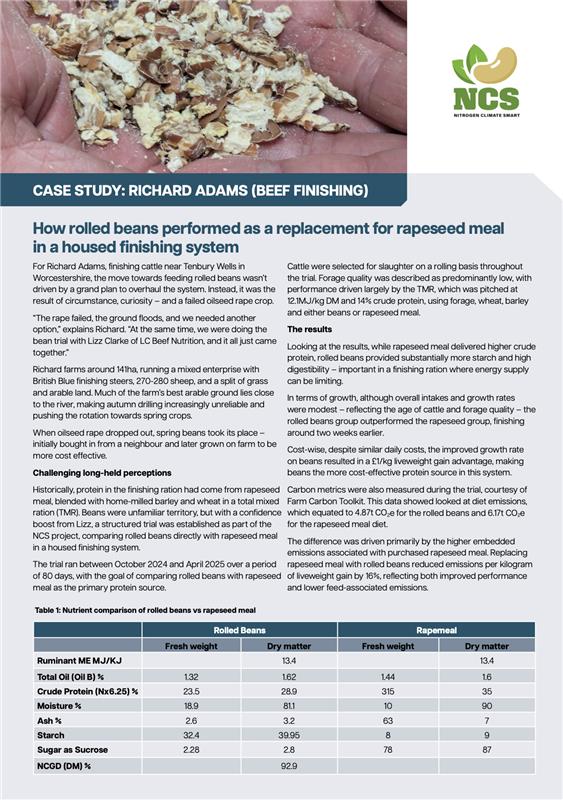
How rolled beans performed as a replacement for rapeseed meal in a housed finishing system
For Richard Adams, finishing cattle near Tenbury Wells in Worcestershire, the move towards feeding rolled beans wasn’t driven by a grand plan to overhaul the system. Instead, it was the result of circumstance, curiosity – and a failed oilseed rape crop.
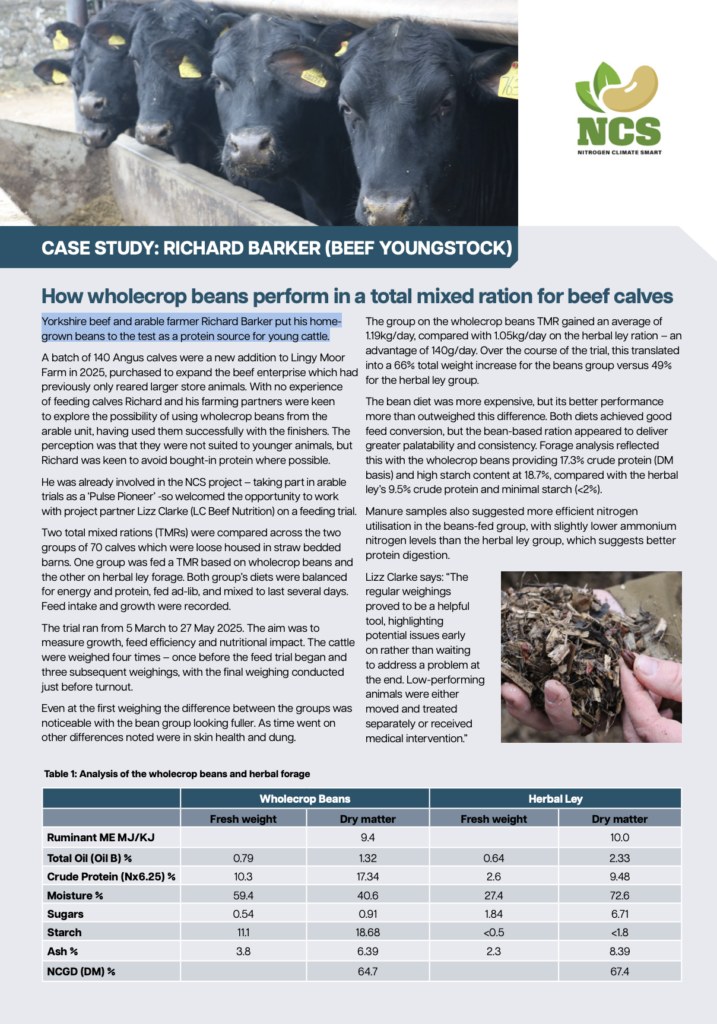
How wholecrop beans perform in a total mixed ration for beef calves
Yorkshire beef and arable farmer Richard Barker put his home-grown beans to the test as a protein source for young cattle.
Poultry

How is broiler performance affected when soya is partially replaced by faba beans?
Clive Soanes Broilers Ltd ran a feeding trial evaluating the effect of reducing soya and partially replacing with UK-grown faba beans across three crops of broilers at one of its production sites in 2024.
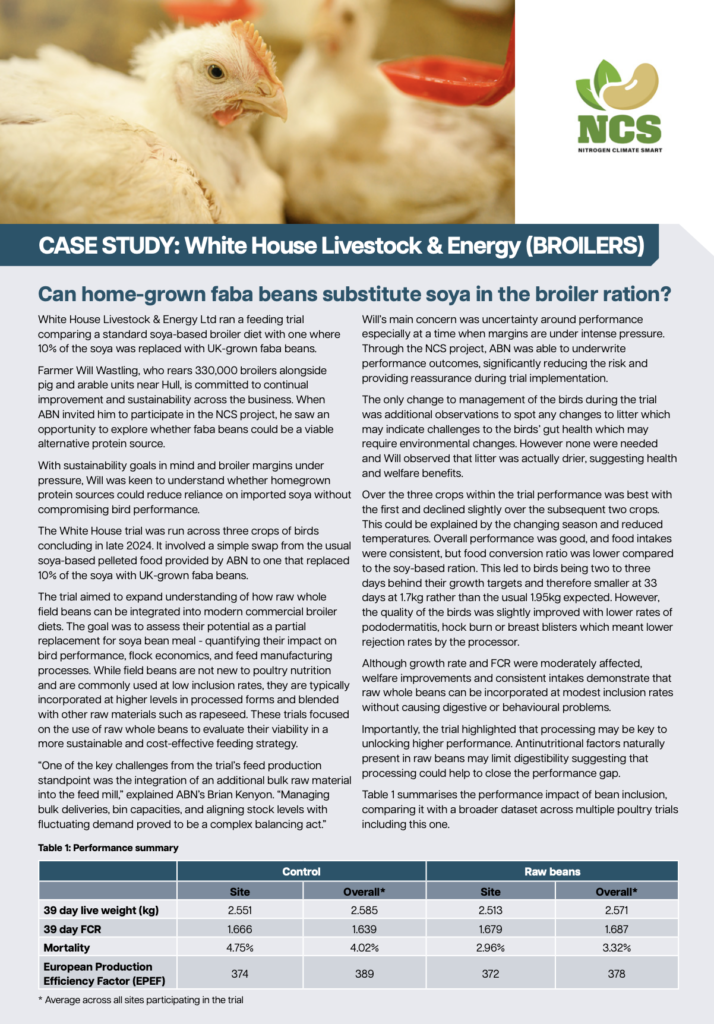
Can home-grown faba beans substitute soya in the broiler ration?
White House Livestock & Energy Ltd ran a feeding trial comparing a standard soya-based broiler diet with one where 10% of the soya was replaced with UK-grown faba beans.
Arable Research Trials
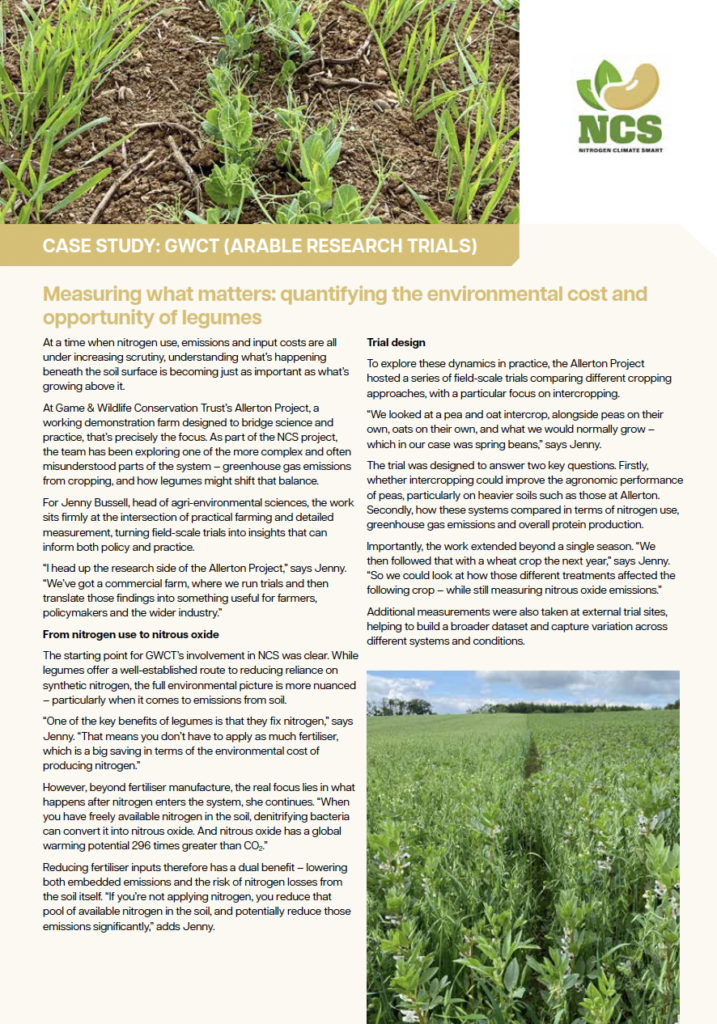
Measuring what matters: quantifying the environmental cost and opportunity of legumes
At a time when nitrogen use, emissions and input costs are all under increasing scrutiny, understanding what’s happening beneath the soil surface is becoming just as important as what’s growing above it. At Game & Wildlife Conservation Trust’s Allerton Project, a working demonstration farm designed to bridge science and practice, that’s precisely the focus.
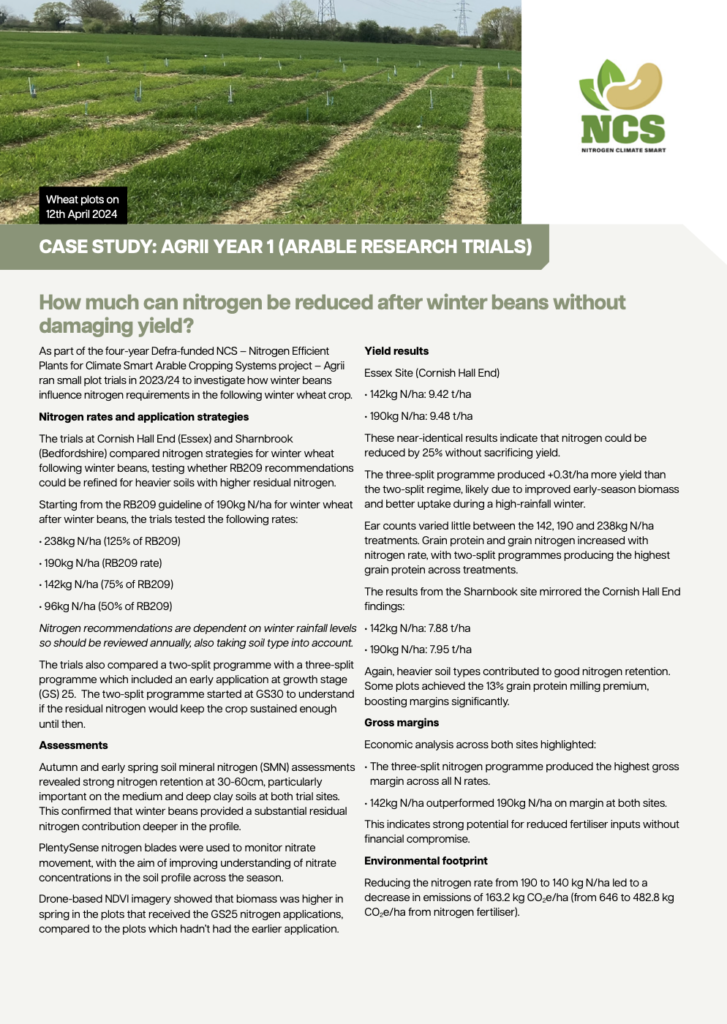
How much can nitrogen be reduced after winter beans without damaging yield?
As part of the four-year Defra-funded NCS project Agrii ran small plot trials in 2023/24 to investigate how winter beans influence nitrogen requirements in the following winter wheat crop.
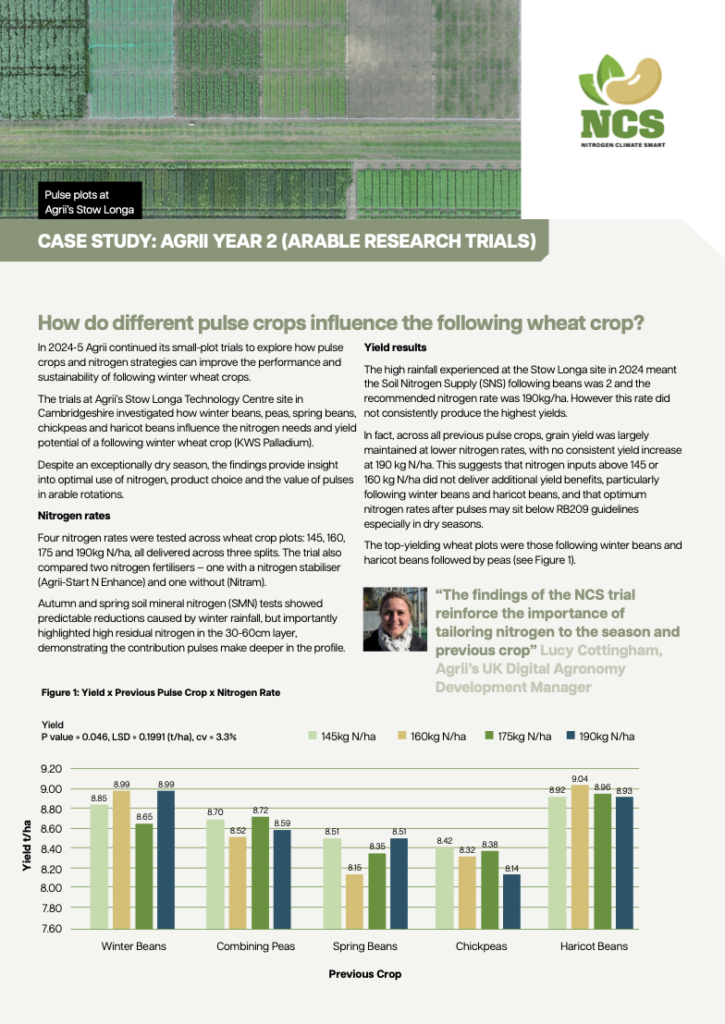
How do different pulse crops influence the following crop?
In 2024-5 Agrii continued its small-plot trials to explore how pulse crops and nitrogen strategies can improve the performance and sustainability of following winter wheat crops.